Webinar Wednesday Rewind: Which Hands-On Environmental Program Is Right For You?
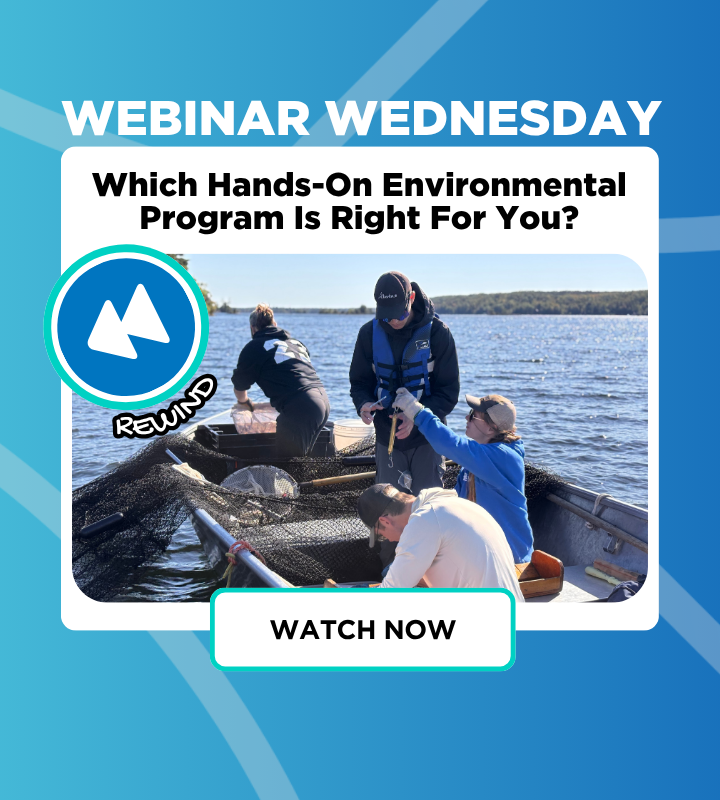
If you love spending time outdoors, care about protecting the environment, or want to turn your interest in nature into a career, Fleming College offers several ways to get started.
Environmental and natural resource sciences cover a wide range of careers, from protecting wildlife and restoring ecosystems to managing forests and studying aquatic environments. While these fields often overlap, each offers a different opportunity to make an impact.
In this edition of Webinar Wednesday Rewind, we’re bringing together several of our environmental program sessions to help you compare your options and discover which path might be right for you.
Whether you picture yourself conducting wildlife surveys, researching species at risk, restoring natural habitats, or working in forest management, Fleming’s Frost Campus offers hands-on learning experiences to help you build the skills to get there.
If You Want to Work with Fish and Wildlife
If you’re passionate about animals and want to work directly in the field studying, monitoring and managing wildlife populations, Fleming’s Fish and Wildlife Technician program may be a great fit.
This two-year diploma program focuses on the practical skills needed to assess fish and wildlife populations, collect environmental data, identify habitats and support sustainable natural resource management.
Students develop foundational knowledge before moving into specialized courses in fisheries management, wildlife ecology, aquatic studies and species identification.
One of the program’s highlights is its five weeks of intensive field schools at the beginning of second year. Students rotate through fisheries, wildlife, terrestrial habitats, wetlands and freshwater ecology, gaining experience with techniques used by professionals in the field.
Activities can include fish sampling, wildlife capture and handling, habitat assessments, aquatic surveys and data collection.
Graduates can explore opportunities with government agencies, environmental consulting firms, conservation organizations and other employers involved in fish and wildlife management.
This path may interest you if: you enjoy working outdoors, are interested in fish and wildlife populations, and want a career focused on fieldwork, monitoring and natural resource management.
If You Want to Protect Wildlife and Species at Risk
If you’re especially interested in animal conservation, scientific research and protecting vulnerable species, consider Fleming’s Conservation Biology program.
While Fish and Wildlife Technician emphasizes field-based monitoring and resource management, Conservation Biology takes a closer look at the science behind animal conservation.
Students explore animal biology, habitat assessment, population dynamics, species at risk, conservation policy and the threats affecting wildlife populations.
The program combines fieldwork with specialized laboratory training. Students gain experience with techniques such as environmental DNA (eDNA) analysis, animal anatomy and disease assessment, wildlife handling, telemetry, camera trapping and habitat surveys.
Applied research is another important part of the program. Students work toward a final research project where they develop and carry out their own conservation investigation, often alongside faculty and community partners.
These projects provide opportunities to contribute to conservation initiatives while developing research, problem-solving and scientific communication skills.
This path may interest you if: you’re curious about animal biology, want to protect species at risk, enjoy scientific research and are interested in combining laboratory work with hands-on conservation activities.
If You Want to Understand and Restore Ecosystems
If you’re interested in the bigger picture of how nature works, Fleming’s Ecosystem Management Technician program offers a broader approach to environmental science.
Rather than focusing primarily on individual species, ecosystem management looks at how plants, animals, water, soil and human activities interact within natural environments.
Students learn to assess the health of terrestrial and aquatic ecosystems, collect and interpret environmental data, and develop approaches to conservation, restoration and sustainable resource use.
Hands-on learning is central to the program. Students participate in field activities that can include water sampling, wildlife monitoring, habitat assessments and ecological restoration projects.
Some of this work takes place right at Frost Campus, where students contribute to ongoing environmental research and restoration initiatives, including monitoring wildlife populations and supporting the development of a tallgrass prairie ecosystem.
The program also explores the human side of environmental management, recognizing that successful conservation requires an understanding of communities, economic considerations and how people interact with natural resources.
This path may interest you if: you want to understand how ecosystems function, enjoy collecting and analyzing environmental data, and are interested in habitat restoration, sustainability and environmental management.
If You Want to Work in Forestry and Forest Management
Forests play an important role in Canada’s environment and economy, and careers in forestry extend well beyond harvesting trees.
If you’re interested in forest conservation, sustainable resource management, tree identification or forestry operations, Fleming offers two pathways to explore.
Forestry Techniques
Fleming’s Forestry Techniques program is a one-year certificate designed to introduce students to the foundational skills needed for entry-level work in the forestry sector.
Students gain practical experience in tree identification, forest measurement, forest insects and diseases, forest fire science, and the safe operation and maintenance of forestry equipment.
Hands-on learning includes working with chainsaws and other equipment, assessing forest conditions and developing skills that can be applied in forestry operations.
The shorter program can also appeal to students who already have postsecondary education and want to add practical forestry skills, or those who want to explore the industry before committing to a longer program.
This path may interest you if: you want to develop practical forestry skills, explore the industry or prepare for entry-level opportunities without committing to a two-year diploma.
Forestry Technician: Adaptive Practices (Co-op)
For students interested in more advanced technical skills and forest management responsibilities, Fleming’s Forestry Technician: Adaptive Practices (Co-op) program offers a two-year diploma pathway.
Building on foundational forestry skills, students explore forest management planning, geographic information systems (GIS), forest ecology, inventory techniques and forestry operations.
The program includes specialized field camps, providing opportunities to learn in forest environments such as Algonquin Park and Haliburton Forest.
Students also complete a co-op component, allowing them to apply their knowledge in a professional setting.
Graduates can pursue opportunities in forest inventory, tree marking, forest operations, forest management, restoration and other natural resource sectors.
The program also offers pathways for graduates interested in continuing their education toward university degrees and professional forestry designations.
This path may interest you if: you want a career in forestry, enjoy outdoor technical work, and are interested in forest management, conservation, mapping and planning.
An added benefit is the connection between the two programs. Students entering in Fall 2026 can begin in Forestry Techniques and explore a pathway into the two-year Forestry Technician program, with overlapping courses making that transition easier.
Wildlife, Ecosystems or Forestry: What Fits You?
One of the biggest differences between these programs is what you want to study and the kind of work you hope to do.
If you want to spend your career monitoring fish and wildlife populations, Fish and Wildlife Technician offers extensive field-based learning.
If you’re more interested in animal biology, species at risk and scientific research, Conservation Biology combines fieldwork with specialized laboratory techniques.
If you want to understand how entire ecosystems function and contribute to environmental restoration, Ecosystem Management Technician takes a broader approach to conservation and sustainability.
If forests are where your interests lie, Forestry Techniques and Forestry Technician: Adaptive Practices (Co-op) provide opportunities to develop skills in forest operations, management and conservation.
While each program has its own focus, they share an emphasis on applied learning and gaining experience in real environments.
Where Could Your Environmental Career Take You?
Environmental careers can take you into forests, wetlands, lakes, research facilities, conservation areas and communities across Canada.
Depending on your program, you could find yourself conducting wildlife surveys, monitoring water quality, restoring habitats, collecting forest inventory data, supporting conservation research or helping organizations manage natural resources responsibly.
Fleming’s environmental programs also offer opportunities for continued education. Some graduates choose to enter the workforce after completing their diploma or certificate, while others pursue additional diplomas, university degrees or professional designations.
The right starting point depends on what interests you most: working with wildlife, studying ecosystems, protecting species or managing forests.
Still Exploring Your Options?
You don’t have to know exactly where you want your environmental career to take you before getting started.
Think about the kind of work you enjoy, whether that’s identifying wildlife, conducting research, solving environmental challenges or spending your days working outdoors.
Watching the full Webinar Wednesday sessions can help you learn more about each program, the hands-on experiences available and the career opportunities you could pursue.
Can’t make a live Webinar Wednesday event?
No problem! Webinar recordings are available on Fleming’s official YouTube channel, and our Program Coordinators and Student Recruitment team are available to answer your questions and help you explore your options.