Conservation Biology
Ontario’s only program focused on conserving native species and their habitats through hands-on field work and cutting-edge tools. With a strong emphasis on applied research, you’ll develop practical skills in biodiversity monitoring, genetics, environmental DNA, and conservation management.
Program Information
Start Date
January 11, 2027
Domestic Availability
Accepting Applications
International Availability
Closed
CIP Code
26.1307
Program Code
CNB
Delivery
In Person
Credential
Ontario College Diploma
Academic School
Location
Program Contact
Domestic Tuition
per semester*
International Tuition
per semester*
Apply Now
Canadian StudentsView Curriculum
September 07, 2027
Domestic Availability
Accepting Applications
International Availability
Coming Soon
CIP Code
26.1307
Program Code
CNB
Delivery
In Person
Credential
Ontario College Diploma
Academic School
Location
Program Contact
Domestic Tuition
per semester*
International Tuition
per semester*
*Domestic tuition amounts shown are from the 2026-2027 academic year and are subject to change.
*International tuition amounts shown are from the 2026-2027 academic year and are subject to change.
Apply Now
Canadian StudentsView Curriculum
January 10, 2028
Domestic Availability
Accepting Applications
International Availability
Coming Soon
CIP Code
26.1307
Program Code
CNB
Delivery
In Person
Credential
Ontario College Diploma
Academic School
Location
Program Contact
Domestic Tuition
per semester*
International Tuition
per semester*
*Domestic tuition amounts shown are from the 2026-2027 academic year and are subject to change.
*International tuition amounts shown are from the 2026-2027 academic year and are subject to change.
Apply Now
Canadian StudentsView Curriculum
The accelerating loss of biodiversity, driven by habitat fragmentation, invasive species, disease, and climate change, has created an urgent demand for conservation professionals who understand how to protect habitats and species at risk.
As part of the program, you will:
- Use at-risk species as focal organisms to examine key conservation biology concepts such as population viability, habitat assessments, and threat mitigation.
- Gain extensive field experience, including terrestrial and aquatic surveys, pollinator monitoring, and species identification.
- Practice core field techniques such as telemetry, Passive Integrated Transponder (PIT) tagging, habitat assessments, insect sampling, camera trapping, and emerging tools for monitoring wildlife and ecosystems.
- Build strong lab competencies, from tissue and genetic sampling to environmental DNA (eDNA) processing, microscopy, invertebrate systematics, and analytical skills.
- Participate in hands-on, applied research (a capstone-style project completed in Semester 4 where students design and execute real conservation studies alongside faculty and partners).
- Learn directly from external conservation partners, strengthening your professional networks and gaining exposure to current practices in government and non-government organizations and private sector conservation.
- Balance field and lab learning with opportunities to analyze data, apply conservation policies, and translate science into management recommendations for species at risk.
Hands-on learning drives the Conservation Biology program. You’ll sharpen real field skills during a Semester 3 field camp, then dive into a semester-long applied research project in Semester 4 working in Fleming’s “living laboratories” (the insectary, the bird conservation, and the pollinator garden).
In partnership with conservation leaders like Kawartha Land Trust and Ontario Streams, you'll complete projects that give you real-world experience, real data, and real impact. You won’t just learn conservation, you’ll do conservation.
Career Opportunities
Career opportunities within this field are varied. Graduates could work for federal, provincial/territorial or municipal government departments, colleges and universities, environmental consulting firms, industry firms, or as self-employed consultants.
Careers include:
- Biological Technician/Technologist
- Conservation Technician
- Aquatic Biology Technician
- Fisheries Technician
- Conservation and Fishery Officer
- Zoological Technician/Technologist
- Species at Risk Technician
- Wildlife Resources Technician
Double the Power of Your Credential
Many of our programs offer the opportunity to earn a second certificate or diploma with just one or two more semesters of study. Add another specialization to your skill set and increase your career prospects with this unique opportunity. Learn more here or contact your program coordinator for more information.
Transfer Credit Opportunities
Certain diploma programs within the School of Environmental and Natural Resource Sciences (SENRS) share some first-semester courses providing students a flexible and interdisciplinary academic start. This allows students to:
- Explore various fields of study within environmental and natural resource sciences
- Discover careers that align with their strengths and interests
- Transfer credits between programs, reducing duplication and saving time
By earning credits that apply across multiple diplomas, students will have the chance to work toward more than one credential without starting from scratch. This also opens doors to a multidisciplinary education, in which students gain a strong foundation in key concepts and practical skills that can be applied across industries.
Fleming College has more grads working in the environmental and natural resources sectors than any other college in Canada. We have an established reputation in the field. Our dedicated and knowledgeable faculty will guide you on your academic journey as you take advantage of our exceptional learning spaces – indoors and outside. A common first semester, shared with the other diploma programs in our School of Environmental and Natural Resource Sciences, provides you with a solid foundation before you go on to specialize in your area of study.
You’re curious and passionate about the natural world. You want a future where wildlife and people can thrive together. And, you’re eager to use science to help make that happen.
This program is a great fit if you love being outdoors, enjoy hands-on applied research, and are excited by big questions about biodiversity, not just animals but the full spectrum of life. You have (or are ready to build) a strong foundation in biology, including vertebrate and invertebrate fundamentals, and you bring critical thinking and a commitment to high standards in your work. You collaborate well, you’re comfortable facing challenging field conditions, and you’re ready to grow into a conservation professional who makes a real difference.
You’ll thrive in this program if you have:
- Enthusiasm for the natural world and its at-risk species
- Interest in applied research and a drive to ask meaningful scientific questions
- Strong critical thinking and analytical skills
- Commitment to high personal and academic standards
- A willingness to work in challenging outdoor environments and varied weather
- The ability to collaborate and contribute to team-based field and research work
- Openness to future job opportunities domestically and abroad
The Indigenous Perspectives Designation (IPD) is an option available to students in this program. To qualify for an IPD, you must take and successfully complete a series of required Indigenous Studies courses as well as participate in a minimum of four approved co-curricular Indigenous events or experiences. Your transcript will indicate the IPD upon graduation, a designation that provides you with a comprehensive understanding of Indigenous cultures, histories, traditions, and contributions to our shared society within the context of your program of study. The IPD provides a valuable skill set sought after in today's employment sector. For more information, please click on the following link: Indigenous Perspectives Designation : Fleming College
- Collect field and laboratory data, as well as access and retrieve publicly available data, in accordance with industry and government protocols and procedures for analysis and presentation to peers, industry and government partners and public.
- Employ current, accepted protocols, tools and technologies to sample, monitor and assess animal populations and their related habitats in accordance with industry and government standards.
- Safely use all tools, materials, equipment and machinery, appropriately and in compliance with industry and government safety and operating standards, to ensure optimum health and safety of self, team members and the environment.
- Accurately identify a wide range of biota to effectively conserve at risk animal populations and their habitats in accordance with industry and government standards.
- Classify terrestrial and aquatic habitats using industry and government accepted protocols and assessment tools to effectively conserve at risk animal populations.
- Assess various biological and genetic parameters of animals using industry and government accepted protocols and assessment tools to effectively conserve at risk animal populations.
- Apply chemical, biological, ecological and genetic principles to the conservation of at risk animal populations and their habitats in accordance with industry and government standards.
- Apply established animal biodiversity and conservation research to develop sustainable recovery plans to effectively sample, monitor or assess animal populations and their habitats using industry and government sampling protocols and assessment tools.
- Research current and emerging animal biodiversity and conservation issues, policies and regulations that support and guide recovery planning and management practices locally, provincially, nationally and internationally.
- Effectively use computer applications and geospatial analysis tools, to present animal biodiversity and conservation data and analysis to industry and government standards.
- Act in accordance with norms and industry/government codes of ethical and professional practice when conducting laboratory work, fieldwork, and/or on social media.
Students applying to Conservation Biology must meet the following requirements:
- OSSD (or equivalent mature student status OSSD) including Gr 12 C English and Gr 12 C Math. Completion of Grade 11 C/U Biology and 12 C/U Chemistry is recommended.
Windows (ideal) or Mac computer. Information about hardware requirements can be found on the ArcGIS Desktop system requirements page.
Transfer Agreements
You may be able to use credits obtained at Fleming College to continue your postsecondary education in pursuit of a degree. The articulation and credit transfer agreements with our partner institutions are summarized here.
Bachelor of Commerce
Requirement
- Completion of the program.
Transfer Credit
- 30 out of a 120-credit degree.
- Refer to the articulation statement for further details.
To apply please see the Apply Alberta website.
For more information
Visit the Athabasca University website for further articulation and program information.
See the official articulation agreement.
Bachelor of Commerce in Accounting
Requirement
- Completion of the program.
Transfer Credit
- 30 out of a 120-credit degree.
- Refer to the articulation statement for further details.
To apply please see the Apply Alberta website.
For more information
Visit the Athabasca University website for further articulation and program information.
See the official articulation agreement.
Bachelor of Commerce in Business Technology Management
Requirement
- Completion of the program.
Transfer Credit
- 30 out of a 120-credit degree.
- Refer to the articulation statement for further details.
To apply please see the Apply Alberta website.
For more information
Visit the Athabasca University website for further articulation and program information.
See the official articulation agreement.
Bachelor of Commerce in Finance
Requirement
- Completion of the program.
Transfer Credit
- 30 out of a 120-credit degree.
- Refer to the articulation statement for further details.
To apply please see the Apply Alberta website.
For more information
Visit the Athabasca University website for further articulation and program information.
See the official articulation agreement.
Bachelor of Commerce in Human Resources Management
Requirement
- Completion of the program.
Transfer Credit
- 30 out of a 120-credit degree.
- Refer to the articulation statement for further details.
To apply please see the Apply Alberta website.
For more information
Visit the Athabasca University website for further articulation and program information.
See the official articulation agreement.
Bachelor of Commerce in Indigenous Business
Requirement
- Completion of the program.
Transfer Credit
- 30 out of a 120-credit degree.
- Refer to the articulation statement for further details.
To apply please see the Apply Alberta website.
For more information
Visit the Athabasca University website for further articulation and program information.
See the official articulation agreement.
Bachelor of Commerce in Marketing
Requirement
- Completion of the program.
Transfer Credit
- 30 out of a 120-credit degree.
- Refer to the articulation statement for further details.
To apply please see the Apply Alberta website.
For more information
Visit the Athabasca University website for further articulation and program information.
See the official articulation agreement.
Bachelor of Human Resources and Labour Relations (General)
Requirement
- Completion of the program.
Transfer Credit
- 30 out of a 90-credit degree.
- Refer to the articulation statement for further details.
To apply please see the Apply Alberta website.
For more information
Visit the Athabasca University website for further articulation and program information.
See the official articulation agreement.
Bachelor of Management (General)
Requirement
- Completion of the program.
Transfer Credit
- 30 out of a 90-credit degree.
- Refer to the articulation statement for further details.
To apply please see the Apply Alberta website.
For more information
Visit the Athabasca University website for further articulation and program information.
See the official articulation agreement.
Bachelor of Professional Arts in Communication Studies
Requirement
- Completion of the program.
Transfer Credit
- 60 out of a 120-credit degree.
- Refer to the articulation statement for further details.
To apply please see the Apply Alberta website.
For more information
Visit the Athabasca University website for further articulation and program information.
See the official articulation agreement.
Bachelor of Professional Arts in Criminal Justice
Requirement
- Completion of the program.
Transfer Credit
- 60 out of a 120-credit degree.
- Refer to the articulation statement for further details.
To apply please see the Apply Alberta website.
For more information
Visit the Athabasca University website for further articulation and program information.
See the official articulation agreement.
Bachelor of Professional Arts in Governance, Law and Management
Requirement
- Completion of the program.
Transfer Credit
- 60 out of a 120-credit degree.
- Refer to the articulation statement for further details.
To apply please see the Apply Alberta website.
For more information
Visit the Athabasca University website for further articulation and program information.
See the official articulation agreement.
Bachelor of Professional Arts in Human Services
Requirement
- Completion of the program.
Transfer Credit
- 60 out of a 120-credit degree.
- Refer to the articulation statement for further details.
To apply please see the Apply Alberta website.
For more information
Visit the Athabasca University website for further articulation and program information.
See the official articulation agreement.
Bachelor of Science
Requirement
- Completion of the program.
Transfer Credit
- 30 out of a 120-credit degree.
- Students admitted after Sept 1, 2026: 30-credit block. Students may receive up to 30 additional credits on a course-by-course basis, provided the diploma courses meet the requirements of AU's BSc (PD) programs.
- Refer to the articulation statement for further details.
To apply please see the Apply Alberta website.
For more information
Visit the Athabasca University website for further articulation and program information.
See the official articulation agreement.
Bachelor of Science in Applied Mathematics
Requirement
- Completion of the program.
Transfer Credit
- 30 out of a 120-credit degree.
- Refer to the articulation statement for further details.
To apply please see the Apply Alberta website.
For more information
Visit the Athabasca University website for further articulation and program information.
See the official articulation agreement.
Bachelor of Science in Biological Sciences
Requirement
- Completion of the program.
Transfer Credit
- 30 out of a 120-credit degree.
- Refer to the articulation statement for further details.
To apply please see the Apply Alberta website.
For more information
Visit the Athabasca University website for further articulation and program information.
See the official articulation agreement.
Bachelor of Science in Computing and Information Systems
Requirement
- Completion of the program.
Transfer Credit
- 30 out of a 120-credit degree.
- Refer to the articulation statement for further details.
To apply please see the Apply Alberta website.
For more information
Visit the Athabasca University website for further articulation and program information.
See the official articulation agreement.
Bachelor of Environmental Science (3Yr)
Requirement
- Minimum 65% cumulative program average.
- The program is offered face-to-face (Nathan campus or Gold Coast campus)
Transfer Credit
- 120 credit points out of a 240-credit point degree.
- Refer to the articulation agreement for further details.
To apply please see the Griffith University's admissions website.
For more information
Visit the Griffith University website for further articulation and program information.
See the official articulation agreement.
Bachelor of Science in Zoology
Requirement
- Completion of the program.
Transfer Credit
- Entry into 3rd-year studies.
- Refer to the articulation agreement for further details.
To apply please see the Hartpury University's admissions website.
For more information
Visit the Hartpury University website for further articulation and program information.
See the official articulation agreement.
Bachelor of Arts - General
Requirement
- Minimum mid-70% cumulative program average.
Transfer Credit
- 60 out of a 120-credit degree.
- Refer to OntarioTech's website for further details.
To apply please see the Ontario Universities' Application Centre (OUAC) website.
For more information
Visit the Ontario Tech University website for further articulation and program information.
Bachelor of Arts in Educational Psychology
Requirement
- Minimum mid-70% cumulative program average.
Transfer Credit
- 60 out of a 120-credit degree.
- Refer to OntarioTech's website for further details.
To apply please see the Ontario Universities' Application Centre (OUAC) website.
For more information
Visit the Ontario Tech University website for further articulation and program information.
Bachelor of Arts in Educational Studies and Digital Technology
Requirement
- Minimum mid-70% cumulative program average.
Transfer Credit
- 60 out of a 120-credit degree.
- Refer to ONTransfer.ca for further details.
To apply please see the Ontario Universities' Application Centre (OUAC) website.
For more information
Visit the Ontario Tech University website for further articulation and program information.
Bachelor of Arts in Psychology
Requirement
- Minimum mid-70% cumulative program average.
Transfer Credit
- 60 out of a 120-credit degree.
- Refer to Ontario Tech's website for further details.
To apply please see the Ontario Universities' Application Centre (OUAC) website.
For more information
Visit the Ontario Tech University website for further articulation and program information.
Bachelor of Arts in Sociology, Technology and Innovation
Requirement
- Minimum mid-70% cumulative program average.
Transfer Credit
- 60 out of a 120-credit degree.
- Refer to OntarioTech's website for further details.
To apply please see the Ontario Universities' Application Centre (OUAC) website.
For more information
Visit the Ontario Tech University website for further articulation and program information.
Bachelor of Commerce
Requirement
- Minimum mid-70% cumulative program average.
- Completion of the Ontario Tech Commerce Bridge.
Transfer Credit
- 45 out of a 120-credit degree.
- Refer to ONTransfer.ca for further details.
To apply please see the Ontario Universities' Application Centre (OUAC) website.
For more information
Visit the Ontario Tech University website for further articulation and program information.
Bachelor of Interdisciplinary Studies
Requirement
- Minimum 65% cumulative program average.
Transfer Credit
- Entry into 5th semester standing in an 8-semester program.
- Refer to Seneca College's website for further details.
To apply please see the Ontario Colleges website.
For more information
Visit the Seneca Polytechnic website for further articulation and program information.
Visit the ONTransfer.ca website for agreement information.
See the official articulation agreement.
Bachelor of Science in Biology
Requirement
- Minimum 75% cumulative program average.
- Students completing the Bachelor of Science (Honours) in Biology can apply to the Specialization in Conservation Biology. Enrolment is limited and competitive.
- Trent will reserve five spaces each year for graduates of Fleming College’s Conservation Biology program who apply internally to the Conservation Biology degree program upon meeting the minimum admission requirements. Students must complete an internal application to Conservation Biology in their second semester at Trent to be considered for the program, provided they meet the terms outlined in Article 6.5 of the agreement.
Transfer Credit
- 6.5 out of a 20-credit degree.
- 7.0 out of a 20-credit degree with completion of the Indigenous Perspectives Designation (IPD). Refer to ONTransfer.ca for further details.
To apply please see the Ontario Universities' Application Centre (OUAC) website.
For more information
Visit the Trent University website for further articulation and program information.
Visit the ONTransfer.ca website for agreement information.
See the official articulation agreement.
Bachelor of Science in Biology, Specialization in Conservation Biology
Requirement
- Minimum 75% cumulative program average.
- Students completing the Bachelor of Science (Honours) in Biology can apply to the Specialization in Conservation Biology. Enrolment is limited and competitive.
- Trent will reserve five spaces each year for graduates of Fleming College’s Conservation Biology program who apply internally to the Conservation Biology degree program upon meeting the minimum admission requirements. Students must complete an internal application to Conservation Biology in their second semester at Trent to be considered for the program, provided they meet the terms outlined in Article 6.5 of the agreement.
Transfer Credit
- 6.5 out of a 20-credit degree.
- 7.0 out of a 20-credit degree with completion of the Indigenous Perspectives Designation (IPD). Refer to ONTransfer.ca for further details.
To apply please see the Ontario Universities' Application Centre (OUAC) website.
For more information
Visit the Trent University website for further articulation and program information.
Visit the ONTransfer.ca website for agreement information.
See the official articulation agreement.
Bachelor of Science in Conservation Biology
Requirement
- Minimum 75% cumulative program average.
- Admission to the program is competitive. Achieving the minimum average does not guarantee admission.
Transfer Credit
- 6.5 out of a 20-credit degree.
- Refer to ONTransfer.ca for further details.
To apply please see the Ontario Universities' Application Centre (OUAC) website.
For more information
Visit the Trent University website for further articulation and program information.
Visit the ONTransfer.ca website for agreement information.
See the official articulation agreement.
Bachelor of Science in Environmental Management, People, Policy, and Planning
Requirement
- Minimum 70% cumulative program average.
- Minimum 60% in each course for the course to be eligible for transfer credit.
Transfer Credit
- 53 out of a 142-credit degree.
- Refer to UNB's website for further details.
To apply please see the University of New Brunswick's admissions website.
For more information
Visit the University of New Brunswick website for further articulation and program information.
See the official articulation agreement.
Bachelor of Science in Environmental Management, Water Resource Management
Requirement
- Minimum 70% cumulative program average.
- Minimum 60% in each course for the course to be eligible for transfer credit.
Transfer Credit
- 44 out of a 142-credit degree.
- Refer to UNB's website for further details.
To apply please see the University of New Brunswick's admissions website.
For more information
Visit the University of New Brunswick website for further articulation and program information.
See the official articulation agreement.
Bachelor of Science in Environmental Management, Wildlife Conservation
Requirement
- Minimum 70% cumulative program average.
- Minimum 60% in each course for the course to be eligible for transfer credit.
Transfer Credit
- 61 out of a 141-credit degree.
- Refer to UNB's website for further details.
To apply please see the University of New Brunswick's admissions website.
For more information
Visit the University of New Brunswick website for further articulation and program information.
See the official articulation agreement.
Bachelor of Arts in Nature-Based Tourism Management
Requirement
- Visit UNBC's Academic Calendar for details.
Transfer Credit
- Refer to UNBC's website for further details.
To apply please see the University of Northern British Columbia's admissions website.
For more information
Visit the University of Northern British Columbia website for further articulation and program information.
See the official articulation agreement.
Bachelor of Arts in Environmental Studies
Requirement
- Minimum 70% cumulative program average.
Transfer Credit
- 10 out of a 20-credit degree.
- Refer to the Laurier's website for further details.
To apply please see the Ontario Universities' Application Centre (OUAC) website.
For more information
Visit the Wilfrid Laurier University website for further articulation and program information.
Visit the ONTransfer.ca website for agreement information.
See the official articulation agreement.
Bachelor of Arts in Public Safety
Requirement
- Minimum 75% cumulative program average.
- The program is offered online.
Transfer Credit
- 10 out of a 20-credit degree.
- Refer to ONTransfer.ca for further details.
To apply please see the Ontario Universities' Application Centre (OUAC) website.
For more information
Visit the Wilfrid Laurier University website for further articulation and program information.
Visit the ONTransfer.ca website for agreement information.
Watch our Webinar Wednesday Recording
In The News: Conservation Biology
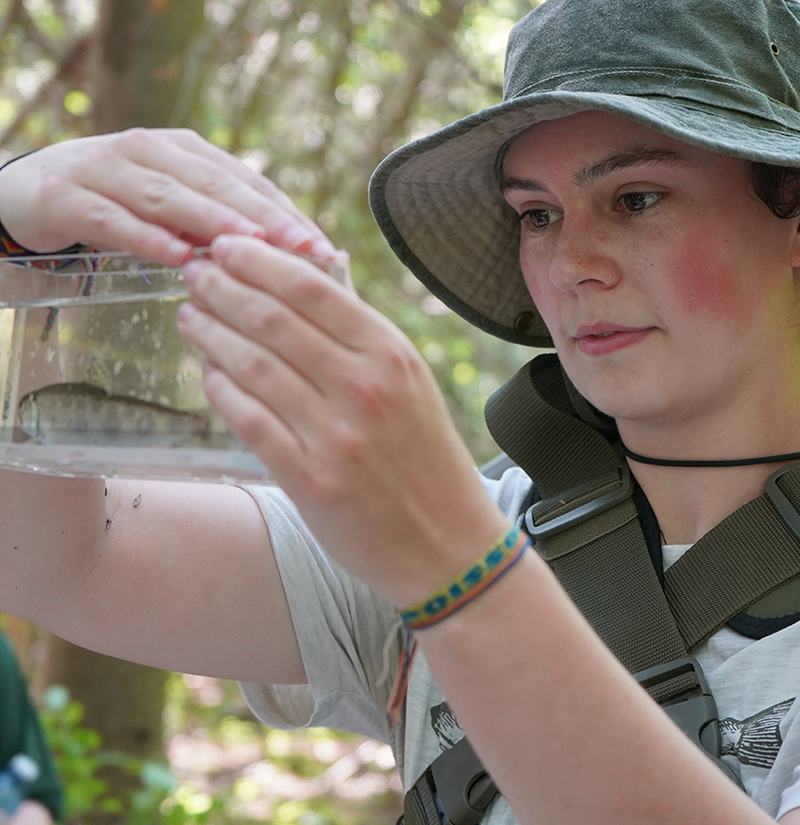
Want to build?expertise?in more than one area of environmental science without starting over??
If you’re?planning a career in environmental and natural resource sciences, choosing a program can feel like a big decision. You might be interested in ecosystem management but also want?to?gain?experience with fish and wildlife. Or?perhaps you’re?passionate about conservation and want to add specialized knowledge in biodiversity and research.
At Fleming College, you may not have to choose just one path.?
Through flexible?credit-transfer?pathways in the School of Environmental and Natural Resource Sciences (SENRS),?you can work?towards more than one?diploma with just two?additional?semesters of study.?
Ready to explore your options?
Start with one of these three programs and?discover?the?possibilities?of adding a second diploma.?
Conservation Biology?
Explore conservation challenges. Protect biodiversity.?
If? you’re?driven to understand and protect the plants, animals and ecosystems that make up our natural world, Conservation Biology combines field experience with laboratory science and applied research.?
The program focuses on biodiversity and conservation challenges, including the protection of native species and their habitats.?You’ll?explore how scientific information can be used to understand environmental changes,?monitor?species and habitats, and develop practical approaches to conservation.?
Biodiversity and conservation science:?Build?expertise?in species-at-risk conservation and habitat assessment.?
Cutting-edge?laboratory tools:?Gain familiarity with emerging technologies like environmental DNA (eDNA) and?conservation?genetics.?
- Scientific data analysis:?Learn how to collect and interpret data to protect native species and habitats.?
- Gain?experience:?Conservation Biology combines field and laboratory learning, giving you hands-on experience with wildlife surveys, habitat assessments, species identification, and biodiversity monitoring. In your final semester,?you’ll?apply your skills through an applied research project?working in Fleming’s living laboratories.?
- Career fit:?Depending on your interests, you?could?pursue roles such as Biological Technician, Conservation Technician, Aquatic Biology Technician, Fisheries Technician, Species at Risk Technician or Wildlife Resources Technician.?
Ecosystem Management Technician?
Monitor the environment. Protect the future.?
Want?to understand the bigger picture of how ecosystems work and how people interact with them??
The Ecosystem Management Technician program takes?a holistic approach?to environmental management.?You’ll?study the planet and how it functions while exploring how human activity affects the natural world and how environmental professionals can help address today's ecological challenges.?
The program incorporates elements of forestry, conservation biology, wildlife?management?and environmental assessment, giving you a broad understanding of ecological issues and practical approaches to addressing them.?
- Ecosystem fundamentals:?Study terrestrial, aquatic, and?restoration?ecology, environmental monitoring, and resource inventories.?
- Applied research methods:?Learn how to design environmental sampling procedures and address real-world ecological challenges.?
- Gain?experience:?This hands-on program?takes?your learning beyond the classroom.?You’ll?participate?in real-world monitoring projects, conduct field research,?and work in partnership with outside organizations.?A?mandatory two-week, 80-hour field placement?gives?you?the opportunity to apply your skills in a professional setting and gain valuable work experience.?
- Career fit:?Graduates?will?find opportunities with conservation authorities, not-for-profit organizations, consulting?firms?and government agencies, including organizations such as the Ministry of Natural Resources and Parks Canada.?
Fish and Wildlife Technician?
Fisheries, Wildlife, Habitat. Stewardship?in?action.?
If?you’re?passionate about fish,?wildlife?and the habitats they depend on, the Fish and Wildlife Technician program offers hands-on training to turn that interest into a career.?
You’ll?learn how professionals?monitor?and manage fish and wildlife populations, assess?habitats?and collect the information needed to support conservation and sustainable resource management. The program combines classroom and laboratory learning with extensive field experience, giving you the opportunity to develop practical skills in real-world settings.?
- Core ecological sciences:?Master practical skills and gain knowledge in fisheries, wildlife, and habitat management.?
- Population assessment techniques:?Build?expertise?in the specific methods used to?monitor?and evaluate fish and wildlife populations.?
- Sustainable resource strategies:?Learn how to analyze data to support ongoing conservation and resource management goals.?
- Gain?experience:?If you learn best by?doing,?you’ll?have plenty of opportunities to put your skills to work. A key part of the program is the?immersive?five weeks of field schools, where you’ll develop practical skills?and?gain experience in?boat handling, live trapping, fish netting, sampling and tagging, electrofishing, habitat assessment, wetland classification, bird banding, use of wildlife monitoring technologies, and so much more.?
- Career fit:?Graduates can find opportunities with government agencies, conservation organizations, consulting firms, non-profit?organizations?and other employers involved in the management and protection of fish, wildlife,?and their habitats.?
Build on Your First Diploma?
You?don’t?have to limit yourself to one area of environmental science. Fleming’s flexible pathways let you build on your first diploma, develop complementary skills, and work toward an?additional?credential without?starting from scratch.?
Whether your interests lie in conservation, fish and wildlife, or ecosystem management, you can create an educational path that reflects your career goals.?
Explore SENRS?programs today?and?map out a dual-credential?pathway that’s right for you.?
Quick Links?to SENRS Program Pages:?
- Conservation Biology?
- Ecosystem Management Technician?
- Fish and Wildlife Technician (Optional Co-op)
More information:
communications@flemingcollege.ca
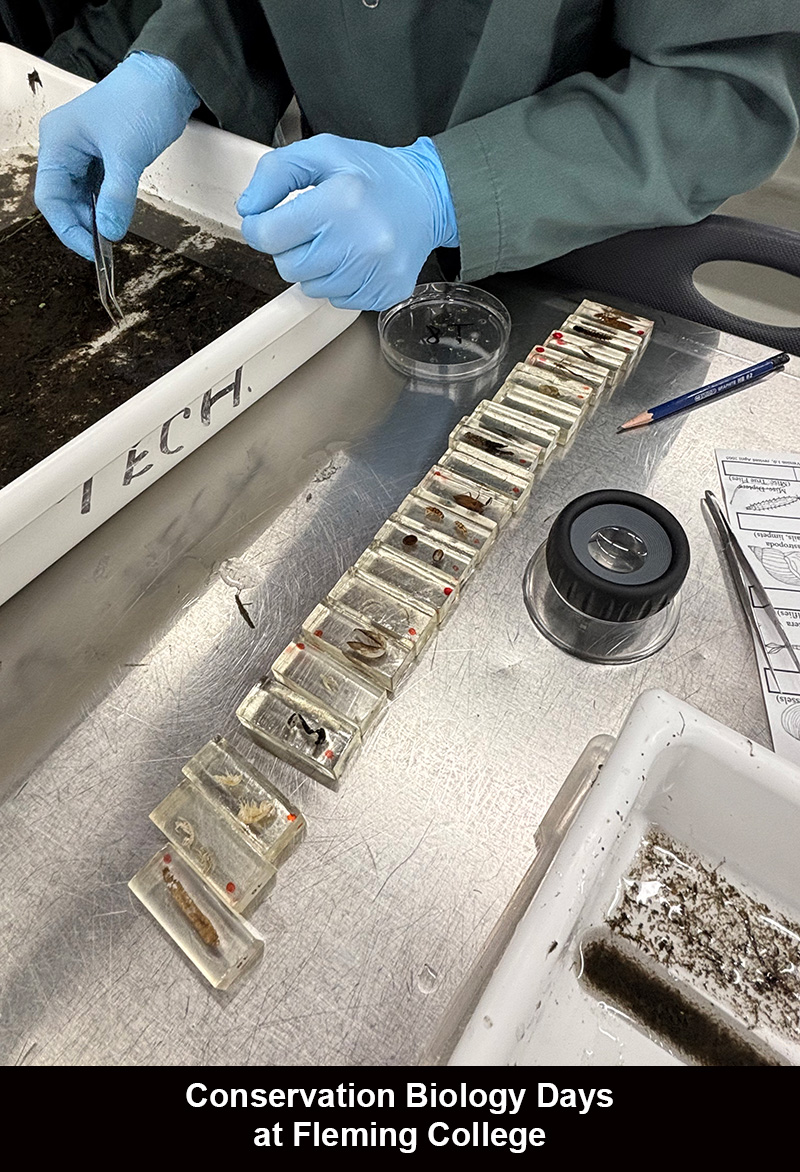
We’re proud to celebrate the success of our second annual Conservation Biology Days at Fleming College’s Frost Campus!
Over the course of three fun-filled educational days, Fleming welcomed 85 local Grade 11 and 12 Science and Environmental Specialist High Skills Major students for an immersive, hands-on experience in conservation biology.
Hands-On Learning in Action
High school students rotated through a series of 30-minute interactive workshops and experiences designed to showcase different areas of conservation biology:
- Vertebrate Anatomy: Students explored wildlife anatomy and physiology through hands-on dissection in our wildlife lab.
- Pollinator Garden: Participants engaged with a living laboratory to see conservation in action and understand the importance of pollinators. They created seed balls compiled of native plant and wildflower seeds to take home with them.
- Benthic Invertebrate Identification: Students examined aquatic organisms to learn how they help assess waterway health.
- Microscope Parasitology Lab: Using microscopes, students discovered the hidden world of microscopic organisms and their role in ecological balance. Prizes were awarded to the students with the closest count.
These experiential learning rotations gave students a dynamic, engaging glimpse into the diverse opportunities within conservation biology and what if feels like to learn at Fleming.
Exploring Beyond the Classroom
In addition to the lab-based activities, students had the opportunity to visit our Fish Hatchery, where they learned about aquaculture practices including fish production for food, conservation, and ornamental purposes. This experience added another valuable dimension to their visit.
Discovering Campus Life
While on Frost Campus, students were encouraged to explore everything the School of Environmental and Natural Resources has to offer. From modern classrooms and specialized labs to welcoming common spaces and scenic outdoor areas, the Frost Campus is designed to foster collaboration, creativity, and hands-on learning.
Inspiring Future Environmental Leaders
Conservation Biology Days continue to be an incredible initiative, made possible by the dedication of our Conservation Biology program experts. Their passion for sharing knowledge and creating memorable experiences for prospective students truly shines through during experiences like this, as they showcase meaningful environmental or science-related careers that connect with real-world learning opportunities.
At Fleming, we look forward to building on this momentum at Frost Campus, inspiring the next generation of environmental leaders in the years ahead!
Learn more about the Conservation Biology program.
To request more information about Conservation Biology Days, e-mail communications@flemingcollege.ca

The energy was vibrant at the Peterborough Memorial Centre on June 9 and 10 as the Fleming College community came together for our 59th Convocation. Across five ceremonies over two incredible days, we celebrated the hard work, resilience, and achievements of more than 4,600 graduates.
Representing 93 programs across all of our academic schools including Health and Community Services, Trades and Technology, Environmental and Natural Resource Sciences, Art + Design, Business and Information Technology, General Arts and Sciences, and Fleming College Toronto, the Class of 2026 is officially ready to make an impact.
Opening Ceremony and Remarks
Each ceremony opened with a beautiful Honour Song by Meegwans Snake, a special gift recognizing the dedication of the graduating class, followed by a meaningful land acknowledgement from Associate Vice President, Health Nick Stone, who served as the Master of Ceremonies.
Members of the Board of Governors welcomed graduates, praising their hard work, commitment, and perseverance. Fleming College Interim President Dr. Theresa Knott extended her congratulations, encouraging the Class of 2026 to keep discovering and imagining new possibilities for their future.
Words of Wisdom from our Valedictorians
Our valedictorians delivered powerful messages, reflecting on shared challenges and achievements, supportive faculty and staff, and the strong bond developed within the Fleming community. The Class of 2026 Valedictorians are:
- Michah Strutzenberger, Paramedic Program
- Leah Falardeau, Customs Border Services Administration
- Amber Carter, Conservation Biology
Recipient of the Rodger Worboy Memorial Award sponsored by Colleen Worboy. - Carson Makie, Electrical Engineering Technology (Co-op)
- Lochana Dilanjan Abeysiriwardena, Global Business Management
Governor General's Award
During the June 9, 2 p.m. ceremony, President Knott presented the Governor General’s Collegiate Bronze to Medal Esthetician – Spa Management program graduate Natalie Sudano. Natalie received the award for achieving the highest overall average upon graduation from a College diploma program.
Welcome to the Alumni Family!
During the ceremony, the focus turned to the future as our newest graduates were officially welcomed into the Fleming alumni community. A lineup of local graduates took the stage to share words of wisdom from their own career journeys and remind the Class of 2026 that their connection to the College continues long after crossing the stage.
We were honoured to hear from Fleming alumni guest speakers:
- Sara Mullen (Paramedic ’07)
- Laura Gordenier (Project Management ’14)
- Peter Carter (Fish and Wildlife Technician ’97 & Fish and Wildlife Technology ’98)
- Jordan Medland (Welding and Fabrication Technician '22)
- Mike Temple (Business Administration - Human Resources Management '06)
The alumni speakers expressed the value of belonging to a global network of Fleming alumni, encouraging the new graduates to stay in touch, lean on Fleming’s supportive community, and take full advantage of the lifelong benefits available to them.
Relive the Moments
Whether you want to watch your own momentous walk across the stage or share a moment with family and friends who couldn't be there in person, you can access recordings of each ceremony on our YouTube channel.
We’ve also captured the best moments, behind-the-scenes excitement, and plenty of photos on our social channels. Check out the highlights on @flemingcollege social channels and Global News, and join the conversation using the hashtag #FlemingGrad:
Congratulations, Class of 2026!
We cannot wait to see what you achieve next!
More information:
communications@flemingcollege.ca
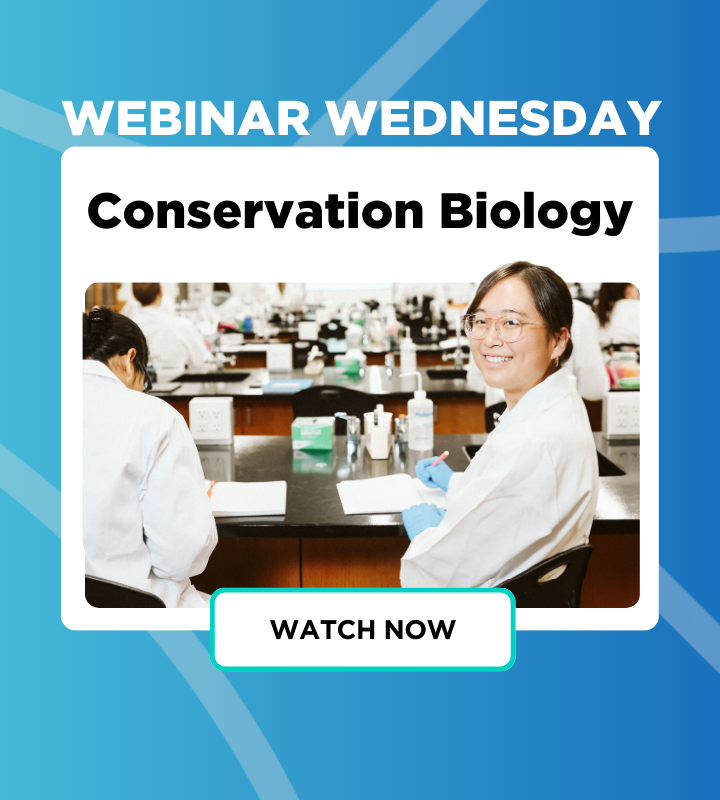
Last week, we hosted a Webinar Wednesday session shining a spotlight on our Conservation Biology program. If you couldn’t join us virtually, don’t worry. Here are the highlights from the session, along with the full recording below to watch at your convenience.
Whether you’re passionate about animal conservation, curious about hands-on field and lab research, or exploring a future in protecting species and ecosystems, this recap highlights why Fleming College’s Conservation Biology program is a strong place to start.
Fleming College’s Conservation Biology program, within the School of Environmental and Natural Resource Sciences, is recognized for its hands-on learning, applied research, and expert faculty with real-world conservation experience. In this Webinar Wednesday session, Program Coordinator Thom Luloff and Student Recruitment Officer Brooke Lynch shared insights into what students can expect from the program.
WHY CONSERVATION BIOLOGY AT FLEMING COLLEGE?
While hands-on labs and fieldwork are a big part of the Conservation Biology program, students quickly discover that learning happens together. You’ll work in small groups alongside classmates and faculty, gaining experience through field surveys, lab work, and real conservation projects. Whether you’re collecting data, problem-solving as a team, or getting involved in student-led initiatives, you become part of a supportive learning community. Many students leave the program not only with practical skills, but with strong connections and a network that helps them take their next step in conservation.
THREE KEY TAKEAWAYS
- You’ll learn by doing both, in the field and in the lab
The Conservation Biology program is hands-on from the start. Students spend time outdoors conducting field surveys and monitoring wildlife, while also gaining experience in labs through techniques like environmental DNA, anatomy, and data analysis. Learning goes beyond lectures and focuses on real conservation skills you can use in the field.
- You’ll work closely with people who care about the same things you do
With smaller class sizes, students work closely with instructors who are actively involved in conservation research and partnerships. Learning often happens through group fieldwork, lab projects, and applied research, giving students regular opportunities to collaborate, ask questions, and learn directly from faculty with real-world experience.
- The program connects you to conservation beyond campus
Students gain experience working with conservation organizations, government partners, and community initiatives throughout the program. These experiences build toward an applied research capstone in the final semester, where students design and carry out their own conservation project. Along the way, students build professional connections and practical skills that help prepare them for careers or further study in conservation.
CHECK OUT THE FULL WEBINAR:
HAVE QUESTIONS OR WANT TO LEARN MORE?
If this session sparked your interest or you’re considering a future as a Conservation Biologist, we’d love to connect with you. Our Student Recruitment team and program representatives are here to answer questions, help you explore admission pathways, or guide you toward the right next step. Be sure to check out our upcoming Webinar Wednesday sessions online. We’re hosting new topics in the months ahead and it’s a great way to learn more about programs that excite you.
CAN’T?MAKE A LIVE EVENT??
No problem! We’ll save video recordings on Fleming’s official YouTube channel. And?don’t?worry, Program Coordinators are always available to answer your questions!???
For more information about Webinar Wednesdays, please contact Student Recruitment.?
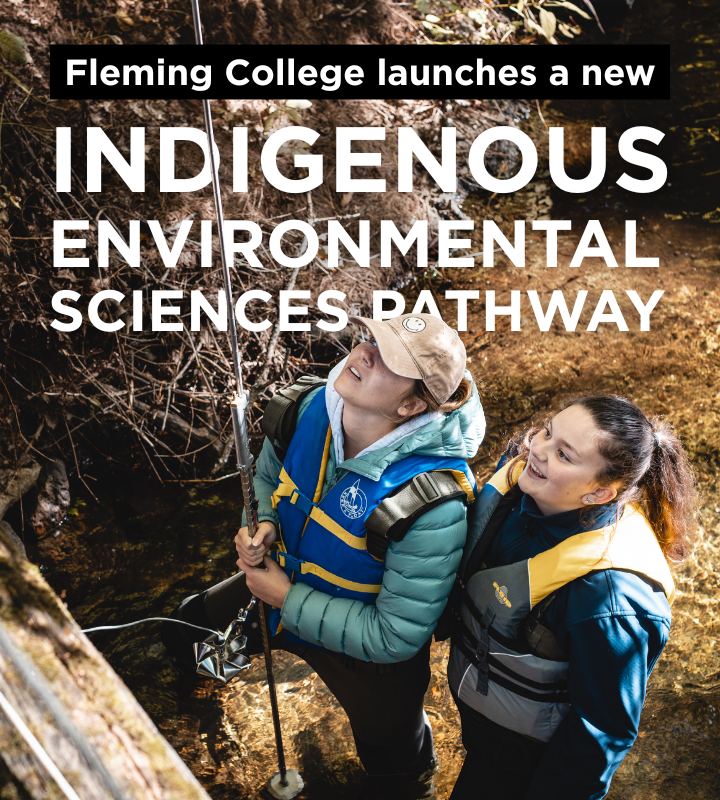
Peterborough, ON – (August 14, 2025) – A new pathway program at Fleming College is opening doors for Indigenous learners interested in pursuing careers in environmental and natural resource sciences.
Launching on September 15, 2025, the Indigenous Environmental Sciences (IES) Pathway offers a supportive and accessible transition into college, with no high school diploma required for admission and no tuition costs for Indigenous students. Delivered through a combination of online and in-person classes at Fleming’s Sutherland campus in Peterborough, the pathway provides a supportive, small-class learning environment designed to help students succeed.
This program reflects the college’s commitment to reconciliation and education by creating an inclusive space where Indigenous learners can thrive and explore meaningful careers in environmental stewardship.
Upon successful completion, students will be eligible to enter a range of diploma and certificate programs within Fleming’s School of Environmental and Natural Resource Sciences (SENRS), including:
In addition to gaining up to five transfer credits, graduates of the IES Pathway program will be well-prepared academically and supported holistically through services offered by Indigenous Student Services and Fleming’s academic departments.
Applications are now open, and spaces are limited. To learn more or to apply, visit:
https://flemingcollege.ca/indigenous-environmental-sciences-pathway or contact IES@flemingcollege.ca
About Fleming College
Fleming College respectfully acknowledges that we are situated on Michi Saagiig Anishinaabeg lands and territory. Located in the heart of Central Ontario, Fleming College has campus locations in Peterborough, Lindsay, Cobourg and Haliburton. Named for famous Canadian inventor and engineer Sir Sandford Fleming, the college features more than 85 full-time programs in Arts and Heritage, Business, Environmental and Natural Resource Sciences, General Arts and Sciences, Health and Wellness, Justice and Community Development, Skilled Trades and Technology, and Continuing Education. Fleming College has more than 8,500 full-time and 445 part-time students, and 95,000 alumni.
For more information, please contact:
IES@flemingcollege.ca
For media inquiries, please contact:
Elise Moore
Communications Officer
Elise.moore@flemingcollege.ca
Find us online:
Web: flemingcollege.ca
Facebook: facebook.com/flemingcollege
X: @FlemingCollege on Twitter
Instagram: @flemingcollege on Instagram
TikTok: @flemingcollege on TikTok

Peterborough, ON (October 4, 2024) – Six Fleming College alumni have been selected as nominees for the distinguished Premier’s Awards this year.
Founded in 1992, the Premier’s Awards are administered by Colleges Ontario, the advocacy voice for Ontario’s 24 colleges.
This annual celebration recognizes the important social and economic contributions college graduates make on a provincial and global scale. Colleges can nominate alumni in seven categories: Skilled Trades, Business, Community Services, Creative Arts and Design, Health Sciences, Recent Graduate, and Science, Technology and Engineering.
The Fleming College nominees for 2024 are:
Skilled Trades
Dylan Stadtke: Mechanical Techniques Plumbing (2016), HVAC Technician (2018)
The co-owner of Pristine Plumbing Peterborough, Dylan’s business is thriving, reflecting his dedication to high professional standards and community involvement. In addition to two Fleming diplomas, Dylan completed the Construction Leadership Program at Fleming in 2022, demonstrating his commitment to leadership and excellence in his field. Beyond his professional achievements, Dylan is deeply committed to men’s mental health and is a strong proponent of promoting women in trades. His dedication to these important issues underscores his role as a leader and innovator in his industry.
Health Sciences
Francine Sam: Practical Nursing (2024)
Francine Sam began her nursing career while living in Australia where she was enrolled in university for nursing. She ended up moving to a rural village in northern Uganda where she did humanitarian work for seven years alongside her young family, caring for vulnerable children and their communities. It was through her experiences there that compelled her to further her education at Fleming College. Francine recently graduated as a Practical Nurse and was the Valedictorian of the School of Health and Community Services and is now working as a Registered Practical Nurse in the Emergency Department at her local hospital.
Community Services
Heather George: Museum Management and Curatorship (2008)
Heather George is an influential leader in the Canadian museum sector. As Executive Director of the Woodland Cultural Centre, she advocates for Indigenous perspectives and creates opportunities for Indigenous artists and curators. As the Past President of the Canadian Museum Association and current Vice President for the Indigenous Heritage Circle, Heather advances the Truth and Reconciliation Commission's Call to Action #67, urging museums to engage in reconciliation with Indigenous peoples. In 2021, she led a national review of museum policies in relation to the United Nations Declaration on the Rights of Indigenous Peoples (UNDRIP). This review involved Indigenous communities and museum professionals, culminating in recommendations to change sector standards and develop federal repatriation laws.
Science, Technology and Engineering
Matthew Wilson: Conservation Biology (2024)
In 2022, Matthew Wilson made a significant decision to leave his career in the shipping industry and return to school. He was driven by a desire to pursue a more meaningful path, he chose to focus on addressing the pressing environmental and natural world challenges facing our planet today. Matt has always had a deep passion for animals and nature. Over the years, he has worn many hats, including biologist, arboricultural field technician, and research assistant. Recently, Matt enrolled in the Conservation Biology Program at Fleming College, where he graduated as Valedictorian of the School of Environmental and Natural Resources. Driven by a strong desire to make a positive impact on our climate, Matt is committed to preserving our natural legacy for future generations.
Recent Graduate
Jacques Graveline: Business Administration-Marketing (2022)
Jacques Graveline was a Student Ambassador for Fleming Indigenous Student Services and Fleming Student Administrative Council. He graduated from Fleming College with an Advanced Diploma in Marketing in 2022 and has been extremely involved in the College since. Elected as Board Chair at Fleming SAC in 2023, he passionately advocates for students to ensure an exceptional college experience. Jacques is a leader in the Peterborough community, supporting the United Way homeless initiative and Dragon Boat Races for Breast Cancer, while creating and implementing marketing strategies as the Marketing Assistant at Bridges Peterborough. Jacques is currently the Governance and Advocacy Coordinator with the Fleming Student Administrative Council.
Creative Arts and Design
Aaron Robitaille: Graphic Design-Visual Communication Advanced Diploma (2020)
A 2020 graduate of Fleming College’s Graphic Design (GDV) program and recipient of the Muriel Cooper Award for Design Excellence, Aaron launched "Aaron Robitaille Design" and developed notable branding for Haven Brewing Company. Her expertise spans large-scope murals, websites, and mentoring local artists, with work featured across Ontario. She is currently an instructor at Fleming College and acts as Vice Chair and member on Artspace’s Board of Directors, Peterborough’s only artist-run centre. The GDV program’s comprehensive training and community partnerships were pivotal in her success, fostering a blend of art and design that continues to drive her career and contributions to the local arts community.
The Premier’s Award nominees will be recognized at a gala event in Toronto on November 25, where the winners will be announced.
To nominate a deserving Fleming graduate for a 2025 Premier’s Award, please contact the Advancement and Alumni Relations Office at 705-749-5530 ext. 1197 or email alumni@flemingcollege.ca.
For media enquiries, please contact:
Asher Lurie
Director, Communications
asher.lurie@flemingcollege.ca
About Fleming College
Fleming College respectfully acknowledges that we are situated on Michi Saagiig Anishinaabeg lands and territory. Located in the heart of Central Ontario, Fleming College has campus locations in Peterborough, Lindsay, Cobourg and Haliburton. Named for famous Canadian inventor and engineer Sir Sandford Fleming, the college features more than 100 full-time programs in Arts and Heritage, Business, Environmental and Natural Resource Sciences, General Arts and Sciences, Health and Wellness, Justice and Community Development, Skilled Trades and Technology, and Continuing Education. Fleming College has more than 6,800 full-time and 10,000 part-time students, and 80,000 alumni.
Web: flemingcollege.ca
Facebook: facebook.com/flemingcollege
Twitter: @FlemingCollege on X
Instagram: @flemingcollege on Instagram
TikTok: @flemingcollege on TikTok
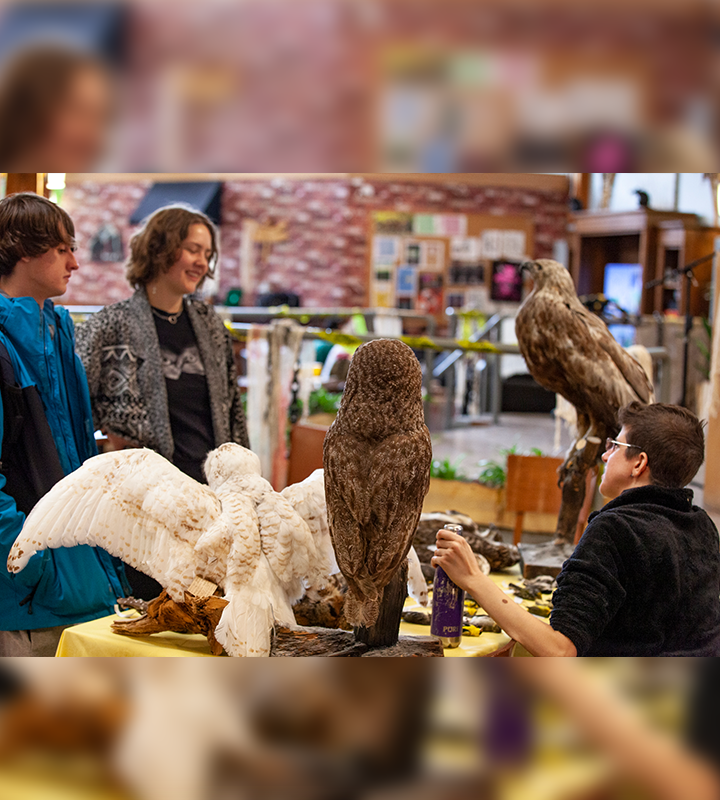
Lindsay, ON – (Jan. 31, 2023) – Inspired by the Conservation Biology program at Fleming College’s Frost Campus and motivated by an international effort to save native bird populations throughout North America, Fleming’s staff and students are working toward becoming Ontario’s first official bird-friendly college campus.
It is estimated that up to one million birds die in North America each year due to window collisions, making it one of the leading causes of bird population decline in Canada and around the world. Finding a way to address this issue is a big part of avian conservation.
With the help of Conservation Biology students, the School of Environmental and Natural Resource Sciences launched a pilot program aimed at bird conservation. That program evolved into the Fleming Bird Conservation Committee (FBCC).
Composed of students, faculty, and college representatives, the FBCC’s goal is to transform the Frost Campus into Ontario’s first Bird Friendly college campus. While many Canadian universities have embraced becoming bird-friendly campuses, few colleges have followed the same route.
There is a specific certification process for a bird-friendly designation. Administered through FLAP Canada, it involves threat reduction, habitat generation and the implementation of policy that mitigates harm to birds.
The FBCC is already hard at work, installing Feather Friendly window protection and protecting and enhancing the natural habitat around Frost Campus.
That work has already been recognized. In November the Frost Student Association was awarded a plaque from Feather Friendly, recognizing the efforts it and the FCBB have done to make the Frost Campus, Auk’s Lodge Frost’s first bird-friendly building.
Conservation Biology students have also embarked on a multi-year research project at the campus, with the help of Feather Friendly. Students are currently designing a research program which will monitor the effectiveness of bird-deterrent decals, comparing treated and untreated windows.
The project will help accomplish the FBCC’s goal of making Frost Campus windows bird friendly, while providing an amazing research opportunity for students.
The FBCC is also actively involved in conducting education outreach through the School of Environmental and Natural Resource Sciences. It has already hosted two highly successful community public awareness events focusing on what can be done to mitigate bird window collisions.
About Fleming College
Fleming College respectfully acknowledges that we are situated on Michi Saagiig Anishinaabeg lands and territory. Located in the heart of Central Ontario, Fleming College has campus locations in Peterborough, Lindsay, Cobourg and Haliburton. Named for famous Canadian inventor and engineer Sir Sandford Fleming, the college features more than 100 full-time programs in Arts and Heritage, Business, Environmental and Natural Resource Sciences, General Arts and Sciences, Health and Wellness, Justice and Community Development, Skilled Trades and Technology, and Continuing Education. Fleming College has more than 6,800 full-time and 10,000 part-time students, and 80,000 alumni.
For more information, please contact:
Sarah Deeth
Communications Officer
sarah.deeth@flemingcollege.ca
705-749-5530 ext. 1161
Web: flemingcollege.ca
Facebook: facebook.com/flemingcollege
Twitter: @FlemingCollege
Instagram: @flemingcollege