Webinar Wednesday Recap: Forestry Technician and Forestry Techniques
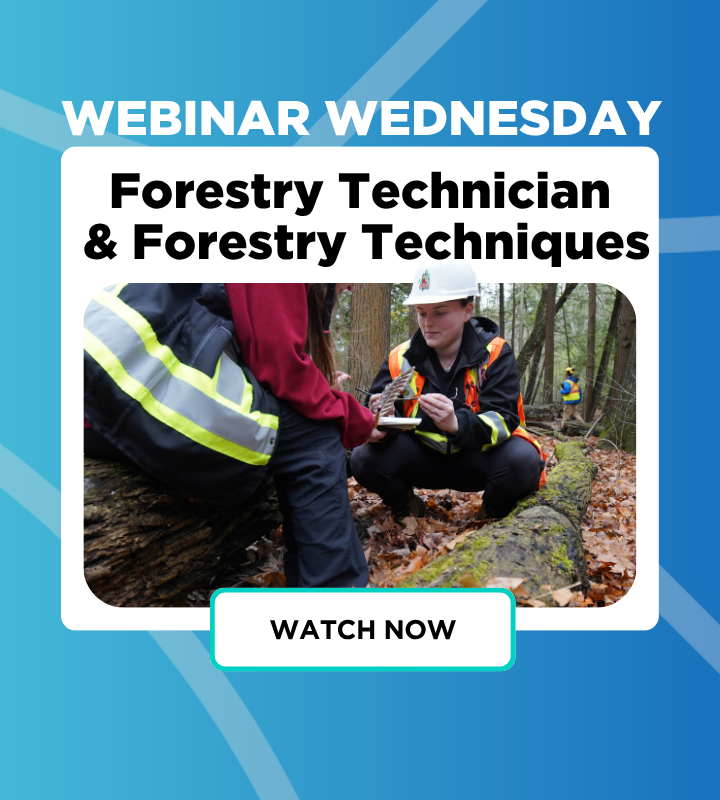
Last week, we hosted a Webinar Wednesday session highlighting our Forestry Technician – Adaptive Practices (Co-op) and Forestry Techniques programs. If you couldn’t join us live, don’t worry. Below are some key highlights from the session, along with the full recording to watch at your convenience.
Fleming College’s forestry programs, within the School of Environmental and Natural Resource Sciences, are known for their hands-on learning, strong industry connections, and immersive outdoor experiences. Prospective students joined Brooke Lynch from Student Recruitment and Dr. Benjamin Walters, Program Coordinator, to learn more about what to expect from these career-focused programs and the opportunities available in the forestry sector.
WHY FORESTRY AT FLEMING?
Fleming’s forestry programs are designed to prepare students for real-world careers in a dynamic and essential industry. With a strong focus on applied learning, students develop practical skills in areas like forest measurement, conservation, geographic information systems (GIS), and forestry operations. From field camps to equipment training, the program blends classroom knowledge with hands-on experience, helping students graduate with the confidence and skills needed to succeed in a wide range of forestry careers.
THREE KEY TAKEAWAYS
1. Explore a wide range of career opportunities in a growing industry
Forestry is a diverse and in-demand field with career paths ranging from wildfire management and urban forestry to conservation, GIS, and logging operations. Students graduate with skills that can lead to roles in both fieldwork and office-based environments, with opportunities to grow into leadership or specialized positions over time. The breadth of the industry means graduates can tailor their careers to match their interests.
2. Learn by doing through hands-on, real-world experiences
A major highlight of the program is its strong emphasis on applied learning. Students gain experience by using industry equipment like chainsaws and forestry simulators, participating in greenhouse growing projects, and completing immersive field camps in locations like Algonquin Park. One standout course simulates a real workplace, where students create maps, collect field data, analyze results, and present findings, closely mirroring what they’ll do in their careers. Students also can contribute to applied research projects like the Kirtland’s Warbler habitat restoration, gaining hands-on experience while supporting real-world environmental conservation efforts.
3. Flexible pathways with opportunities for advancement
Students can choose between a one-year Forestry Techniques certificate or a two-year Forestry Technician diploma, with the ability to transition between programs as their goals evolve. The diploma program includes a co-op term, giving students valuable industry experience before they graduate. It also opens doors to professional designations and university pathways, with many students continuing their education or advancing quickly within the workforce.
CHECK OUT THE FULL WEBINAR:
HAVE QUESTIONS OR WANT TO LEARN MORE?
If this session sparked your interest or you’re considering a future as a future in forestry, we’d love to connect with you. Our Student Recruitment. team and program representatives are here to answer questions, help you explore admission pathways, or guide you toward the right next step. Be sure to check out our upcoming Webinar Wednesday sessions online. We’re hosting new topics in the months ahead and it’s a great way to learn more about programs that excite you.
CAN’T MAKE A LIVE WEBINAR WEDNESDAY EVENT?
No problem! We’ll save video recordings on Fleming’s official YouTube channel. And don’t worry, Program Coordinators are always available to answer your questions!
For more information about Webinar Wednesdays, please contact Student Recruitment.