Webinar Wednesday Recap: Conservation Biology
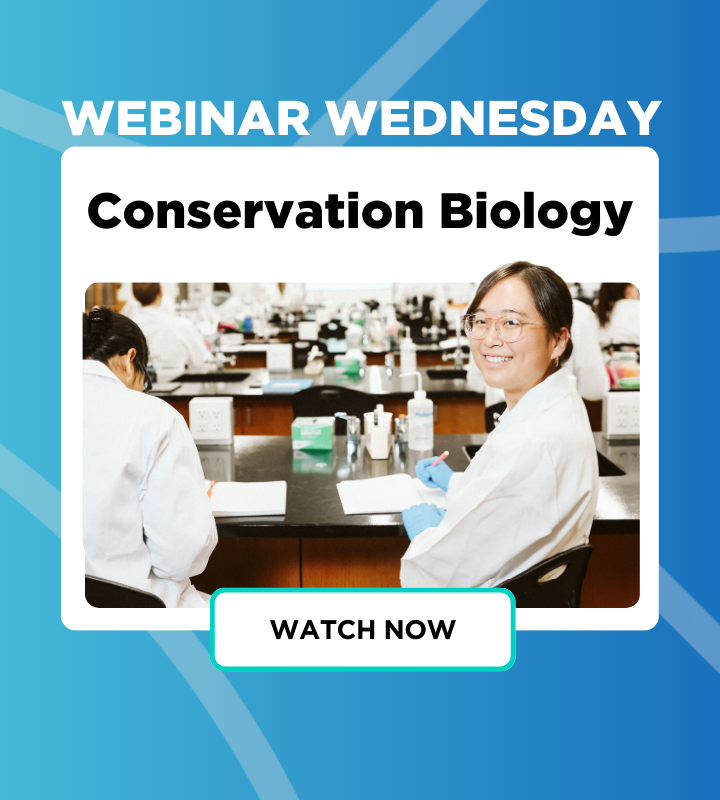
Last week, we hosted a Webinar Wednesday session shining a spotlight on our Conservation Biology program. If you couldn’t join us virtually, don’t worry. Here are the highlights from the session, along with the full recording below to watch at your convenience.
Whether you’re passionate about animal conservation, curious about hands-on field and lab research, or exploring a future in protecting species and ecosystems, this recap highlights why Fleming College’s Conservation Biology program is a strong place to start.
Fleming College’s Conservation Biology program, within the School of Environmental and Natural Resource Sciences, is recognized for its hands-on learning, applied research, and expert faculty with real-world conservation experience. In this Webinar Wednesday session, Program Coordinator Thom Luloff and Student Recruitment Officer Brooke Lynch shared insights into what students can expect from the program.
WHY CONSERVATION BIOLOGY AT FLEMING COLLEGE?
While hands-on labs and fieldwork are a big part of the Conservation Biology program, students quickly discover that learning happens together. You’ll work in small groups alongside classmates and faculty, gaining experience through field surveys, lab work, and real conservation projects. Whether you’re collecting data, problem-solving as a team, or getting involved in student-led initiatives, you become part of a supportive learning community. Many students leave the program not only with practical skills, but with strong connections and a network that helps them take their next step in conservation.
THREE KEY TAKEAWAYS
- You’ll learn by doing both, in the field and in the lab
The Conservation Biology program is hands-on from the start. Students spend time outdoors conducting field surveys and monitoring wildlife, while also gaining experience in labs through techniques like environmental DNA, anatomy, and data analysis. Learning goes beyond lectures and focuses on real conservation skills you can use in the field.
- You’ll work closely with people who care about the same things you do
With smaller class sizes, students work closely with instructors who are actively involved in conservation research and partnerships. Learning often happens through group fieldwork, lab projects, and applied research, giving students regular opportunities to collaborate, ask questions, and learn directly from faculty with real-world experience.
- The program connects you to conservation beyond campus
Students gain experience working with conservation organizations, government partners, and community initiatives throughout the program. These experiences build toward an applied research capstone in the final semester, where students design and carry out their own conservation project. Along the way, students build professional connections and practical skills that help prepare them for careers or further study in conservation.
CHECK OUT THE FULL WEBINAR:
HAVE QUESTIONS OR WANT TO LEARN MORE?
If this session sparked your interest or you’re considering a future as a Conservation Biologist, we’d love to connect with you. Our Student Recruitment team and program representatives are here to answer questions, help you explore admission pathways, or guide you toward the right next step. Be sure to check out our upcoming Webinar Wednesday sessions online. We’re hosting new topics in the months ahead and it’s a great way to learn more about programs that excite you.
CAN’T MAKE A LIVE EVENT?
No problem! We’ll save video recordings on Fleming’s official YouTube channel. And don’t worry, Program Coordinators are always available to answer your questions!
For more information about Webinar Wednesdays, please contact Student Recruitment.