Webinar Wednesday Recap: Biotechnology – Advanced
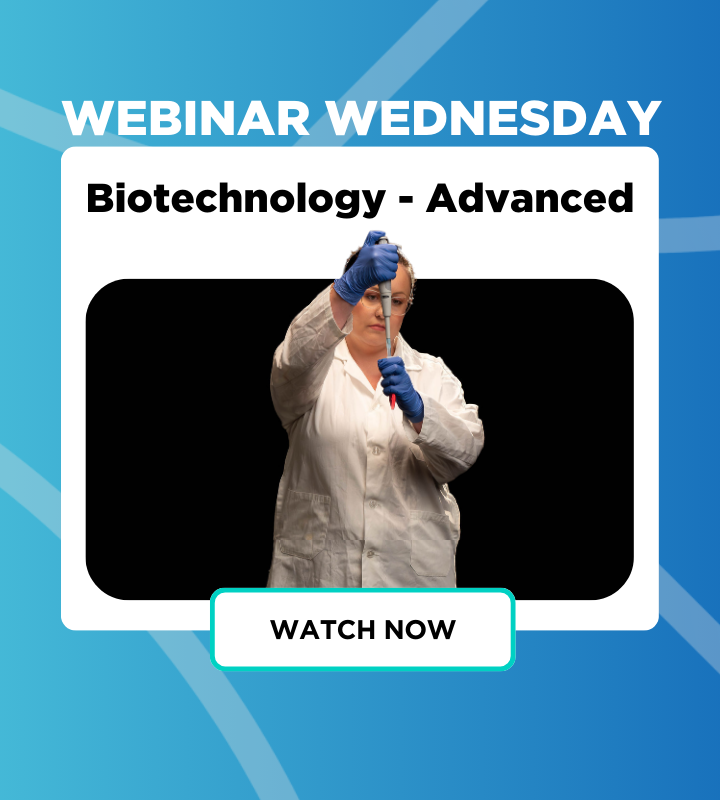
Last week, we hosted a Webinar Wednesday session shining a spotlight on our Biotechnology – Advanced program. If you couldn’t join us virtually, don’t worry. Below are the highlights from the session, along with the full recording below to watch at your convenience.
Fleming College’s Biotechnology program, within the School of Health and Community Services, is known for its intensive lab training, industry-focused curriculum, and strong emphasis on real world application. Prospective students joined Nick from Student Recruitment, Sol from Fleming’s International team, and Amanda Rochon, Program Coordinator for the program, to learn more about what to expect.
Why Biotechnology at Fleming?
The Biotechnology program at Fleming is designed to prepare students for real lab environments from day one. With a strong mix of foundational science, extensive hands-on lab training, and a dedicated field placement semester, students build the technical skills and professional confidence employers are looking for. Graduates leave with significant lab experience, industry exposure, and a flexible skill set that can lead to opportunities across biotech, research, quality control, analytical testing, and related science sectors.
For students who already hold a science-based diploma or degree, a Fast Track option is also available. Qualified applicants can enter directly into semester 3, completing the advanced lab focused semesters and the placement in a shorter timeframe. This pathway allows students to strengthen their hands on experience and add an industry placement to their academic background.
Three Key Takeaways
1. A fast, hands-on program with real lab time
The Biotechnology program is structured to build confidence step-by-step. In semesters 1 and 2, students focus on foundational courses such as biology, chemistry, math, physics, scientific communication, and introductory DNA applications. These early semesters are designed to strengthen core knowledge while introducing essential lab techniques and tools.
As students move into semesters 3 and 4, the program becomes more specialized and intensive. Courses expand into molecular biology, microbiology, biochemistry, pharmacology and toxicology, analytical chemistry, lab automation, and quality control and assurance. DNA courses run throughout the program, allowing students to continuously build and refine their skills. This layered structure ensures students feel prepared as they move into more advanced and applied lab work.
2. Students gain nearly 500 hours of hands-on lab training
A major highlight of the webinar was the emphasis on time spent in the lab. Over the first four semesters, students complete close to 500 hours of hands-on lab experience. Training begins with foundational skills such as pipetting, calculations, and safe lab practices, then progresses into complex applications like DNA extraction, quantification, profiling, microbiological analysis, and instrumentation.
Students work with industry relevant tools and techniques, including liquid handling automation, database systems, analytical instruments, and quality control procedures. By the final semester, students are completing advanced DNA projects and competency-based assessments that mirror real workplace expectations. This high volume of lab time helps graduates enter placement and employment with strong technical confidence.
3. A full semester placement with strong career flexibility
Semester 5 is entirely dedicated to a field placement of up to 600 hours. Students work in industry, research, healthcare, environmental, or quality control settings, gaining meaningful experience and professional connections. The placement process is student driven, allowing learners to explore opportunities based on their interests and geographic preferences, with faculty support throughout.
The program also includes professional practice preparation, such as resume development, interview practice, and workplace readiness training. Graduates pursue careers across a wide range of sectors including research institutes, diagnostic labs, fertility clinics, environmental testing facilities, and forensic settings. Some continue into university degree pathways or medical lab technology programs, while others secure employment directly through their placement experience.
CHECK OUT THE FULL WEBINAR:
HAVE QUESTIONS OR WANT TO LEARN MORE?
If this session sparked your interest or you are considering a future in biotechnology, we would love to connect with you. Our Student Recruitment team and program representatives are here to answer questions, help you explore admission pathways, or guide you toward the right next step. Be sure to check out our upcoming Webinar Wednesday sessions online. We’re hosting new topics in the months ahead and it’s a great way to learn more about programs that excite you.
CAN’T MAKE A LIVE WEBINAR WEDNESDAY EVENT?
No problem! We’ll save video recordings on Fleming’s official YouTube channel. And don’t worry, Program Coordinators are always available to answer your questions!
For more information about Webinar Wednesdays, please contact Student Recruitment.