The Fifth Sculptor: Carving a Legacy Out of Stone
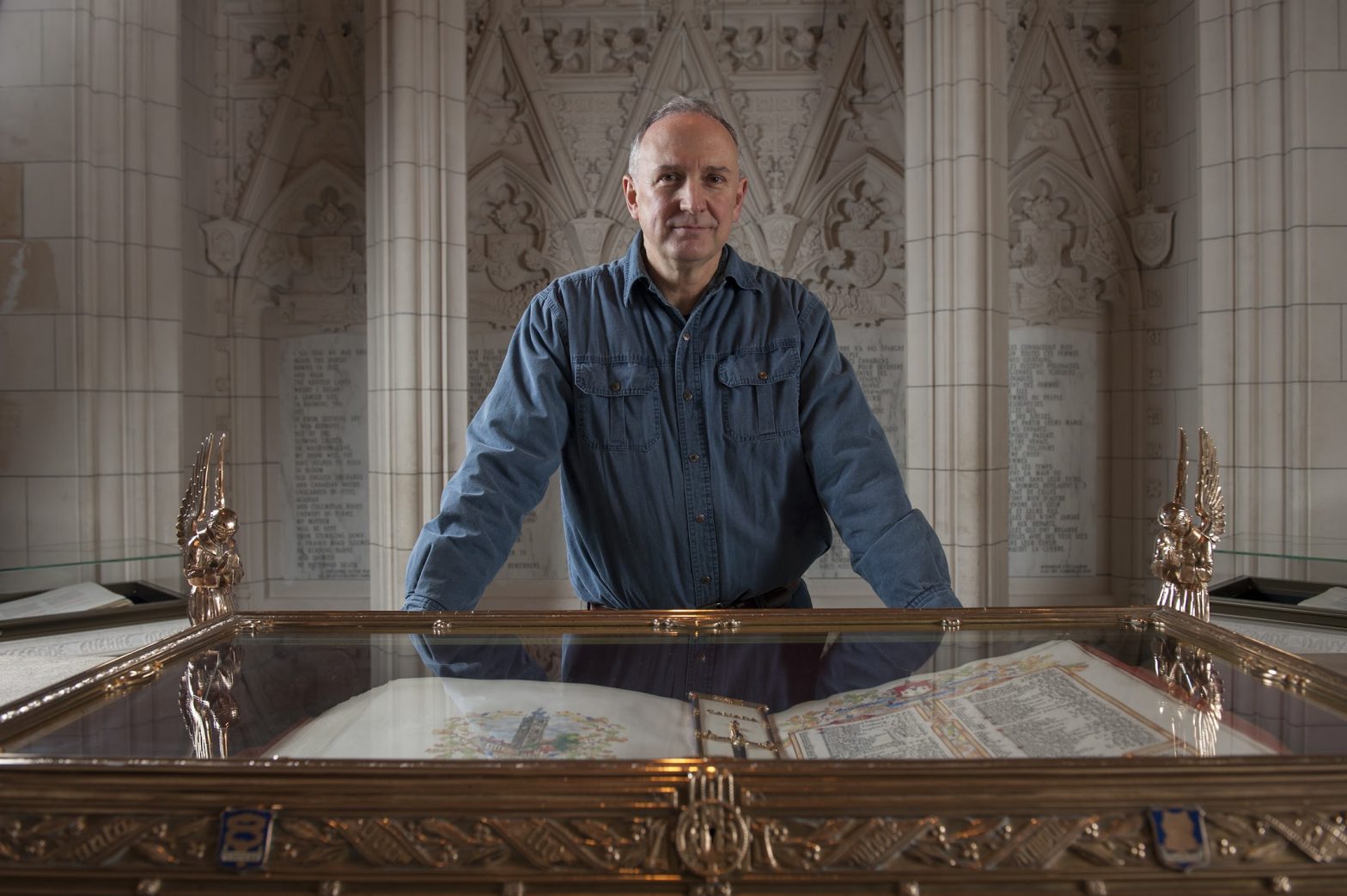
As a child in Peterborough, Phil White spent hours sketching, sculpting, and imagining a life shaped by art. “I was carving and selling wood sculptures in local galleries by the time I was 17,” he recalls. Drawn to Northwest Coast Indigenous art, Phil soon realized that while he truly admired the form, it wasn’t his own cultural voice. That early self-awareness sparked a lifelong pursuit: to carve out a space in Canada’s artistic and historical narrative—literally.
Phil’s journey led him to Fleming College’s renowned Art Conservation Techniques program (since renamed as the Cultural Heritage Conservation and Management program), which he entered at 21. Encouraged by his sister, a professor at Trent University, Phil enrolled and immediately felt at home. “It was a natural fit for my skills,” he says. “The program was intense and foundational, it taught me the science, history, and practical skills behind preserving art and artifacts.” His third-year internship at the Canadian Conservation Institute set the stage for his next chapter – a full-time role at the Canadian War Museum, which he landed the week after graduation.
While building a career in museum conservation, Phil continued sculpting on the side, crafting coats of arms, crests, and traditional carvings. His growing expertise and reputation eventually converged into one of the country’s rarest and most prestigious roles: Dominion Sculptor of Canada.
Becoming Canada’s Dominion Sculptor
Established in 1936, the position of Dominion Sculptor is responsible for the preservation and creation of architectural sculpture on Parliament Hill. Phil had heard about the role during his time at Fleming College. On field trips to Ottawa, he even saw the work of the previous Dominion Sculptor up close. “It’s easier to become Prime Minister than to get this job,” Phil jokes. “There have only been six Dominion Sculptors since its creation.”
When the position opened in 2005, Phil leapt at the chance. “I heard about it and had my application in an hour later,” he says. The rigorous national competition drew 75–80 applicants. The process involved multiple stages: résumés, portfolios, interviews, and extensive vetting. Months later, a letter arrived in the mail—Phil had been chosen. At the time, he was in a management training program at the War Museum, being groomed for a senior leadership role. “I had to tell my director, ‘Thank you for all of the training, but I’ve got another plan,’” he laughs.
Historic Work on Parliament Hill
During his tenure, Phil created some of the most important sculptural works in Canadian history, including the sovereign’s thrones used in the Senate Chamber.
In 2016, ahead of Canada’s 150th anniversary, he was asked to design new thrones for Queen Elizabeth II. The timeline was tight, but Phil delivered. “The hardest part is always getting approvals,” he explains. However, within a week of his first meeting with Senate staff, his throne sketches were approved. He collaborated with top carvers and fabricators to bring the vision to life, ensuring the thrones were completed and installed well before July 1, 2017. Though Queen Elizabeth never sat in the throne herself, it bears her royal cypher. The first monarch to use it was her son, King Charles.
One of his most meaningful projects, however, was redesigning the altars and display cases for the Books of Remembrance, which list the names of Canadians who died in service. Housed in the Peace Tower, the original cases were falling into disrepair. Phil led a multi-year redesign rooted in historical integrity and national symbolism.
The team sourced stone from the same English quarry that produced Canada’s First World War grave markers, a quarry that had been closed for years. “We convinced the owner to reopen it for us,” Phil says. The new designs were unveiled during Remembrance Week in 2014, a massive collaborative project involving more than 75 people.
Royal Sculptures and Memorable Moments
Phil also created two official sculptures of Queen Elizabeth II, a bronze bust in 2007, and a later version in stone. While he didn’t sculpt her from life, he met her during her final official visit to Canada. “She unveiled the model I had created. I was so nervous, all the cameras were on me,” he recalls. Later, his wife asked why he kept rubbing his sleeve. “I was wiping away sweat from nerves. I didn’t want the Queen to have to shake my sweaty hand,” he laughs.
One amusing anecdote from his early sculpture of the Queen: after presenting the clay model to Parliament, a royal aide leaned in and said, “Can you make her look a little younger?” So, Phil gently smoothed a few wrinkles.
Legacy in Stone
Phil White’s fingerprints are etched into the very walls of Canada’s most iconic buildings. From Parliament Hill’s stately carvings to the sacred Books of Remembrance, his work doesn’t just tell stories, it preserves them.
And now, in retirement, Phil returns to the creative freedom that first drew him to the arts. Only this time, he’s not carving someone else’s vision, he’s sculpting his own.