From Fleming’s Frost Campus to Mexico: How Conservation Biology Students are Tracking Monarch Migration with Cutting-Edge Technology
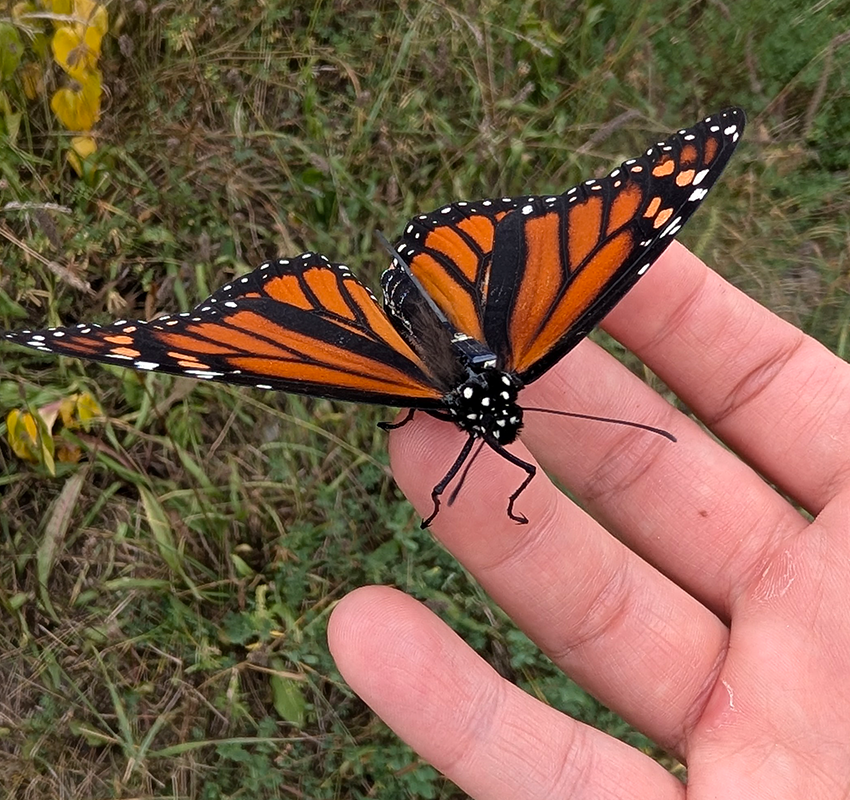
By early September, the annual migration of monarch butterflies is hard to miss. These beautiful tiny travelers flutter past meadows and backyard gardens, embarking on an epic journey all the way to Mexico.
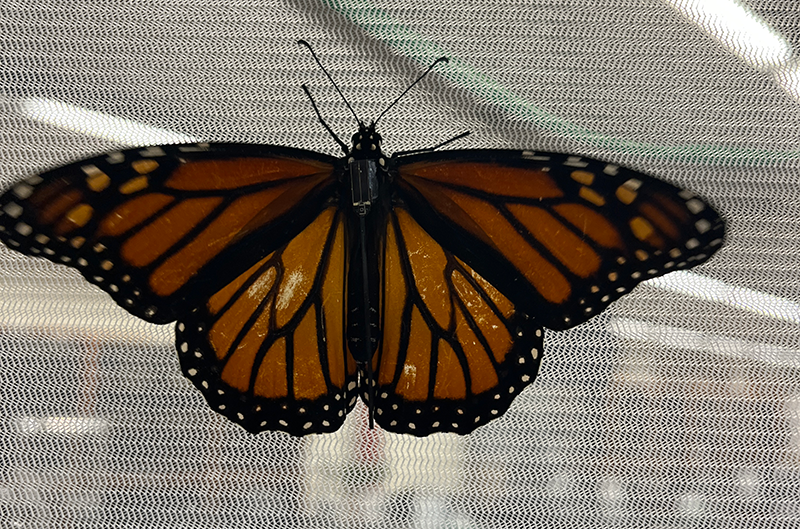
This year, two monarch butterflies named Connie and Sandy are giving us a front-row seat to their adventure. For students in Fleming College’s Conservation Biology program, it’s more than that. They’re turning monarch migration into cutting-edge science.
Bringing High-Tech Butterfly Conservation to the Classroom
On September 17, 2026, third semester Conservation Biology students in Professor Erin McGauley’s class experienced an exciting milestone. After Fleming College purchased ultralight BlūMorpho solar transmitters last spring, the students helped to deploy them alongside traditional Monarch Watch sticker tags on two remarkable female monarchs.
These aren’t your average butterflies. They belong to the extraordinary “super generation” of monarchs that live for eight or nine months instead of a few weeks, postponing reproduction to focus entirely on surviving the journey south.
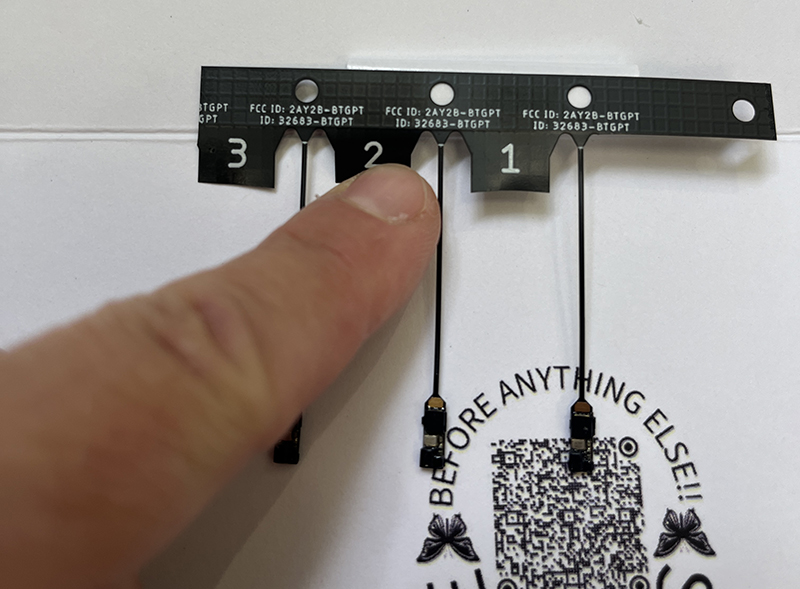
Working alongside Erin, students read through a strict tri-national protocol to ensure every step was followed, completed data sheets, and assessed the butterflies’ health classifications. Because a permit is required for transmitter tagging, Erin (who holds a permit) used eyelash glue to gently secure the tiny transmitters (weighing just 0.066 grams, the same as a single grain of rice!) to each butterfly’s thorax, with a delicate antenna running along the abdomen.
“It’s amazing to be bringing cutting-edge conservation technology to the classroom,” says Erin. “The data our two monarchs are providing along their journey will help protect these endangered butterflies.”
For Erin and Conservation Biology students, the release of these monarch butterflies was memorable. Students had a chance to hold the insects, which offered a deeper sense of connection to nature and to each insect. The shared bond inspired them to name the two vivid orange and black monarchs Connie (named after the Conservation Biology program) and Sandy (after the College’s namesake Sir Sandford Fleming). As they released them in the Frost Campus Pollinator Garden, students stood together in quiet wonder of the incredible journey ahead as they watched the pair take flight.
“Rooting for these tiny flyers is infectious! As soon as Connie and Sandy began to travel in earnest, our students’ interest took off too,” says Erin. “They were trading progress updates amongst themselves and sharing their hopes for the insects’ safe travel south.”
Erin’s educator friends who have heard of the initiative are tracking the butterflies with their classes, from Grade 2 to Grade 9.
“The excitement around the stories this technology generates transcends age!” she says.
How the Technology Works
For decades, tracking an individual monarch over its entire multi-generational cycle was nearly impossible. Traditional numbered wing stickers show where a butterfly started and ended, but reveal nothing about the route it took in between.
The BlūMorpho tags change everything. These solar-powered radio transmitters broadcast on the same frequency band as Bluetooth. As Connie and Sandy wing their way south, their signals are picked up passively by smartphones with Bluetooth and Location Services enabled when they come within about 100 metres of a tagged butterfly.
Follow Connie and Sandy’s Journey on the Project Monarch App
What makes this project truly special is that you don’t need to be a researcher to join in. You can track their progress too! Anyone can follow Connie and Sandy in real-time on the projectmonarch.org website or by downloading the free, Project Monarch app.
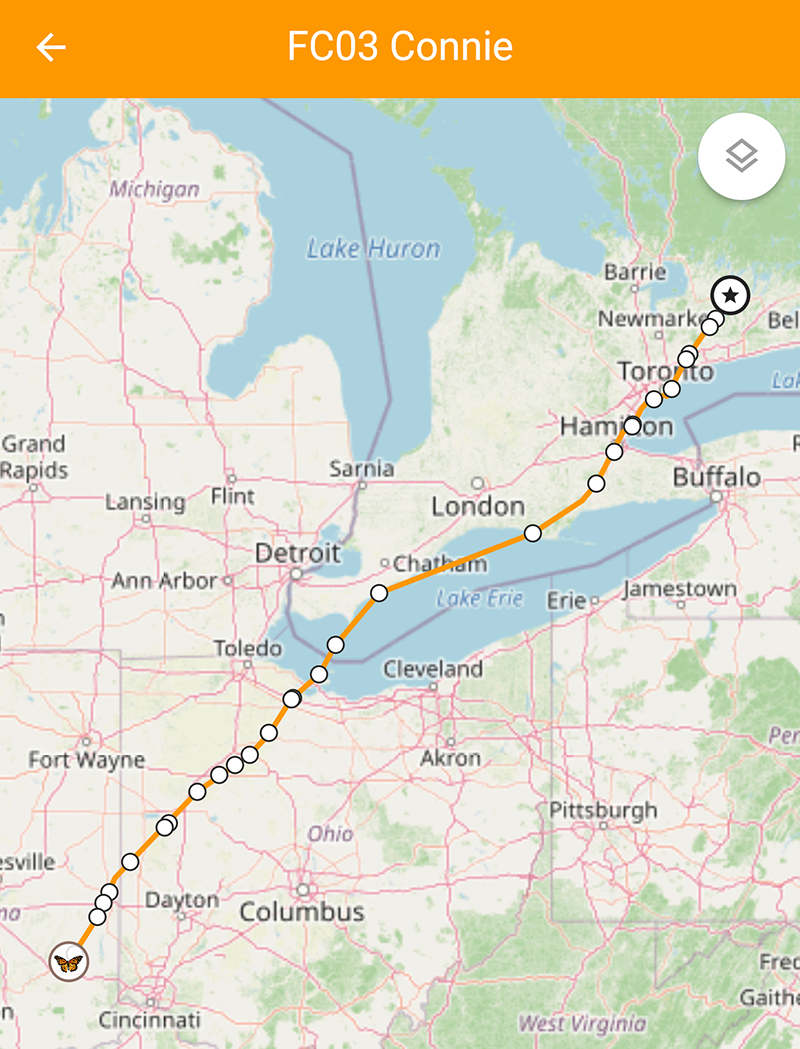
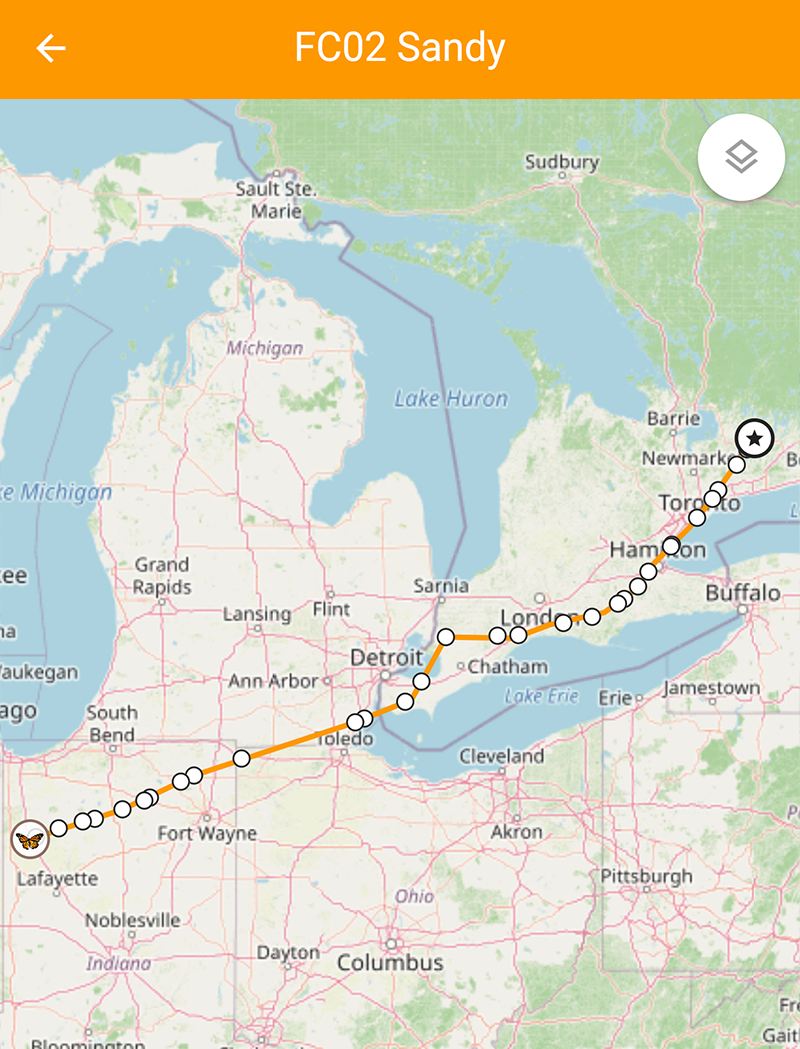
To find out where Fleming butterflies are now, open the Map, search for Fleming College look under “All orgs”, select FC03 Connie or FC02 Sandy, and tap the heart icon to receive updates on their epic flight.
Within days of release, the app’s live map showed incredible progress:
- Connie flew southwest over Toronto, crossed Lake Erie, and headed deep into the United States, logging nearly 1,000 km in her first few days.
- Sandy started along a similar route along Lake Ontario then took an inland route, crossing Lake St. Clair and heading west toward Illinois, United States.
Why It Matters
Monarch butterflies are listed as a federally endangered species, making this hands-on learning deeply impactful. As Erin puts it, “It’s 100% pure conservation biology!”
Every ping on the map helps international conservation biologists fill critical knowledge gaps regarding butterfly migration pathways, population connectivity, stopover sites, and the impacts of weather and climate. The information generated through this data will directly inform recovery work for these iconic butterflies, proving that protecting them requires a connected chain of safe habitats with milkweed plants, gardens, and nectar sources stretching all the way across the continent.
By putting state-of-the-art tools directly into the hands of our students, Fleming College is helping train the next generation of environmental leaders while contributing vital data to protect an endangered species.
Want to help from home? Fleming’s Frost Campus Pollinator Garden provides an essential refueling stop for migrating monarchs, complete with native milkweed. If you want to host monarchs next summer, Erin notes that late fall is the ideal time to sow Common or Swamp Milkweed; simply take dry, brown pods and press the seeds directly into the ground after the first frost to ensure Connie and Sandy’s offspring have a safe place to lay eggs in Summer 2027.
Curious to learn more about Fleming’s hands-on Conservation Biology program that studies insects, small mammals, fish, environmental DNA, and more?
Click here to find out how you can start a great career in Conservation Biology or explore other environmental programs in our School of Environmental and Natural Resource Sciences.