Frost Campus Pollinator Garden
Scan a plant sign to learn more about what’s growing here.
Fleming’s School of Environmental and Natural Resource Sciences is leveraging campus lands to promote pollinator habitat. The Frost Campus Pollinator Garden was initially established in 2004 and has gradually expanded to provide an impressive 1,200 square feet of native plant habitat. The garden acts as a living laboratory where staff, students and community members learn about seed saving, pollinator diversity, and native plant identification.
With funding from the Trans Canada Trail, the garden has enhanced accessibility features including trail surfaces, benches and a sensory garden zone that includes plants people can touch and smell at heights appropriate to those with assistive devices. The addition of a variety of native, sensory-friendly, and pollinator-attracting plants creates an immersive nature experience for all.
The garden also includes culturally significant plants such as wild strawberry, bearberry and cedar. These plants provide important nectar, pollen, and habitat for insects and birds, while offering food, medicine, and spiritual resources for human communities. Interpretive signage within the garden notes the Indigenous uses of native plants, highlighting reciprocal relationships with the land and the interconnectedness of life.
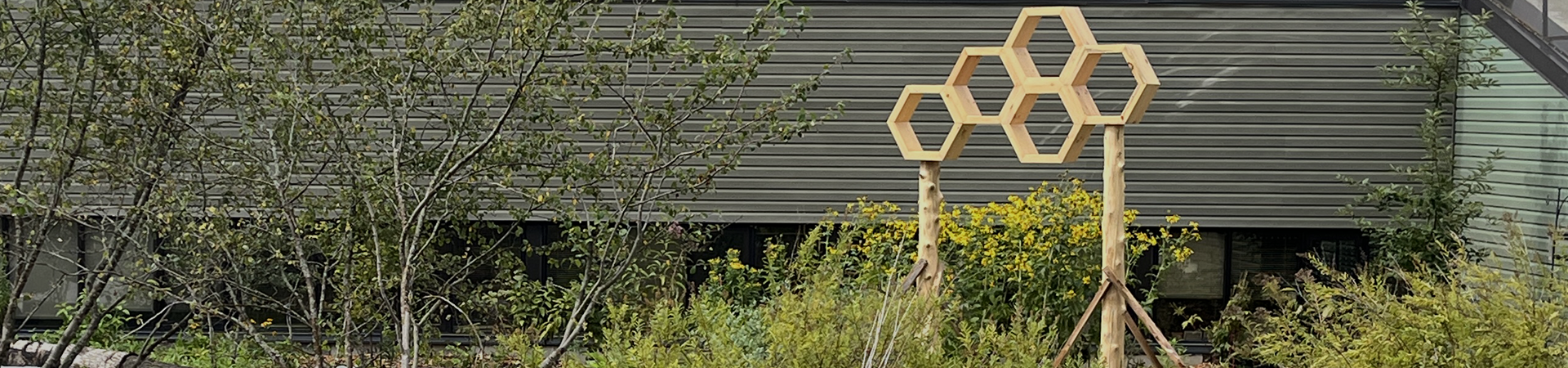
We invite you to come enjoy the pollinator garden – sit for a while and listen to the buzzing of local pollinators, appreciate the colours and smells around you and learn more about the plants in this space through interpretive signage and QR codes that get you up close with some of our favourite plants. You can locate the Pollinator Garden via its hexagonal pollinator art structure built by Fleming’s carpentry program.
If you’re not standing in the garden, scroll down to learn more about featured native plant species and habitats below!
And speaking of features...the Pollinator Garden has been recognized by Pollinator Partnership Canada. Fleming College was the third school in Canada to be designated a Bee Campus. The Frost Campus community also has close ties with the City of Kawartha Lakes, which was designated a Bee City in 2017.
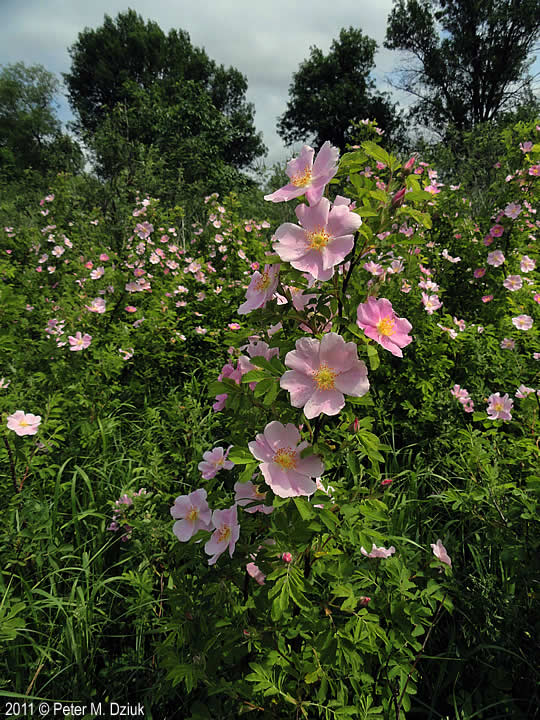
Smooth Rose
Rosa blanda
 Photographer: Peter M. Dzuik
 A native shrub with pink or white flowers and very few thorns. Produces vitamin C-rich rose hips that feed birds and mammals through winter.
Learn More
Smooth Rose, also known as wild rose, meadow rose, and prairie rose, is native to North America. This shrub’s white or pink flowers have five broad petals and bloom in late June or early July. It mostly lacks the sharp thorns of traditional rose plants – any thorns will be found only at the plant’s base. Smooth Rose also produces berry-like fruits called rose hips that are high in vitamin C and are a vital winter food source for many birds and mammals. In the warmer months, the flowers attract large numbers of native bees, particularly bumble bees, carpenter bees, masked bees, mason bees, and sweat bees.
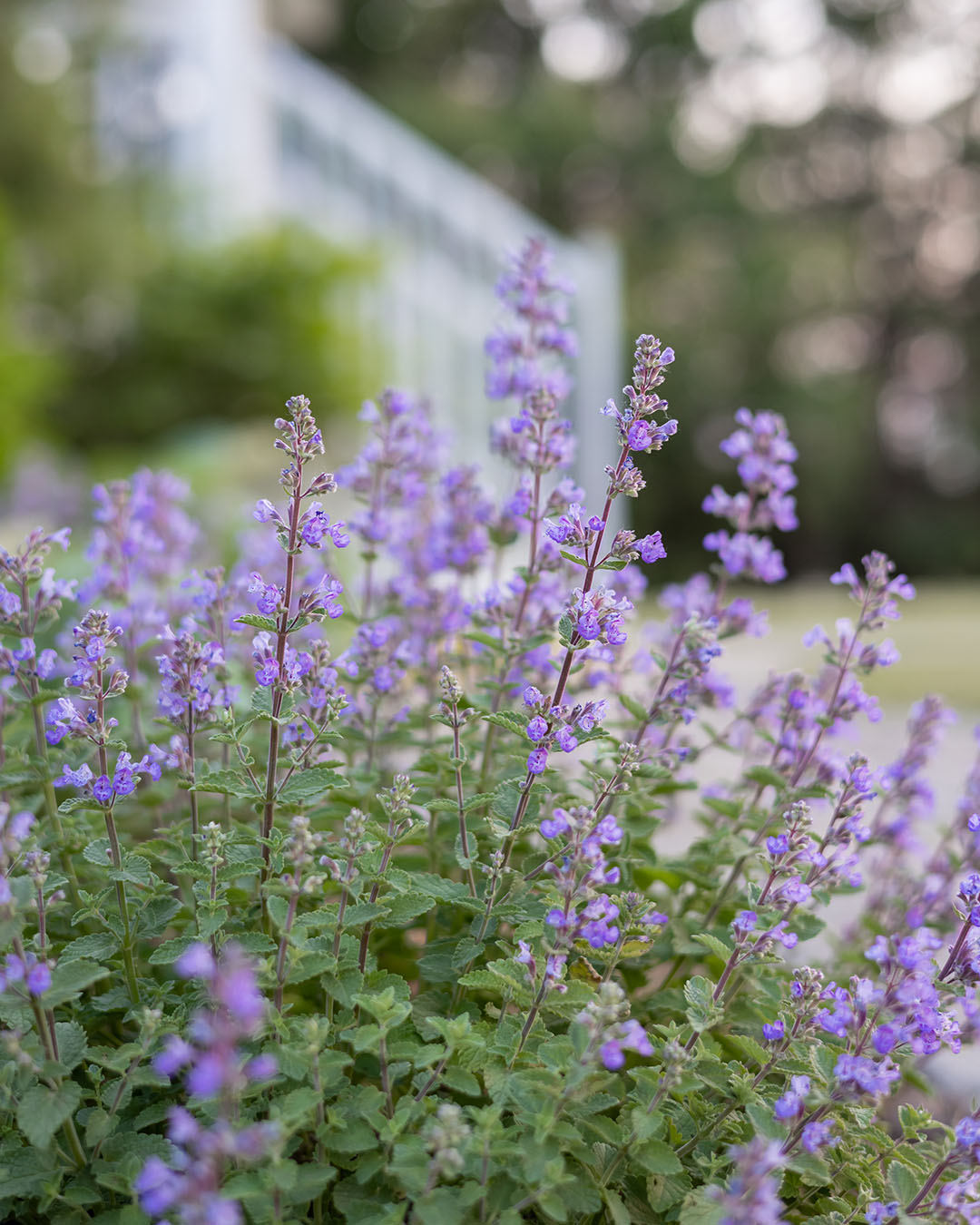
Catmint
Nepeta cataria
 Photographer: Peter M. Dzuik
 One of the first perennials to bloom, attracting bees, butterflies, moths, and hummingbirds. Known for its minty scent and medicinal uses.
Learn More
Catmint is one of the first perennials to bloom in the spring, and is a major draw for Snowberry Clearwing moths, bees, butterflies, hummingbirds, and other insect pollinators. Purple flowers grow into broad mounds that smell and have a minty taste. Catmint is commonly used in herbal teas and salads, and is used to treat colds, fevers, insomnia, digestive issues, and bug bites. We aren't the only ones who occasionally munch on Catmint leaves - these plants are food to several butterfly and moth larvae. Catmint and Catnip are not the same, though both are attractive to cats – hence the common name. Catmint also works as a pest deterrent, repelling aphids, squash bugs, and mosquitoes. Please note that it should not be ingested by pregnant women, as it may stimulate menstruation/uterine contractions.
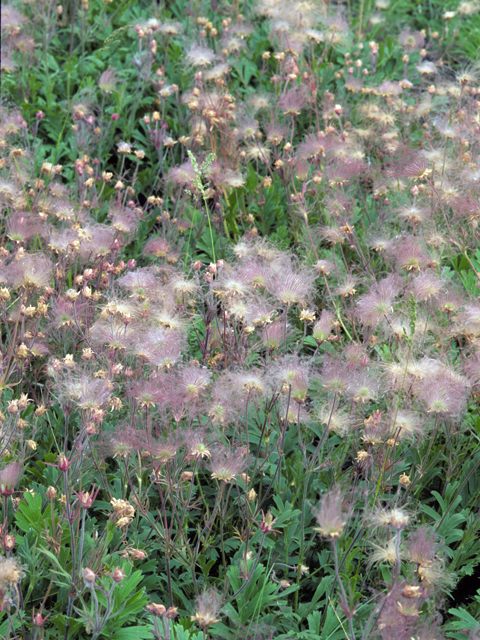
Prairie Smoke
Geum triflorum
 Photographer: Wasowski, Sally and Andy
 A low-growing plant with bell-shaped flowers that transform into wispy seed heads, creating a smoky effect across the ground.
Learn More
Prairie Smoke is frequently planted in gardens despite it being an uncommon wildflower in Ontario. It’s often found in alvars, which are an endangered ecosystem! These low-growing plants (6-18 in) have ferny, hairy leaves and reddish-purple bell-shaped flowers that hang in groups of three. They bloom in April-May, and the flowers turn up after being pollinated by bees so that the seed can be spread by the wind or by passing animals. During this stage, Prairie Smoke flowers are wispy and grey which makes it appear as though there is smoke hovering close to the ground. Some of the other names this plant is known by reflect this feature: it is also called Old Man's Whiskers, Torchflower and Maidenhair. Come autumn, most of the leaves will turn a deep red, and are sometimes evergreen. In various Indigenous medicinal practices, Prairie Smoke was used to treat various ailments from snow-blindness to sore throats.
Canada Milkvetch
Astragalus canadensis
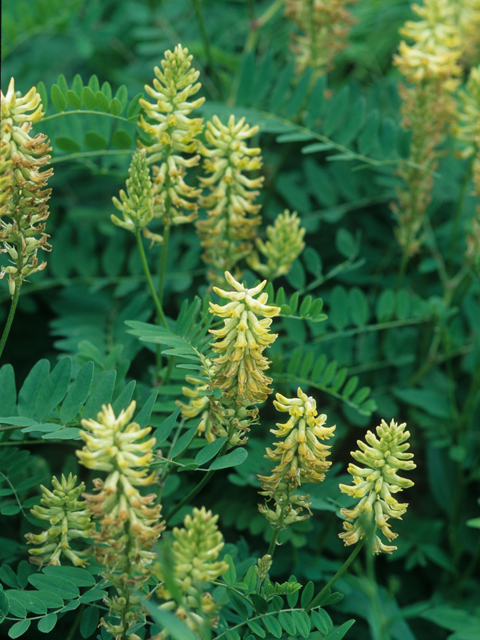 Photographer: Wasowski, Sally and Andy
 Produces clusters of pale flowers rich in nectar, attracting butterflies and hummingbirds. Improves soil by fixing nitrogen.
Learn More
Canada Milkvetch has many whitish to pale yellow or greenish pea flowers that hang down slightly on top of leafy stems. The flowers often begin to bloom in May and are found across Canada. In August the flowers turn into seed pods that can be planted throughout autumn and early winter. This plant is rich in nectar, and both hummingbirds and butterflies feed from it. The Western Tailed Blue butterfly lays its eggs on Canada Milkvetch and its caterpillars depend on this plant. Canada Milkvetch is also a pollen source for the at-risk American Bumblebee. Milkvetch plants are nitrogen-fixing and improve the fertility of the soil. Canada Milkvetch was used in traditional Indigenous medicinal practices as an analgesic (pain relief) and anti-hemorrhagic (prevents/reduces bleeding).
Cut-leaf Coneflower
Rudbeckia laciniata
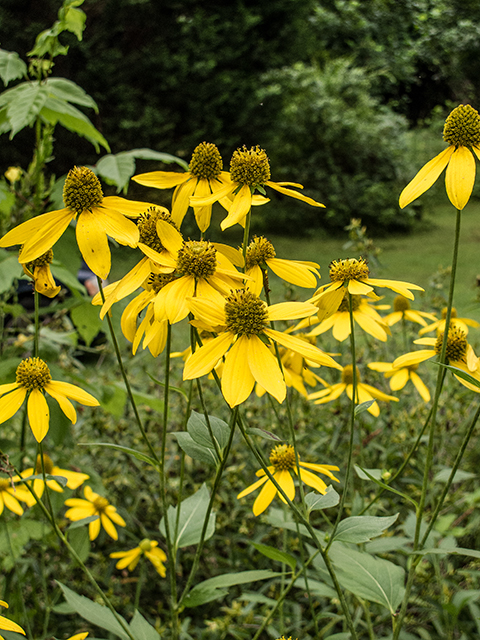 Photographer: Brundage, Stephanie
 Tall perennial with yellow blooms often mistaken for Black-eyed Susans. Spreads widely and supports many pollinators.
Learn More
This perennial blooms with delightful yellow flowers from midsummer to fall. Often mistaken for Black-eyed Susans, the centers of these flowers are greenish-yellow rather than black. Cut-leaf Coneflower roots spread underground, so this plant needs a large garden. The flowers are host to moths and butterflies including the Silvery Checkerspot. The Cut-leaf Coneflower is highly attractive to bees and butterflies such as the Black Swallowtail and American Lady, and some birds, like finches and cardinals, eat the seeds in late fall and winter. The young greens are edible, with a slightly citrusy flavour, and can be enjoyed fresh or cooked. These plants were historically a staple vegetable to many indigenous communities.
Yarrow
Achillea millefolium
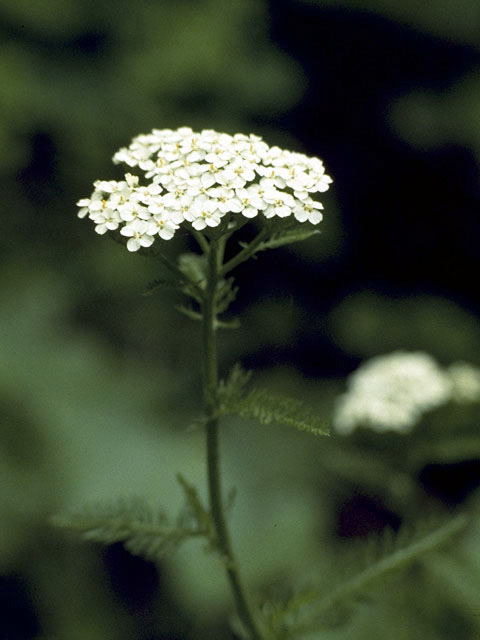 Photographer: Dwiggins, Pam
 A hardy perennial with feathery leaves and clusters of white flowers that support a wide variety of pollinators.
Learn More
Common Yarrow, also known as milfoil or woundwort is a member of the aster family. It has flat-topped clusters of small white flowers that bloom from April to October, and its aromatic, fine, feathery leaves give the plant a soft, fern-like appearance. These flowers are found all across North America, as well as in Europe and Asia. Yarrow is a crucial perennial that supports over 100 insect species, including the Painted Lady butterfly, and several moths. Yarrow’s genus name, Achillea, was named after Achilles, who used plant extracts to treat soldiers’ wounds in the Battle of Troy. Interestingly, several Indigenous peoples used Yarrow for a variety of ailments: it was applied to wounds and burns, and made into a tea to soothe colds, fever, and headaches. In Europe, Yarrow has been used to brew beer since the Middle Ages, and it has very strong ties to folklore and symbolism.
Zigzag Goldenrod
Solidago flexicaulis
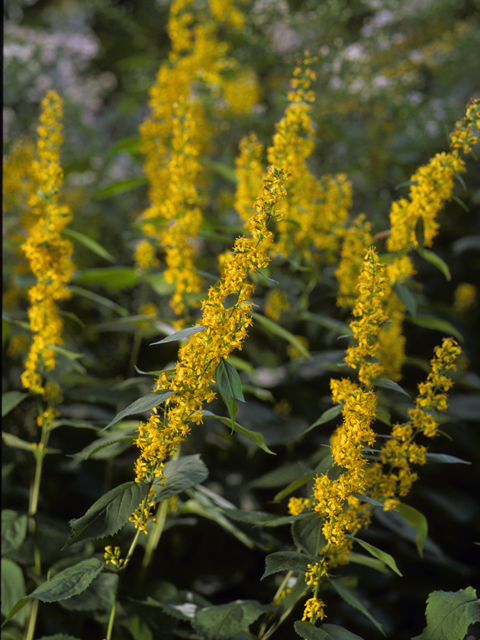 Photographer: Wasowski, Sally and Andy
 A well-behaved goldenrod species with zigzag stems and yellow flowers that support many pollinators late in the season.
Learn More
Zigzag Goldenrod, also known as Broadleaf Goldenrod, tends to be less aggressive than other goldenrods and ‘behaves’ well in a low-maintenance garden like this one. Standing at 2-4 feet tall, the zig-zag stems bear small yellow flowers that bloom in late summer. Goldenrod flowers attract bees, butterflies, wasps, skippers, beetles, flies, and some birds that eat their seeds, such as Swamp Sparrows, and Pine Siskin. Zigzag Goldenrod has rich, sticky pollen and nectar, and—like most goldenrods—supports one-third of all of Ontario's bees. Goldenrod nectar is an essential late-season source of energy for the next year's bumblebee queens, allowing them to build fat reserves to survive the winter. Pollen specialist bees, some of which have specialized to only collect pollen from goldenrod and asters, rely on this plant to collect pollen for their nests for the larvae to feed on and to produce the next generation. Goldenrod is also a host plant for several types of caterpillars, which helps support the local bird populations.
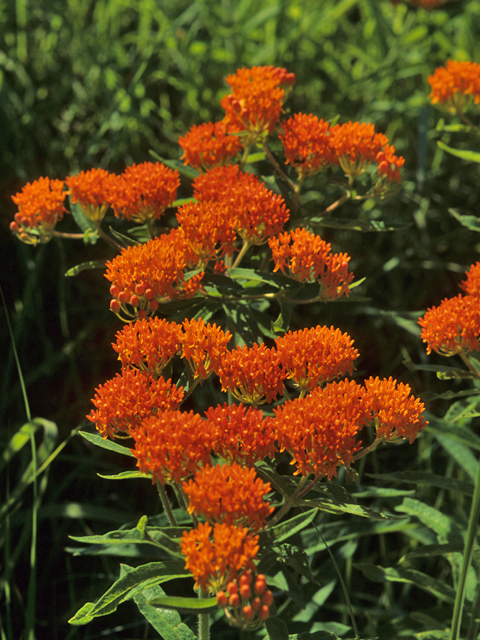
Butterfly Milkweed
Asclepias tuberosa
 Photographer: Wasowski, Sally and Andy
 Bright orange flowers attract butterflies, bees, and hummingbirds. Essential for monarch caterpillars.
Learn More
This bushy 1-2ft tall perennial is known for bright orange and yellow flowers and is a must-have for pollinator-friendly gardens. They typically bloom from May to September, providing long-lasting vibrant garden colour. Butterfly Milkweed is a vital plant for supporting pollinators: Monarch caterpillars rely on its leaves for food, while adult butterflies, bees, and hummingbirds are drawn to its nectar-rich flowers. This plant is also a larval host to the Gray Hairstreak, the Queen, and Milkweed Tussock Moth. Unlike Common Milkweed, which spreads aggressively, Butterfly Milkweed doesn't take over garden spaces. It's also deer and rabbit resistant as the leaves are quite bitter. Though some parts of the plant are toxic, some First Nations used parts of the plant as a cure for pleurisy (inflammation of the lungs) which is why Butterfly Milkweed's other common name is pleurisy root.
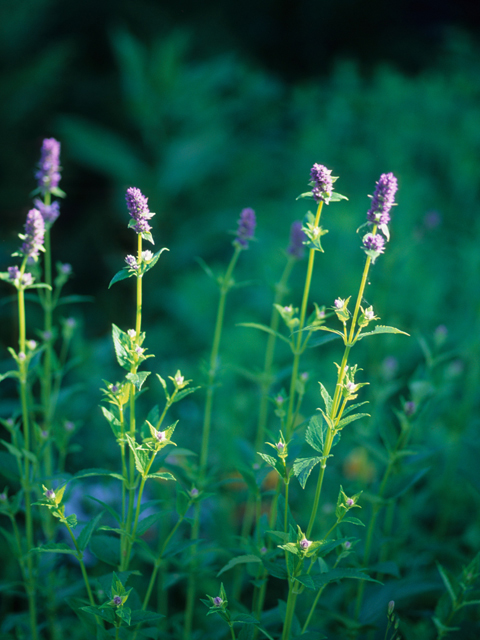
Anise Hyssop
Agastache foeniculum
 Photographer: Wasowski, Sally and Andy
 Produces spikes of blue flowers and a licorice scent when crushed. Extremely attractive to pollinators.
Learn More
Anise Hyssop is a perennial that grows to 2-4ft tall, with a spike of bright blue flowers. One plant can produce up to 90,000 individual flowers! When the leaves of this plant are crushed, they give off an anise or licorice scent. Anise Hyssop blooms in July and August and is visited by many pollinators, including hummingbirds, butterflies, bumblebees, honey bees, carpenter bees, and night-flying moths. This flower is considered to be an excellent pollinator plant: the 1969 edition of Encyclopedia of Organic Gardening claims that one acre of this flower can support 100 bee hives! Anise Hyssop is said to relieve congestion, respiratory infections, treat burns, and can be used to treat wounds. In Indigenous medicine, a wash was made using the flower to relieve itching that comes from poison ivy. It is also believed that it has mood-stabilizing qualities and its incense was used as a sort of anti-depressant. Clinical research has shown that Anise Hyssop essential oil is antiviral.
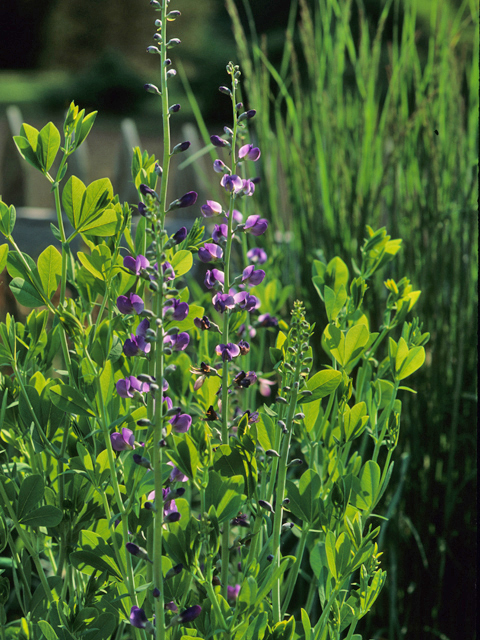
Wild Blue Indigo
Baptisia australis
 Photographer: Wasowski, Sally and Andy
 A bushy perennial with blue-purple flowers that supports many butterfly species and improves soil health.
Learn More
Wild Blue Indigo is a bushy robust perennial that rises 2-4ft high. The flowers are blue-purple and pea-like, blooming from April to July. In the late fall, the plant turns silvery-gray and sometimes breaks at ground level and tumbles around in the wind. Wild Blue Indigo, like other members of the pea family, helps to add nitrogen to the soil. Wild Blue Indigo is the larval host plant of the Wild Indigo Duskywing butterfly, along with several other butterflies including the Frosted Elfin, Eastern Tailed Blue, Hoary Edge, Orange Sulphur, and Clouded Sulphur. The nectar of Wild Blue Indigo is favoured by bumblebees, and songbirds may feed on its seeds. Its plant juice turns purple on exposure and is a fair substitute for true indigo when making blue dye. Beware: this plant is poisonous if ingested.
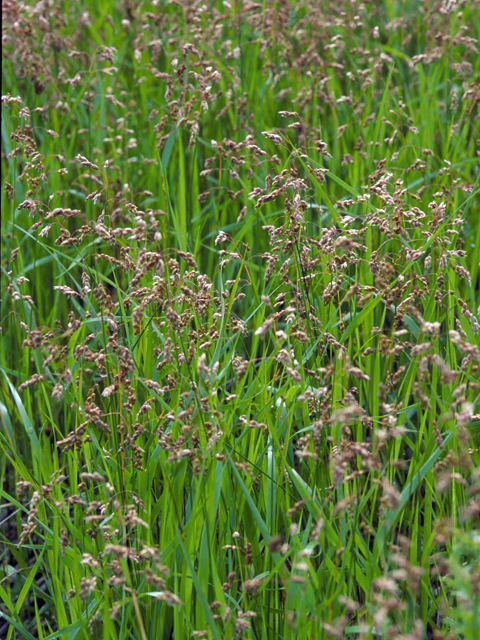
Sweetgrass
Hierochloe odorata
 Photographer: Wasowski, Sally and Andy
 Sweetgrass is a fragrant, fast-spreading native grass with deep cultural significance. It supports pollinators and provides shelter and nesting material for over 24 species of songbirds.
Learn More
Featured Indigenous Species: Sweetgrass is a slender, sweet-smelling grass that spreads very quickly. It’s a culturally significant native grass that supports various pollinators and wildlife. It provides shelter and nesting material for over 24 species of songbirds, and offers protection for beneficial insects. Its seed head, which matures in late May to early June, feeds birds. While it doesn’t host a specific caterpillar, it is considered a beneficial plant in a pollinator garden to support a healthy ecosystem. This plant has natural chemicals that help to repel mosquitoes. It is a sacred grass to Indigenous peoples, who braid and burn it in cultural practice.
Wild Strawberry
Fragaria virginiana
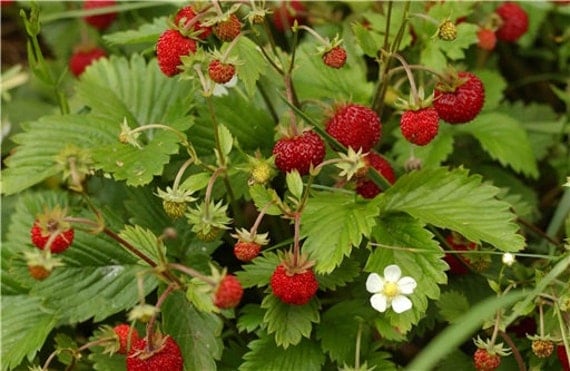 Photographer: No credit, the website is Northwest Wild Foods
 A low-growing plant that spreads by runners and produces small, sweet strawberries in early summer.
Learn More
Featured Indigenous Species: Wild strawberry is a perennial groundcover identified by its compound leaves with 3 leaflets. It is a low growing plant, only reaching 10cm tall, and grows quickly by using runners: above-ground stems that grow horizontally and produce new plants that root as they go. From late March to May, wild strawberry plants produce small white flowers with five petals and yellow centers. Following the flowers, the plants produce tiny strawberries that ripen in late spring and early summer. While only growing about the size of your thumbnail, the small strawberries taste very sweet and juicy. Because they are the first berries in the year to ripen, they are known to the Haudenosaunee (Iroquois) peoples as “leader of the fruits” and hold great cultural significance. For generations, the fruit and leaves have been used for drinks, cakes, breads, and fruit leather, as well as medicinal teas known to aid the kidneys, joints, fevers, and women’s reproductive health. Wild strawberry is an important species pollinators like the Bronze Copper butterfly, long horned bees and mining bees, among others. It even has distinct nectar guides (patterns on the flowers that direct pollinators to the nectar) that are only visible to bees.
Silverweed
Argentina anserina
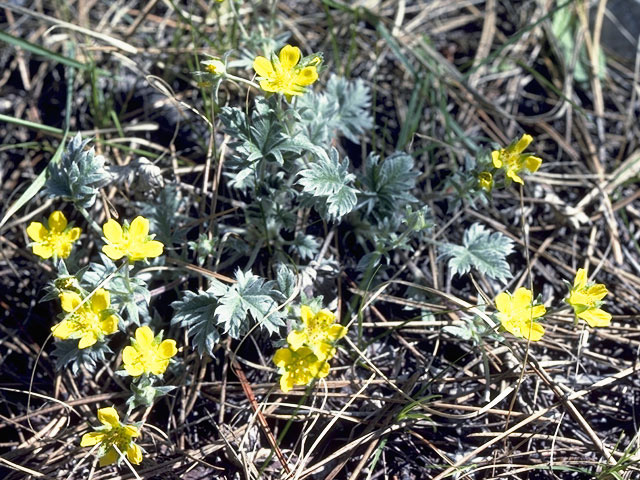 Photographer: Bransford, W.D. and Dolphia
 A low-growing plant with yellow flowers and silvery leaves covered in fine hairs. Provides nectar for bees, flies, and beetles.
Learn More
Featured Indigenous Species: Silverweed is a perennial flower that grows up to 8 inches tall. The leaves of this yellow flower are long and saw-toothed, and are covered in silky white hairs, giving the plants a silvery appearance. Bees are the primary pollinators of this flower, along with flies and beetles. It blooms from June to September and serves as an important source of nectar and pollen. Birds also feed on the plant’s seeds later in the season. This plant has many uses: in Indigenous practice its root was harvested for a food that has been likened to parsnips. Medicinally, it was used as an astringent in gargles, and was brewed into teas to reduce inflammation and stop bleeding.
Pearly Everlasting
Anaphalis margaritacea
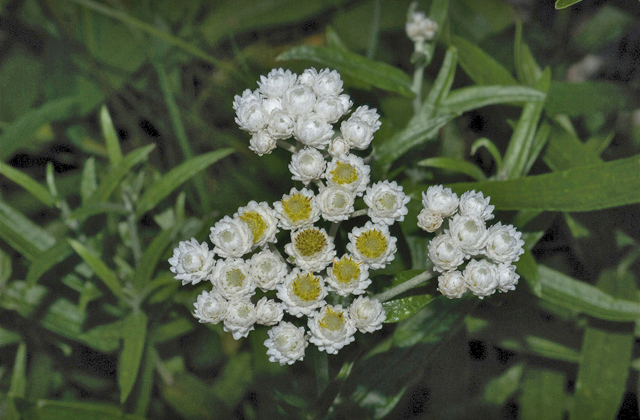 Photographer: Glase, Terry
 A tall plant with white flowers that bloom throughout summer and provide habitat for butterflies.
Learn More
Featured Sensory Species: These little white flowers grow up to 3ft tall, and their common name reflects their long bloom period, which extends throughout the summer. Pearly Everlasting are larval hosts to skipper butterflies and to the American Lady and the Painted Lady butterfly. The undersides of the leaves are covered in tiny hairs which gives them a wooly feeling. The leaves can be edible when cooked, and Indigenous peoples used Pearly Everlasting to make ointments for sores, teas for rheumatism, and medicinal smoke for colds.
Virginia Mountain Mint
Pycnanthemum virginianum
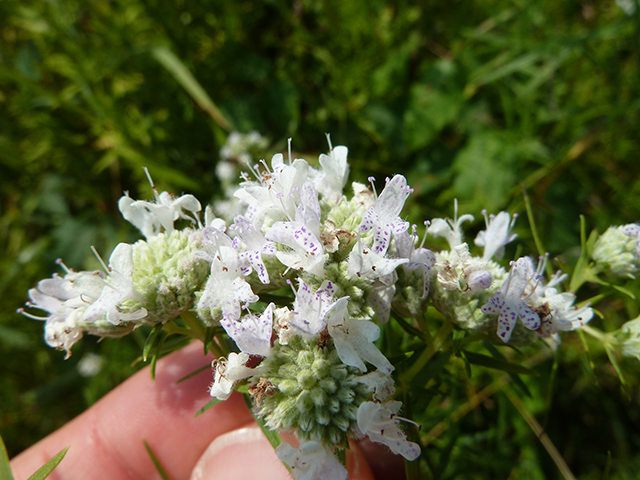 Photographer: Johnathan Flickinger
 A bushy herb with clusters of tiny flowers that attract a wide variety of pollinators. Leaves release a strong mint scent when crushed.
Learn More
Featured Sensory Species: Virginia Mountain Mint is a bushy aromatic herb with branching square stems and toothless leaves with pointed tips. The tiny tubular flowers on Virginia Mountain Mint are densely clustered and bloom from July to September. When the flowers mature into dry capsules they hold four tiny black seeds, which are a great food source for birds in the winter months. When crushed, the flowers and leaves give off a strong mint smell, and can be used for tea or in cooking. While Virginia Mountain mint is definitely in the mint family, it is actually not found in mountainous regions and prefers moist soils near meadows, swamps, streams, and ponds. It is used by many pollinator species including bees, butterflies, wasps, flies, and even beetles, but it is rarely browsed by mammals, as they turn away at the strong mint scent. The Pearl Crescent butterfly is particularly attracted to Virginia Mountain Mint.
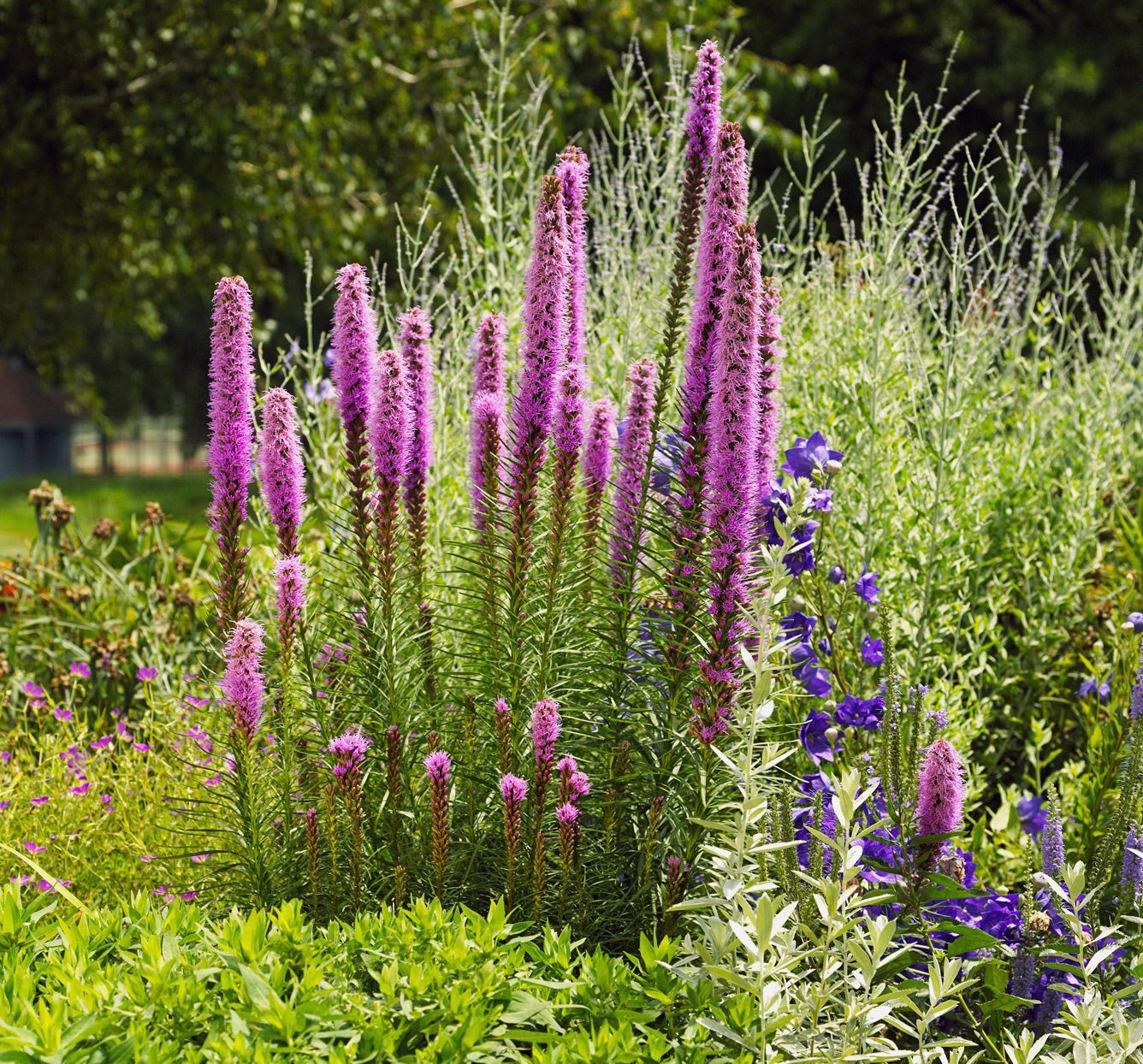
Dense Blazing Star
Pycnanthemum virginianum
 Photographer: Marty Baldwin
 A striking native wildflower with tall purple spikes that attract butterflies, bees, and hummingbirds.
Learn More
Featured Sensory Species: Dense Blazing Star is a perennial wildflower native to Ontario with visually stunning bright purple flowers and spiraling leaves. The flowers cluster as a spike on the end of each stem and are tufted and feathery. It can grow to 2m in height and is found in prairies, abandoned fields, and other sunny habitats. Many wildlife species rely on Dense Blazing Star: in the winter, its seed pods are a food source for birds, and in the summer, its flowers attract many species of butterflies, bees, and hummingbirds. You can often hear the buzzing of pollinators around the flowers – listen closely!
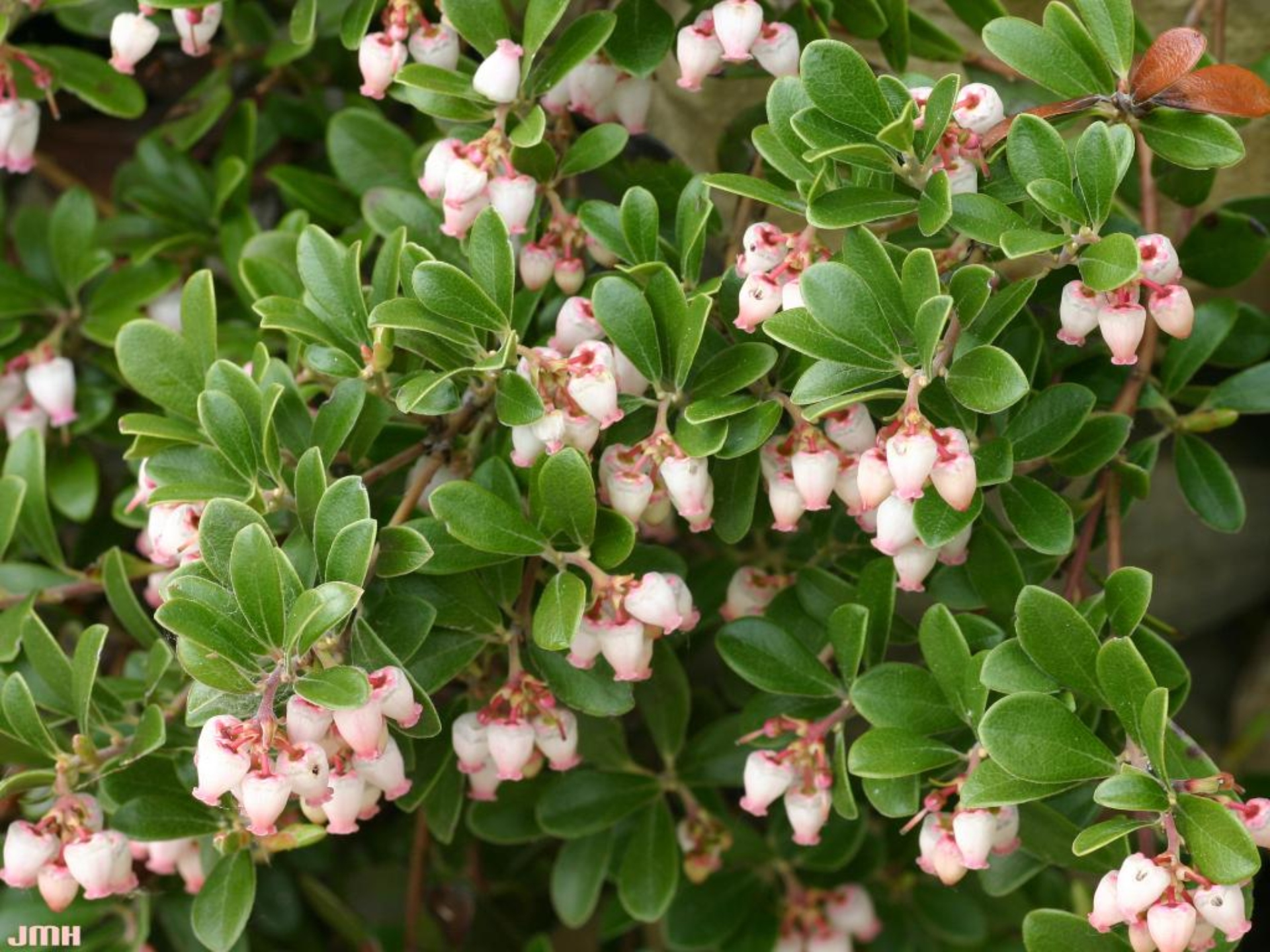
Red Bearberry (Kinnikinnick)
Arctostaphylos uva-ursi
 Photographer: John Hagstrom
 An evergreen groundcover with small bell-shaped flowers and bright red berries. The berries are eaten by wildlife, including bears.
Learn More
Featured Indigenous Species: Red Bearberry is an evergreen groundcover shrub with thick paddle-shaped leaves that are yellow-green in spring, dark green in summer, and bright red in winter. It has small bell-shaped pink or white flowers that droop down below the leaves. Red Bearberry, or Kinnikinnick, is an important species for pollinators such as hummingbirds and bees. Its scientific name, Arctostaphylos uva-ursi, means “bear grape”, named for the edible berries it produces in the late summer that are often eaten by black bears. While the berries are bitter when raw, they are often boiled and dried to bring out their sweetness. Red Bearberry is also known as Kinnikinnick, meaning “smoking mixture” in the Algonquin language. It was thus named because the leaves and bark can be dried and added to tobacco for smoking, but they can also be made into an astringent tea.
🪨 Rock Piles
Rock piles provide essential shelter for many insects. They create stable environments where pollinators can nest, regulate temperature, and survive extreme weather.
Learn More
Habitat Feature: Many insects rely on rock piles as a key part of their habitat. By providing features such as this, we can support more insect diversity. Just like us, many of these pollinators rely on sturdy shelters—they make nests in cracks and crevices of the rock piles, or burrow in the soil beneath a stone. Rocks keep the conditions beneath it relatively stable, even more so during extreme weather. Under a rock pile, the soil is cool and damp on hot sunny days and remains safe and dry during rain. Rocks give insects a way to control their body temperature: rocks tend to hold onto their heat, so a stone that’s been under the sun all day will stay warm long after the sun has gone down. Because stones are unlikely to move, many insects use them for long-term shelter, especially to stay safe over winter.
🌲 Log Piles
Log piles support biodiversity by offering nesting and shelter for insects, including native bees that rely on cavities in wood.
Learn More
Habitat Feature: Log piles are essential in a pollinator garden because they are critical habitat for garden wildlife. They provide shelter, nesting, and breeding sites for a wide range of species – from spiders and beetles to native bees. Approximately 30% of native bees are cavity-nesters, making use of holes in dead wood to lay their eggs. Log piles offer a safe, dry, mostly frost-free shelter for insects to hibernate over winter, including bumblebee queens and caterpillars. A single log can support a range of species who all contribute to a healthy ecosystem. Predators that live in these log piles (spiders, ground beetles, centipedes) help control pests like slugs and aphids. Even as the wood rots, it contributes to the garden as it breaks down into rich organic material, adding essential nutrients into the soil.
🌳 Trees in the Garden
Trees provide early-season food for pollinators when flowers are scarce, especially for emerging queen bees.
Learn More
Habitat Feature: Having trees in a pollinator garden is important because it provides a food source when perennial flowers are scarce. Trees bloom early in the spring when many flowers are still just pushing up, so when hungry queen bees emerge from hibernation, flowering trees offer a critical supply of energy. Native trees are far better than any imported or exotic species when it comes to hosting insects—this American Basswood is a primary host for over 150 species of Lepidoptera (butterflies and moths), such as the Basswood Leafroller, Four-horned Sphinx, Eastern Tiger Swallowtail, and Mourning Cloak. American Basswood trees have fragrant flowers that attract bees, flies, and moths and later in the season they have small nut-like fruits that are eaten by squirrels and birds. Mature trees often develop cavities that birds use as nesting sites. Native trees maximize biodiversity benefits!