Resources Drilling Technician (Optional Co-op)
This is the only program of its kind in Canada. Learn foundational skills for a variety of drilling sectors, and train hands-on on a full range of drilling equipment.
Program Information
Start Date
January 11, 2027
Domestic Availability
Accepting Applications
International Availability
Accepting Applications
CIP Code
46.0504
Program Code
RDB
Delivery
In Person, Hybrid
Credential
Ontario College Diploma
Academic School
Location
Program Contact
Domestic Tuition
per semester*
International Tuition
per semester*
View Curriculum
September 07, 2027
Domestic Availability
Accepting Applications
International Availability
Coming Soon
CIP Code
46.0504
Program Code
RDB
Delivery
In Person, Hybrid
Credential
Ontario College Diploma
Academic School
Location
Program Contact
Domestic Tuition
per semester*
International Tuition
per semester*
*Domestic tuition amounts shown are from the 2026-2027 academic year and are subject to change.
*International tuition amounts shown are from the 2026-2027 academic year and are subject to change.
Apply Now
Canadian StudentsView Curriculum
January 10, 2028
Domestic Availability
Accepting Applications
International Availability
Coming Soon
CIP Code
46.0504
Program Code
RDB
Delivery
In Person, Hybrid
Credential
Ontario College Diploma
Academic School
Location
Program Contact
Domestic Tuition
per semester*
International Tuition
per semester*
*Domestic tuition amounts shown are from the 2026-2027 academic year and are subject to change.
*International tuition amounts shown are from the 2026-2027 academic year and are subject to change.
Apply Now
Canadian StudentsView Curriculum
Our School offers the only college program in Canada providing training in drilling, and we are the only program in the world offering training in so many of the different types of drilling. Numerous sectors rely on drilling skills, so this program opens doors to huge opportunities, many employers, and options to choose which field of drilling you will focus on. Our grads are in high demand. Every year, national and international employers recruit at our on-campus job fairs, and many of our students have employment offers before they graduate.
Currently, these fields offer employment opportunities for drilling careers:
- Construction Drilling and Blasting
- Geotechnical Drilling
- Environmental Drilling
- Water Well Drilling
- Resources Drilling, including minerals and oil and gas exploration
- Horizontal Directional Drilling
In our program, you'll learn the foundational theory, techniques and methods relating to each of these types of drilling, with an emphasis on safe working practices, while you learn to operate a full range of drilling equipment hands-on.
Students entering the program in September may apply to participate in an optional paid co-op. The deadline to apply is at the end of November, where students must submit an application form (including a resume) to the Co-op Office. Students must achieve a 70% (2.5 GPA) average, and pass all courses in Semester 1 in order to be enrolled in the co-op option. Students who are accepted will participate in a career preparation course, and will do their co-op between semesters 2 and 3. The co-op option provides the opportunity to:
- Integrate classroom learning with work-based learning
- Explore the variety of careers available in the field
- Network for future job opportunities
The co-op option is not available for students who begin the program in January, as they attend classes over the summer.
With your university degree or Ontario College Diploma in a related field, you can get credit for semester one of the program, and enter directly into semester two. Degrees in the following areas of study will be considered:
- Environmental Science
- Environmental Studies
- Science - Chemistry or Biology
- Geography
Graduates with an Ontario College Diploma in one of the following fields of study will be considered:
- Environmental Science/Studies
- Natural Resources
People may assume that resources drilling, such as for minerals and oil and gas exploration, is the sector where most graduates find work. In fact, there are numerous types of drilling required for a variety of industries and projects, with excellent job prospects:
- Geotechnical drilling is required before any large construction project can begin. This involves subsurface investigations to evaluate property for infrastructure development, drilling for soil samples, determining soil type and depth, and ground conditions.
- Construction drilling includes drilling foundations and anchoring piles for bridges, roadwork, or for any large building or development.
- Environmental drilling involves obtaining samples of soil and groundwater, to control or remediate contaminants. Sites such as fuel service stations, landfills, mining operations, or abandoned infrastructures are examined, to either monitor or to reclaim the land for other purposes.
- Drilling skills are essential for water well design, installation and monitoring.
- Horizontal directional drilling is used to drill underneath structures such as roadways, foundations, or other properties, or beneath lakes, rivers or streams. The goal is to create a below-ground conduit, providing a transportation solution for waterlines, electrical lines, pipelines, or fibre-optic cables, for example.
- Geothermal drilling, to install geothermal heating or cooling systems, is another growing field.
Our well-rounded program provides the courses and hands-on experience you need to begin a career in this exciting and varied sector. A full 80% of the program consists of practical learning sessions in our state-of-the-art, on-campus Parnham Training Centre, and off-campus in the field. You'll also be challenged to think on your feet and use your problem-solving skills.
- You'll work on a full range of drilling equipment in our five service bays.
- Four specially equipped classrooms/labs feature everything from a drilling simulator to hands-on drilling activities.
- Course work includes an introduction to emerging fields, such as the geothermal industry.
- You'll get industry recognition for your studies. Our grads are exempt from taking the mandatory Ontario Ministry of the Environment 10-day Water Well Constructed Course. (Ontario Regulation 903 requires successful completion of this training for new well technicians.)
Our unique program offers a rare combination of technical training, theory and hands-on experience. Due to our strong connections with the industry, and our geographical location, the program is well positioned to place graduates throughout North America and globally. Employers know our grads have a good foundation of theory and practice, as well as excellent transferrable skills to draw upon for any challenge in the workplace.
Many of our programs offer the opportunity to earn a second certificate or diploma with just one or two more semesters of study. Add another specialization to your skill set and increase your career prospects with this unique opportunity.
Learn more here or contact your program coordinator for more information.
Certain diploma programs within the School of Environmental and Natural Resource Sciences (SENRS) share some first-semester courses providing students a flexible and interdisciplinary academic start. This allows students to:
- Explore various fields of study within environmental and natural resource sciences
- Discover careers that align with their strengths and interests
- Transfer credits between programs, reducing duplication and saving time
By earning credits that apply across multiple diplomas, students will have the chance to work toward more than one credential without starting from scratch. This also opens doors to a multidisciplinary education, in which students gain a strong foundation in key concepts and practical skills that can be applied across industries.
Following your first semester, you'll begin to explore specialized training in drilling. You'll spend most of your time in labs or field classes, putting your education to work and refining your skills. You'll also take part in field assignments in local quarries and job-related activities.
You've got to love working outside, enjoy hands-on work, be willing to operate equipment, and be independently minded. Opportunities exist for both men and women - more brains than brawn is required to be competent in the field. Some of the personality traits and skills essential to your success include:
- good motor skills and physical health
- flexibility (particularly regarding hours of work)
- interpersonal skills
- analytical and creative thinking skills
- mechanical aptitude
- ability to lift 40 kilograms
- able to stand for 12 hours
- able to read and understand safety labels
Faculty report that the requests for graduates by industry often exceed the number of students completing this program. Upon graduation you'll find yourself in positions such as driller or helper. You may work in an urban, rural, or more remote area, throughout Canada, North America, or around the world. At least ten global industries are open to you for potential employment, including: Construction Drilling, Geotechnical, Environmental, Blast-hole drilling, Blasting, Mineral Exploration and Mining (surface and underground), Horizontal Directional Drilling, Geothermal, Water Wells Construction Drilling, and Oil and Gas industries.
You can move up the ladder to own a business, or work in sales, tech support, or management with larger companies. Your potential employment is excellent as a graduate of our one-of-a-kind program. The average starting annual income is $52,000.00 but you could make much more than that within a few years after graduation. Even as a summer student employee, it is possible to earn $20,000.00 to $30,000.00.
Graduates of the two-semester Blasting Techniques program are eligible for entry to semester two of this program.
If you are an international student, check the information on admission requirements and how to apply.
Plan to spend about $1,500 for books, supplies and safety equipment.
Textbooks Required
The Drilling Manual, 6th Edition, ADITC (Australian Drilling Industry Training Committee Limited)
Hydraulics Fundamentals of Service, 8th Edition
IHSA Construction Health and Safety Manual
Ontario OH&S Act and Regulations, Consolidated Edition
Mandatory Equipment Students Need to Provide /Purchase
- Vest or Jacket (detachable hood only) with CSA Approved Class 3 Reflective Striping on Orange Background
- Overalls or Coveralls with CSA Approved Class 3 Reflective Striping on Orange Background
- CSA Approved 8″ (minimum) Work Boots
- Work Gloves
- Pocket Note Book
- Pencil (not pen)
- Watch or other Time Keeping Device
Mandatory Equipment Supplied by College (costs included in student's Tuition/Fees payments)
- CSA Approved Hard Hat Class E (supplied in Common First Semester)
- Folding Jack Knife (supplied in Common First Semester)
- Tape Measure (supplied in Common First Semester)
- Safety Glasses (supplied in second semester)
- Hearing Protection (supplied in second semester)
- Digital Multimeter (Supplied in Fourth Semester)
- Fittings Lab Project supplies (Supplied in Fourth Semester)
Extra Courses
Approximate costs for extra courses that are optional but recommended:
- Transportation of Dangerous Goods
- First Aid
- Working at Heights
- Shielded Metal Arc Welding (SMAW/Stick)
- H2S (Hydrogen Sulphide Safety)
- DZ License (Ontario Truck Training Academy OTTA)
The Indigenous Perspectives Designation (IPD) is an option available to students in this program. To qualify for an IPD, you must take and successfully complete a series of required Indigenous Studies courses as well as participate in a minimum of four approved co-curricular Indigenous events or experiences. Your transcript will indicate the IPD upon graduation, a designation that provides you with a comprehensive understanding of Indigenous cultures, histories, traditions, and contributions to our shared society within the context of your program of study. The IPD provides a valuable skill set sought after in today's employment sector. For more information, please click on the following link: Indigenous Perspectives Designation : Fleming College
- Apply knowledge of earth/soil sciences, geology, hydrogeology and ecology to ensure environmentally and economically appropriate drilling operations.
- Use appropriate drilling materials, equipment and techniques in accordance with government regulations and industry standards.
- Safely operate, maintain, and trouble shoot problems within drilling equipment.
- Prepare digital reports, field notes/records and other relevant documentation in an accurate and timely manner, in compliance with industry and government regulations and policies.
- Assess risk and implement mitigation strategies to protect self, co-workers, the public, and the environment, through the safe use, storage and disposal of materials and the operation of equipment.
- Act in accordance with, and promote professionalism and ethical practice, in the application of drilling techniques and practices.
- Research drilling practices, emerging technologies, and environmental and natural resources issues from a range of sources relevant to the drilling industry to remain current in the field of practice.
- Develop strategies for ongoing personal and professional development to enhance work performance and to remain current in the field of practice.
Students applying to Resources Drilling Technician (Optional Co-op) must meet the following requirements:
- OSSD including Gr 12 C English and Gr 12 C Math
PC / Windows
- Operating System:Windows 10
- Processor:Core i5 - 1.6Ghz minimum
- Memory:8GB minimum
- Hard Disk:160GB minimum
Internet Connection: 2.5 Mbps Download and 3.0 Mbps Upload (minimum)
Transfer Agreements
You may be able to use credits obtained at Fleming College to continue your postsecondary education in pursuit of a degree. The articulation and credit transfer agreements with our partner institutions are summarized here.
Bachelor of Commerce
Requirement
- Completion of the program.
Transfer Credit
- 30 out of a 120-credit degree.
- Refer to the articulation statement for further details.
To apply please see the Apply Alberta website.
For more information
Visit the Athabasca University website for further articulation and program information.
See the official articulation agreement.
Bachelor of Commerce in Accounting
Requirement
- Completion of the program.
Transfer Credit
- 30 out of a 120-credit degree.
- Refer to the articulation statement for further details.
To apply please see the Apply Alberta website.
For more information
Visit the Athabasca University website for further articulation and program information.
See the official articulation agreement.
Bachelor of Commerce in Business Technology Management
Requirement
- Completion of the program.
Transfer Credit
- 30 out of a 120-credit degree.
- Refer to the articulation statement for further details.
To apply please see the Apply Alberta website.
For more information
Visit the Athabasca University website for further articulation and program information.
See the official articulation agreement.
Bachelor of Commerce in Finance
Requirement
- Completion of the program.
Transfer Credit
- 30 out of a 120-credit degree.
- Refer to the articulation statement for further details.
To apply please see the Apply Alberta website.
For more information
Visit the Athabasca University website for further articulation and program information.
See the official articulation agreement.
Bachelor of Commerce in Human Resources Management
Requirement
- Completion of the program.
Transfer Credit
- 30 out of a 120-credit degree.
- Refer to the articulation statement for further details.
To apply please see the Apply Alberta website.
For more information
Visit the Athabasca University website for further articulation and program information.
See the official articulation agreement.
Bachelor of Commerce in Indigenous Business
Requirement
- Completion of the program.
Transfer Credit
- 30 out of a 120-credit degree.
- Refer to the articulation statement for further details.
To apply please see the Apply Alberta website.
For more information
Visit the Athabasca University website for further articulation and program information.
See the official articulation agreement.
Bachelor of Commerce in Marketing
Requirement
- Completion of the program.
Transfer Credit
- 30 out of a 120-credit degree.
- Refer to the articulation statement for further details.
To apply please see the Apply Alberta website.
For more information
Visit the Athabasca University website for further articulation and program information.
See the official articulation agreement.
Bachelor of Human Resources and Labour Relations (General)
Requirement
- Completion of the program.
Transfer Credit
- 30 out of a 90-credit degree.
- Refer to the articulation statement for further details.
To apply please see the Apply Alberta website.
For more information
Visit the Athabasca University website for further articulation and program information.
See the official articulation agreement.
Bachelor of Management (General)
Requirement
- Completion of the program.
Transfer Credit
- 30 out of a 90-credit degree.
- Refer to the articulation statement for further details.
To apply please see the Apply Alberta website.
For more information
Visit the Athabasca University website for further articulation and program information.
See the official articulation agreement.
Bachelor of Professional Arts in Communication Studies
Requirement
- Completion of the program.
Transfer Credit
- 60 out of a 120-credit degree.
- Refer to the articulation statement for further details.
To apply please see the Apply Alberta website.
For more information
Visit the Athabasca University website for further articulation and program information.
See the official articulation agreement.
Bachelor of Professional Arts in Criminal Justice
Requirement
- Completion of the program.
Transfer Credit
- 60 out of a 120-credit degree.
- Refer to the articulation statement for further details.
To apply please see the Apply Alberta website.
For more information
Visit the Athabasca University website for further articulation and program information.
See the official articulation agreement.
Bachelor of Professional Arts in Governance, Law and Management
Requirement
- Completion of the program.
Transfer Credit
- 60 out of a 120-credit degree.
- Refer to the articulation statement for further details.
To apply please see the Apply Alberta website.
For more information
Visit the Athabasca University website for further articulation and program information.
See the official articulation agreement.
Bachelor of Professional Arts in Human Services
Requirement
- Completion of the program.
Transfer Credit
- 60 out of a 120-credit degree.
- Refer to the articulation statement for further details.
To apply please see the Apply Alberta website.
For more information
Visit the Athabasca University website for further articulation and program information.
See the official articulation agreement.
Bachelor of Science
Requirement
- Completion of the program.
Transfer Credit
- 30 out of a 120-credit degree.
- Students admitted after Sept 1, 2026: 30-credit block. Students may receive up to 30 additional credits on a course-by-course basis, provided the diploma courses meet the requirements of AU's BSc (PD) programs.
- Refer to the articulation statement for further details.
To apply please see the Apply Alberta website.
For more information
Visit the Athabasca University website for further articulation and program information.
See the official articulation agreement.
Bachelor of Science in Applied Mathematics
Requirement
- Completion of the program.
Transfer Credit
- 30 out of a 120-credit degree.
- Refer to the articulation statement for further details.
To apply please see the Apply Alberta website.
For more information
Visit the Athabasca University website for further articulation and program information.
See the official articulation agreement.
Bachelor of Science in Biological Sciences
Requirement
- Completion of the program.
Transfer Credit
- 30 out of a 120-credit degree.
- Refer to the articulation statement for further details.
To apply please see the Apply Alberta website.
For more information
Visit the Athabasca University website for further articulation and program information.
See the official articulation agreement.
Bachelor of Science in Computing and Information Systems
Requirement
- Completion of the program.
Transfer Credit
- 30 out of a 120-credit degree.
- Refer to the articulation statement for further details.
To apply please see the Apply Alberta website.
For more information
Visit the Athabasca University website for further articulation and program information.
See the official articulation agreement.
Bachelor of Arts - General
Requirement
- Minimum mid-70% cumulative program average.
Transfer Credit
- 60 out of a 120-credit degree.
- Refer to OntarioTech's website for further details.
To apply please see the Ontario Universities' Application Centre (OUAC) website.
For more information
Visit the Ontario Tech University website for further articulation and program information.
Bachelor of Arts in Educational Psychology
Requirement
- Minimum mid-70% cumulative program average.
Transfer Credit
- 60 out of a 120-credit degree.
- Refer to OntarioTech's website for further details.
To apply please see the Ontario Universities' Application Centre (OUAC) website.
For more information
Visit the Ontario Tech University website for further articulation and program information.
Bachelor of Arts in Educational Studies and Digital Technology
Requirement
- Minimum mid-70% cumulative program average.
Transfer Credit
- 60 out of a 120-credit degree.
- Refer to ONTransfer.ca for further details.
To apply please see the Ontario Universities' Application Centre (OUAC) website.
For more information
Visit the Ontario Tech University website for further articulation and program information.
Bachelor of Arts in Psychology
Requirement
- Minimum mid-70% cumulative program average.
Transfer Credit
- 60 out of a 120-credit degree.
- Refer to Ontario Tech's website for further details.
To apply please see the Ontario Universities' Application Centre (OUAC) website.
For more information
Visit the Ontario Tech University website for further articulation and program information.
Bachelor of Arts in Sociology, Technology and Innovation
Requirement
- Minimum mid-70% cumulative program average.
Transfer Credit
- 60 out of a 120-credit degree.
- Refer to OntarioTech's website for further details.
To apply please see the Ontario Universities' Application Centre (OUAC) website.
For more information
Visit the Ontario Tech University website for further articulation and program information.
Bachelor of Commerce
Requirement
- Minimum mid-70% cumulative program average.
- Completion of the Ontario Tech Commerce Bridge.
Transfer Credit
- 45 out of a 120-credit degree.
- Refer to ONTransfer.ca for further details.
To apply please see the Ontario Universities' Application Centre (OUAC) website.
For more information
Visit the Ontario Tech University website for further articulation and program information.
Bachelor of Interdisciplinary Studies
Requirement
- Minimum 65% cumulative program average.
Transfer Credit
- Entry into 5th semester standing in an 8-semester program.
- Refer to Seneca College's website for further details.
To apply please see the Ontario Colleges website.
For more information
Visit the Seneca Polytechnic website for further articulation and program information.
Visit the ONTransfer.ca website for agreement information.
See the official articulation agreement.
Bachelor of Arts
Requirement
- Minimum 75% cumulative program average.
Transfer Credit
- 5 out of a 20-credit degree (Cohort: Fall 2023 - Present).
- Refer to ONTransfer.ca for further details.
To apply please see the Ontario Universities' Application Centre (OUAC) website.
For more information
Visit the Trent University website for further articulation and program information.
Visit the ONTransfer.ca website for agreement information.
See the official articulation agreement.
Bachelor of Science
Requirement
- Minimum 75% cumulative program average.
Transfer Credit
- 5 out of a 20-credit degree (Cohort: Fall 2023 - Present).
- Refer to ONTransfer.ca for further details.
To apply please see the Ontario Universities' Application Centre (OUAC) website.
For more information
Visit the Trent University website for further articulation and program information.
Visit the ONTransfer.ca website for agreement information.
See the official articulation agreement.
In The News: Resources Drilling Technician (Optional Co-op)
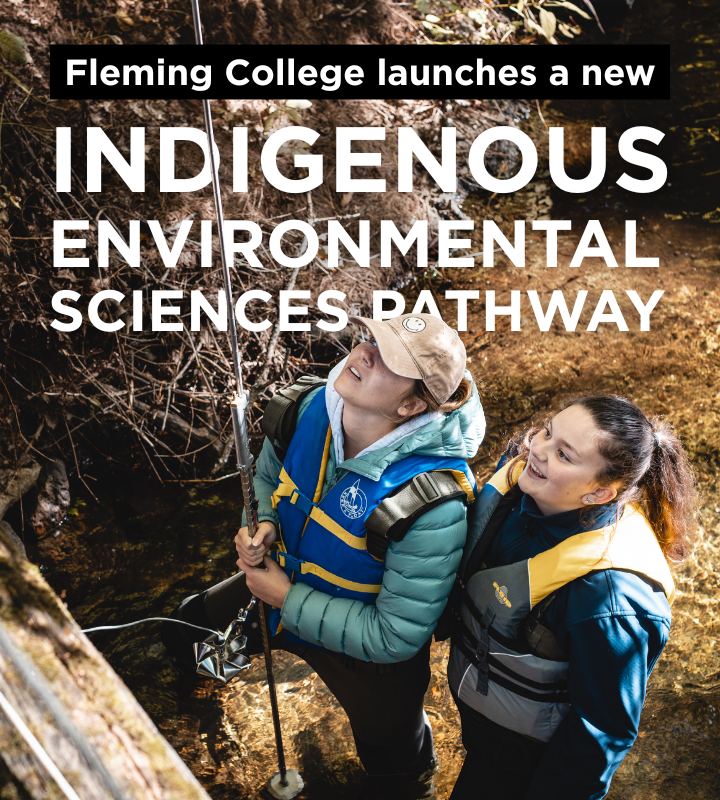
Peterborough, ON – (August 14, 2025) – A new pathway program at Fleming College is opening doors for Indigenous learners interested in pursuing careers in environmental and natural resource sciences.
Launching on September 15, 2025, the Indigenous Environmental Sciences (IES) Pathway offers a supportive and accessible transition into college, with no high school diploma required for admission and no tuition costs for Indigenous students. Delivered through a combination of online and in-person classes at Fleming’s Sutherland campus in Peterborough, the pathway provides a supportive, small-class learning environment designed to help students succeed.
This program reflects the college’s commitment to reconciliation and education by creating an inclusive space where Indigenous learners can thrive and explore meaningful careers in environmental stewardship.
Upon successful completion, students will be eligible to enter a range of diploma and certificate programs within Fleming’s School of Environmental and Natural Resource Sciences (SENRS), including:
In addition to gaining up to five transfer credits, graduates of the IES Pathway program will be well-prepared academically and supported holistically through services offered by Indigenous Student Services and Fleming’s academic departments.
Applications are now open, and spaces are limited. To learn more or to apply, visit:
https://flemingcollege.ca/indigenous-environmental-sciences-pathway or contact IES@flemingcollege.ca
About Fleming College
Fleming College respectfully acknowledges that we are situated on Michi Saagiig Anishinaabeg lands and territory. Located in the heart of Central Ontario, Fleming College has campus locations in Peterborough, Lindsay, Cobourg and Haliburton. Named for famous Canadian inventor and engineer Sir Sandford Fleming, the college features more than 85 full-time programs in Arts and Heritage, Business, Environmental and Natural Resource Sciences, General Arts and Sciences, Health and Wellness, Justice and Community Development, Skilled Trades and Technology, and Continuing Education. Fleming College has more than 8,500 full-time and 445 part-time students, and 95,000 alumni.
For more information, please contact:
IES@flemingcollege.ca
For media inquiries, please contact:
Elise Moore
Communications Officer
Elise.moore@flemingcollege.ca
Find us online:
Web: flemingcollege.ca
Facebook: facebook.com/flemingcollege
X: @FlemingCollege on Twitter
Instagram: @flemingcollege on Instagram
TikTok: @flemingcollege on TikTok
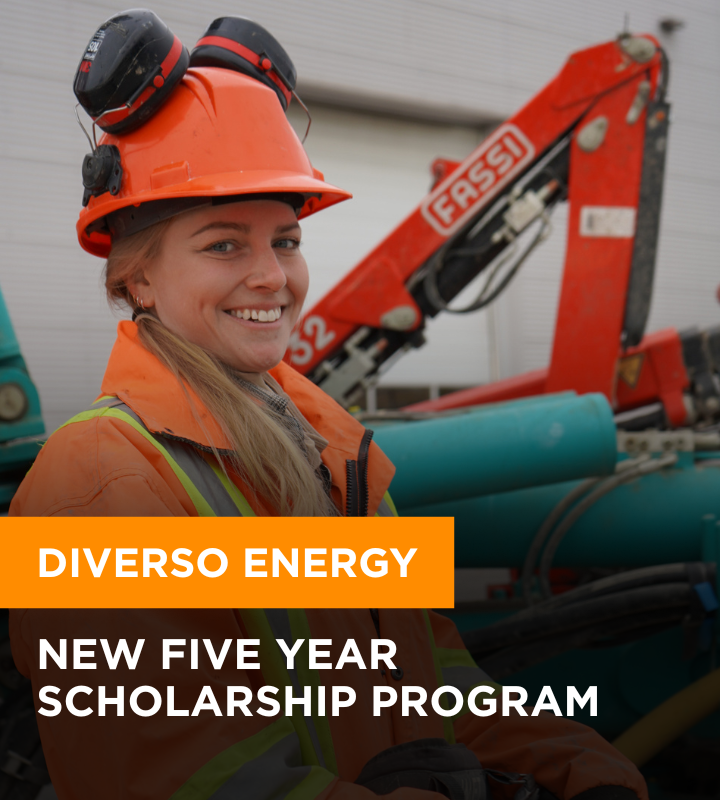
Fleming College Foundation is thrilled to enter a new five-year partnership with Diverso Energy. Read on for Diverso Energy’s full media release.
June 5, 2025 — Diverso Energy, a leader in geothermal utility solutions, today announced a new five-year partnership with the Fleming College Foundation to establish the Diverso Energy Scholarship in support of students enrolled in the college’s Resources Drilling Technician program.
Beginning this academic year, the scholarship will support two students annually who demonstrate academic commitment and a passion for a career in drilling. In addition to the scholarships, Diverso Energy will provide funding to support the highest priority needs of the Resources Drilling Technician program—reinforcing its long-term commitment to industry development and technical education.
“Our objective is to help educate and empower the next generation of drillers,” said Tim Weber, CEO of Diverso Energy. “We want to ensure the skilled resources required to meet the demands of the rapidly growing geothermal space are developed and supported. This partnership with Fleming College is a natural way to invest in the future of clean energy infrastructure.”
Fleming College, known for its hands-on training and field-oriented curriculum, is home to one of the only programs in North America dedicated specifically to drilling. With the geothermal sector experiencing significant growth due to increased demand for sustainable energy solutions, the need for skilled professionals has never been greater.
“We are grateful to the team at Diverso Energy for their generous donation to our Resources Drilling Technician Program,” said Chris Jardine, Associate Vice-President, Marketing and Advancement at Fleming College. “Their support strengthens our program operations and provides financial security for deserving students, helping them develop the skills needed to become leaders in the drilling industry. Diverso Energy’s partnership reflects a shared commitment to preparing a skilled, professional, and safety-focused workforce through the high quality, hands-on training Fleming delivers. We sincerely thank Diverso Energy and look forward to continuing our collaborative relationship.”
Two Fleming College graduates, Jacob Arsenau and Ben McDowell, went from summer jobs to full time employment at Diverso. Their story was featured in a recent CBC feature on the role of drillers in Canada’s energy transition.
“This scholarship shows that the industry is paying attention to the next generation of drillers and values what we’re learning so we can immediately make an impact in a job with a clear career path,” says former Fleming student Ben McDowell.
About Diverso Energy
Diverso Energy is Canada’s leading Energy-as-a-Service (EaaS) provider, specializing in geothermal utility solutions for multi-unit residential buildings (MURBs). By removing upfront capital costs and guaranteeing system operations, Diverso enables developers to adopt sustainable, low-carbon heating and cooling through a seamless, subscription-based model. Visit www.diversoenergy.com for more info.
About Fleming College Foundation
The Fleming College Foundation supports student success through scholarships, bursaries, and targeted funding initiatives. The Resources Drilling Technician program at Fleming’s School of Environmental and Natural Resource Sciences is a recognized leader in drilling education, preparing graduates for careers in mining, construction, geotechnical, and environmental drilling, including geothermal. For more information about Fleming College, please contact Valerie Gagnon, Senior Development Officer, Advancement & External Relations – valerie.gagnon@flemingcollege.ca
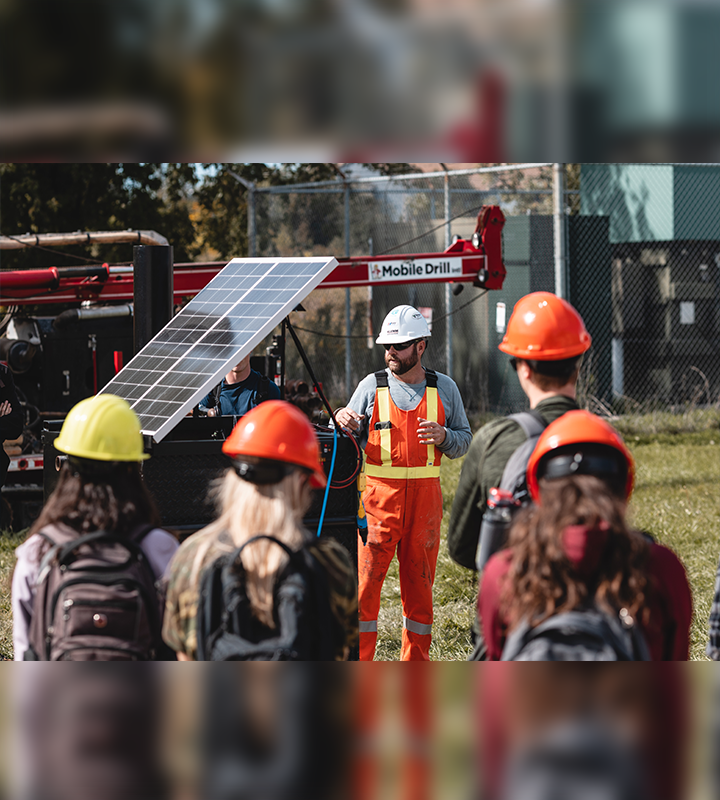
Lindsay, ON (March 7, 2024) - Choose where you want to work. Choose who you want to work for.
For Fleming College Resource Drilling Technician (RDT) students, this is a reality. Upon graduation, these highly skilled students are stepping into lucrative paying positions within a rapidly expanding industry.
Fleming College is the only post-secondary institution in North America offering a two-year diploma program in drilling. It is also the only RDT program that encompasses technical training and theory with an intense focus on hands-on learning.
A common first semester allows students to explore different career paths and provides them with a well-rounded education which covers everything from math and communications to rock and soil analysis. RDT students can also obtain their Indigenous Perspectives Designation, a distinction unique to Fleming College, and considered an asset to employers.
Most of the program is dedicated to hands-on training, using the same equipment students will use in the field. Most of that equipment has been donated to the college by leading members of the drilling industry.
Students also learn how to diagnose equipment issues and repair machinery in the field, a skill that can potentially save employers thousands of dollars.
The demand for Fleming College drilling graduates allows students to choose their adventure and start their careers on their terms, whether they want to live in Downtown Toronto and enjoy the city life or are more on the adventurous side and want to take a helicopter to work.
Careers in the drilling industry can vary widely, from owning your own company, working in a management position or specializing in a niche aspect of drilling.
A Geotechnical driller is needed at the start of every large construction project, to conduct a subsurface investigation and drill for soil samples. Construction drilling is utilized in roadwork, infrastructure projects and building bridges.
Drillers are an essential part of well design, construction, and maintenance. Horizontal directional drilling is used to get underneath roads, rivers, and streams. Environmental drilling focuses on obtaining soil and water samples for analysis to control and remediate contaminates. This work is done around fuel service stations, mines, landfills, and abandoned buildings.
Fleming is launching a new component to its program in the fall of 2024 which focuses on the growing field of Geothermal drilling. This new aspect to the program will put Fleming students at the forefront of the green energy sector.
The RDT program is open to both domestic and international students.
Each student receives an automatic bursary of $500 at the start of their second semester and there are 19 scholarships and bursaries available to drilling students, totaling more than $32,000. Some of these scholarships are available specifically to women looking to start a career in skilled trades.
Fleming College students can be proudly found in every aspect of the North American drilling sector. Many of the program’s alumni are now industry leaders, working in management positions or entrepreneurs with their own companies.
Year after year those industry leaders return to Fleming College, looking to hire Fleming students with the same high-quality education they received.
The Resource Drilling Technician Program is located at Fleming College’s Frost Campus in Lindsay, ON. Visit here for more information and to schedule a tour of the campus.
About Fleming College
Fleming College respectfully acknowledges that we are situated on Michi Saagiig Anishinaabeg lands and territory. Located in the heart of Central Ontario, Fleming College has campus locations in Peterborough, Lindsay, Cobourg and Haliburton. Named for famous Canadian inventor and engineer Sir Sandford Fleming, the college features more than 100 full-time programs in Arts and Heritage, Business, Environmental and Natural Resource Sciences, General Arts and Sciences, Health and Wellness, Justice and Community Development, Skilled Trades and Technology, and Continuing Education. Fleming College has more than 6,800 full-time and 10,000 part-time students, and 80,000 alumni.
For media enquiries, please contact:
Sarah Deeth
Communications Officer
sarah.deeth@flemingcollege.ca
705-749-5530 ext. 1161
Web: flemingcollege.ca
Facebook: facebook.com/flemingcollege
Twitter: @FlemingCollege on Twitter
Instagram: @flemingcollege on Instagram