Electrical Engineering Technology
This advanced diploma focuses on industrial electrical power, process control, and automation systems. Students learn on the latest equipment and software gaining valuable technical knowledge and experience.
Program Information
Start Date
January 11, 2027
Domestic Availability
Accepting Applications
International Availability
Accepting Applications
CIP Code
15.0303
Program Code
ETT
Delivery
In Person
Credential
Ontario College Advanced Diploma
Academic School
Location
Program Contact
Domestic Tuition
per semester*
International Tuition
per semester*
View Curriculum
September 07, 2027
Domestic Availability
Accepting Applications
International Availability
Coming Soon
CIP Code
15.0303
Program Code
ETT
Delivery
In Person
Credential
Ontario College Advanced Diploma
Academic School
Location
Program Contact
Domestic Tuition
per semester*
International Tuition
per semester*
*Domestic tuition amounts shown are from the 2026-2027 academic year and are subject to change.
*International tuition amounts shown are from the 2026-2027 academic year and are subject to change.
Apply Now
Canadian StudentsView Curriculum
January 10, 2028
Domestic Availability
Accepting Applications
International Availability
Coming Soon
CIP Code
15.0303
Program Code
ETT
Delivery
In Person
Credential
Ontario College Advanced Diploma
Academic School
Location
Program Contact
Domestic Tuition
per semester*
International Tuition
per semester*
*Domestic tuition amounts shown are from the 2026-2027 academic year and are subject to change.
*International tuition amounts shown are from the 2026-2027 academic year and are subject to change.
Apply Now
Canadian StudentsView Curriculum
Our six-semester program focuses on industrial electrical power, process controls, and automation systems, however the program content and skills can also be applied to commercial and residential settings. There is a high degree of practical lab work within the program using modern industrial equipment and software to ensure students gain the technical knowledge and experience needed for industry.
Extensive hands-on training and applied learning through labs, an applied project course, and an optional co-op provide students with the practical experience they need to succeed in the workplace.
With a focus on safety, students are trained in industry health and safety standards and regulations such as:
- Canadian Electrical Code
- Occupational Health and Safety Act
- CSA Electrical Safety Standard
- WHMIS
- Working at Heights
- Confined Space Identification
- Hoisting and Rigging
Our lab facilities are equipped with the latest technology and tools. We offer small lab section sizes and, whenever possible, each student has their own workstation and set of equipment to work with to provide individual training.
Fleming is home to the Centre for Advancement in Mechatronics and Industrial Internet of Things (CAMIIT), a multipurpose research centre for both industrial and academic research projects. Students may have opportunities to participate in applied research projects right on campus relating to system design, advanced manufacturing, the industrial internet of things or 3D printing.
With extensive hands-on lab work and applied research projects related to CAMIIT, you will have many opportunities to gain practical, applied experience. Students in the program may also take part in Siemens Canada's Dual Education Program for Engineering and Technologist Students, an innovative work-integrated learning program that provides an educational and professional foundation for students. It includes a structured mentorship program and hands-on work experience.
The program also prepares you for certification with the Ontario Association of Certified Engineering Technicians and Technologists (OACETT) as a Certified Engineering Technologist (CET).
This program does offer an optional paid co-op between semesters 4 and 5. Please visit the Electrical Engineering Technology Optional Co-op program page for more information.
Graduates of this program are in demand and typically work in the design, development, testing, production, maintenance, and operation of electrical and electronic systems.
Employers include electrical utilities, communications companies, equipment manufacturers, the public sector, and organizations across manufacturing, processing, and transportation sectors.
Common job titles include Electrical Engineering Technician, Robotics or Controls Technician, Manufacturing Technician, Instrumentation or Calibration Technician, and PLC Programmer.
Prospective students are encouraged to explore these careers and related job postings to better understand the technologies used at Fleming and in the field.
- Analyze, interpret, and produce electrical and electronics drawings, technical reports including other related documents and graphics.
- Analyze and solve complex technical problems related to electrical systems by applying mathematics and science principles.
- Design, use, verify, and maintain instrumentation equipment and systems.
- Design, assemble, test, modify, maintain and commission electrical equipment and systems to fulfil requirements and specifications under the supervision of a qualified person.
- Commission and troubleshoot static and rotating electrical machines and associated control systems under the supervision of a qualified person.
- Design, assemble, analyze, and troubleshoot electrical and electronic circuits, components, equipment and systems under the supervision of a qualified person.
- Design, install, analyze, assemble and troubleshoot control systems under the supervision of a qualified person.
- Use computer skills and tools to solve a range of electrical related problems.
- Create, conduct and recommend modifications to quality assurance procedures under the supervision of a qualified person.
- Prepare reports and maintain records and documentation systems.
- Design, install, test, commission and troubleshoot telecommunication systems under the supervision of a qualified person.
- Apply and monitor health and safety standards and best practices to workplaces.
- Perform and monitor tasks in accordance with relevant legislation, policies, procedures, standards, regulations, and ethical principles.
- Configure installation and apply electrical cabling requirements and system grounding and bonding requirements for a variety of applications under the supervision of a qualified person.
- Design, commission, test and troubleshoot electrical power systems under the supervision of a qualified person.
- Select and recommend electrical equipment, systems and components to fulfil the requirements and specifications under the supervision of a qualified person.
- Apply project management principles to contribute to the planning, implementation, and evaluation of projects.
Students applying to Electrical Engineering Technology must meet the following requirements:
- OSSD including Grade 12 (C) English and Grade 12 (C) Math.
- A minimum final grade of 60 % in Grade 12 C Math is required.
Recommended (but not required for admission)
- High school level Physics course is recommended
PC / Windows
- Operating System:Windows 10
- Processor:Core i5 - 1.6Ghz minimum
- Memory:8GB minimum
- Hard Disk:160GB minimum
Internet Connection: 2.5 Mbps Download and 3.0 Mbps Upload (minimum)

Transfer Agreements
You may be able to use credits obtained at Fleming College to continue your postsecondary education in pursuit of a degree. The articulation and credit transfer agreements with our partner institutions are summarized here.
Bachelor of Engineering in Electrical Engineering
Requirement
- Minimum 70% cumulative program average.
- The admission average is based on grades on the first attempt in the required courses of the final year of your technology program.
- Required to complete the Lakehead University summer transition program.
Transfer Credit
- 12.5 out of a 27.5-credit degree.
- If you are missing core courses, you will be asked to take “make-up” courses from our engineering programs' first and second year.
To apply please see the Ontario Universities' Application Centre (OUAC) website.
For more information
Visit the Lakehead University website for further articulation and program information.
Visit the ONTransfer.ca website for agreement information.
Bachelor of Arts - General
Requirement
- Minimum mid-70% cumulative program average.
Transfer Credit
- 60 out of a 120-credit degree.
- Refer to OntarioTech's website for further details.
To apply please see the Ontario Universities' Application Centre (OUAC) website.
For more information
Visit the Ontario Tech University website for further articulation and program information.
Bachelor of Arts in Educational Psychology
Requirement
- Minimum mid-70% cumulative program average.
Transfer Credit
- 60 out of a 120-credit degree.
- Refer to OntarioTech's website for further details.
To apply please see the Ontario Universities' Application Centre (OUAC) website.
For more information
Visit the Ontario Tech University website for further articulation and program information.
Bachelor of Arts in Educational Studies and Digital Technology
Requirement
- Minimum mid-70% cumulative program average.
Transfer Credit
- 60 out of a 120-credit degree.
- Refer to ONTransfer.ca for further details.
To apply please see the Ontario Universities' Application Centre (OUAC) website.
For more information
Visit the Ontario Tech University website for further articulation and program information.
Bachelor of Arts in Psychology
Requirement
- Minimum mid-70% cumulative program average.
Transfer Credit
- 60 out of a 120-credit degree.
- Refer to Ontario Tech's website for further details.
To apply please see the Ontario Universities' Application Centre (OUAC) website.
For more information
Visit the Ontario Tech University website for further articulation and program information.
Bachelor of Arts in Sociology, Technology and Innovation
Requirement
- Minimum mid-70% cumulative program average.
Transfer Credit
- 60 out of a 120-credit degree.
- Refer to OntarioTech's website for further details.
To apply please see the Ontario Universities' Application Centre (OUAC) website.
For more information
Visit the Ontario Tech University website for further articulation and program information.
Bachelor of Commerce
Requirement
- Minimum mid-70% cumulative program average.
- Completion of the Ontario Tech Commerce Bridge.
Transfer Credit
- 45 out of a 120-credit degree.
- Refer to ONTransfer.ca for further details.
To apply please see the Ontario Universities' Application Centre (OUAC) website.
For more information
Visit the Ontario Tech University website for further articulation and program information.
Bachelor of Interdisciplinary Studies
Requirement
- Minimum 65% cumulative program average.
Transfer Credit
- Entry into 5th semester standing in an 8-semester program.
- Refer to Seneca College's website for further details.
To apply please see the Ontario Universities' Application Centre (OUAC) website.
For more information
Visit the Seneca Polytechnic website for further articulation and program information.
Visit the ONTransfer.ca website for agreement information.
See the official articulation agreement.
In The News: Electrical Engineering Technology

The energy was vibrant at the Peterborough Memorial Centre on June 9 and 10 as the Fleming College community came together for our 59th Convocation. Across five ceremonies over two incredible days, we celebrated the hard work, resilience, and achievements of more than 4,600 graduates.
Representing 93 programs across all of our academic schools including Health and Community Services, Trades and Technology, Environmental and Natural Resource Sciences, Art + Design, Business and Information Technology, General Arts and Sciences, and Fleming College Toronto, the Class of 2026 is officially ready to make an impact.
Opening Ceremony and Remarks
Each ceremony opened with a beautiful Honour Song by Meegwans Snake, a special gift recognizing the dedication of the graduating class, followed by a meaningful land acknowledgement from Associate Vice President, Health Nick Stone, who served as the Master of Ceremonies.
Members of the Board of Governors welcomed graduates, praising their hard work, commitment, and perseverance. Fleming College Interim President Dr. Theresa Knott extended her congratulations, encouraging the Class of 2026 to keep discovering and imagining new possibilities for their future.
Words of Wisdom from our Valedictorians
Our valedictorians delivered powerful messages, reflecting on shared challenges and achievements, supportive faculty and staff, and the strong bond developed within the Fleming community. The Class of 2026 Valedictorians are:
- Michah Strutzenberger, Paramedic Program
- Leah Falardeau, Customs Border Services Administration
- Amber Carter, Conservation Biology
Recipient of the Rodger Worboy Memorial Award sponsored by Colleen Worboy. - Carson Makie, Electrical Engineering Technology (Co-op)
- Lochana Dilanjan Abeysiriwardena, Global Business Management
Governor General's Award
During the June 9, 2 p.m. ceremony, President Knott presented the Governor General’s Collegiate Bronze to Medal Esthetician – Spa Management program graduate Natalie Sudano. Natalie received the award for achieving the highest overall average upon graduation from a College diploma program.
Welcome to the Alumni Family!
During the ceremony, the focus turned to the future as our newest graduates were officially welcomed into the Fleming alumni community. A lineup of local graduates took the stage to share words of wisdom from their own career journeys and remind the Class of 2026 that their connection to the College continues long after crossing the stage.
We were honoured to hear from Fleming alumni guest speakers:
- Sara Mullen (Paramedic ’07)
- Laura Gordenier (Project Management ’14)
- Peter Carter (Fish and Wildlife Technician ’97 & Fish and Wildlife Technology ’98)
- Jordan Medland (Welding and Fabrication Technician '22)
- Mike Temple (Business Administration - Human Resources Management '06)
The alumni speakers expressed the value of belonging to a global network of Fleming alumni, encouraging the new graduates to stay in touch, lean on Fleming’s supportive community, and take full advantage of the lifelong benefits available to them.
Relive the Moments
Whether you want to watch your own momentous walk across the stage or share a moment with family and friends who couldn't be there in person, you can access recordings of each ceremony on our YouTube channel.
We’ve also captured the best moments, behind-the-scenes excitement, and plenty of photos on our social channels. Check out the highlights on @flemingcollege social channels and Global News, and join the conversation using the hashtag #FlemingGrad:
Congratulations, Class of 2026!
We cannot wait to see what you achieve next!
More information:
communications@flemingcollege.ca
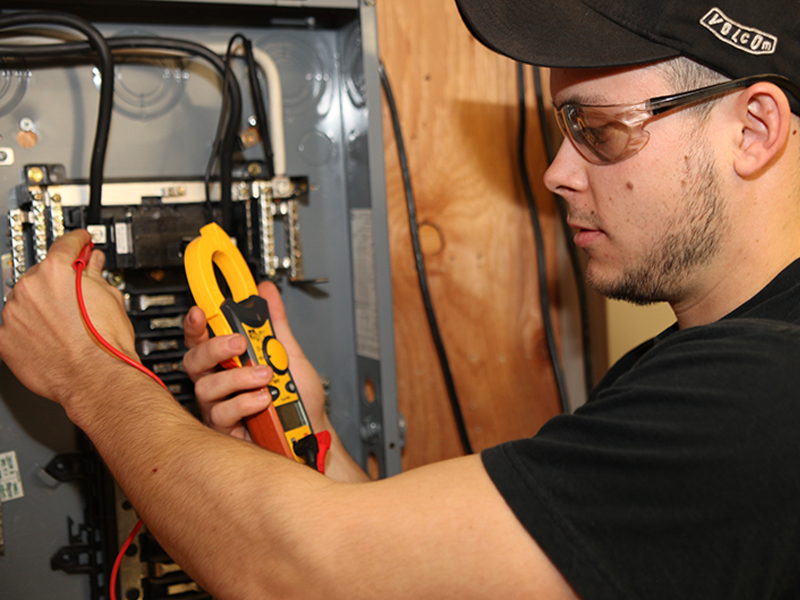
Technology is changing fast, and so are the careers behind it. Today’s industries don’t just need people who can wire a panel or lead technical team. They need professionals who understand automation, robotics, programming, industrial data, networking, and intelligent systems working together in real time.
That’s exactly where Fleming College’s Electrical Engineering programs stand out.
Whether you’re interested in becoming highly skilled in hands-on electrical systems or stepping into advanced automation, programming, and systems integration roles, Fleming College offers two in-demand career pathways:
The Difference: Technician vs. Technologist
At first glance, these careers sound similar, and they are connected. Both require work in hands-on electrical engineering tasks and both are in demand across manufacturing, automation, energy, utilities, robotics, and industrial sectors. The difference comes down to depth, responsibility, and system-level design and integration.
- Electrical Engineering Technician
The two-year Electrical Engineering (EE) Technician diploma program focuses on practical, hands-on skills used every day in technical environments.EE Technicians are essential to keeping systems running safely and efficiently in factories, plants, utilities, and industrial operations. This path is ideal for students who enjoy working with tools and technology and solving real-world technical problems. They excel in a hands-on learning environment and want to enter the workforce quickly.
Technicians are often the people who:
- Install and maintain equipment
- Test and troubleshoot electrical and automation systems
- Support production and maintenance teams
- Work directly with machinery and controls
- Follow and apply established technical procedures
- Work under supervision of engineers or technologists
- Electrical Engineering Technologist
The three-year Electrical Engineering (EE) Technology advanced diploma program builds on the EE Technician program with the addition of an optional semester-long paid co-op placement and two semesters that deepen knowledge and skills in systems integration such as automation programming, industrial networking.Electrical Engineering Technologists don’t just maintain systems, they help design, optimize, integrate, and improve them. They often work between tradespeople, technicians, and engineers, helping to connect automation and industrial technology.
In many industries, technologists are becoming some of the most valuable technical professionals because they combine electrical knowledge, automation skills, programming ability, data and networking understanding, and real-world troubleshooting experience at the system or plant level.
Technologists are often the people who:
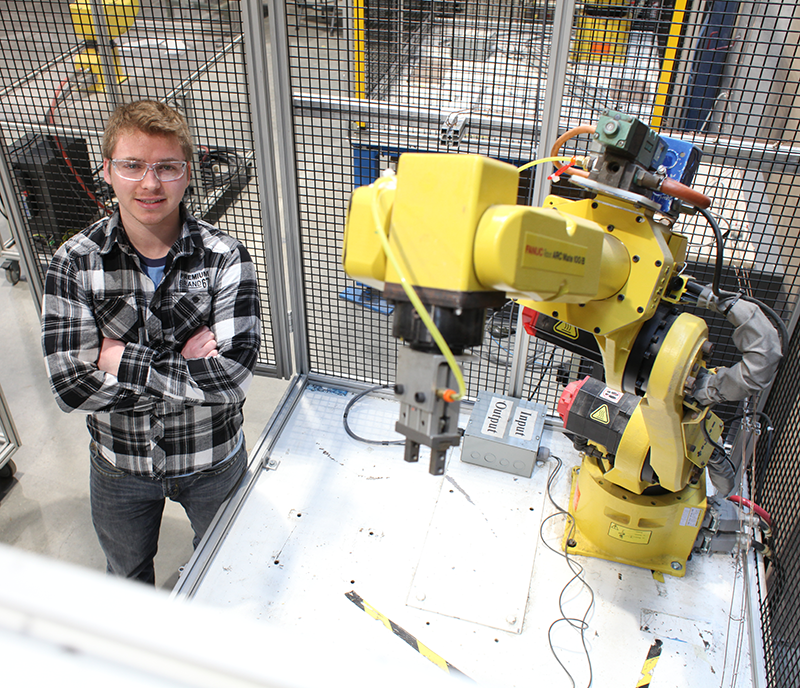
- Program PLCs and automation systems
- Integrate robotics into manufacturing and process lines
- Analyze plant-wide system problems and provide solutions
- Develop technical procedures
- Select, design, and configure industrial data systems and integrate with existing software
- Lead small technical teams
Which Program Is Right for You?
Both pathways can lead to rewarding, high-demand careers. The difference is really about how far you want to go.
Choose Electrical Engineering TECHNICIAN if you:
- Want a faster path into industry
- Prefer highly hands-on procedure-based technical work
- Enjoy troubleshooting and maintenance
- Like working directly with equipment and systems
- An end goal to become an Electrician but are having trouble securing employment
Choose Electrical Engineering TECHNOLOGY if you:
- In addition to Technician level, desire a deeper knowledge in automation and programming
- Take the lead in problem-solving and systems level thinking
- Are interested in robotics, SCADA, networking, or artificial intelligence
- Want opportunities for leadership and advancement
- Like the idea of combining electrical systems with software and industrial technology
Why These Skills Matter More Than Ever
Modern industry is evolving into connected, intelligent systems. Factories, utilities, and industrial facilities rely on the in-demand skills acquired in Fleming College’s Electrical Engineering Technician and Electrical Engineering Technology programs. Employers need graduates who can understand both physical machines and the software and data systems controlling them.
This combination of electrical systems + automation + programming + industrial data is becoming one of the most employable skill sets in advanced technology industries.
Fleming’s approach to program curriculum recognizes that the future belongs to adaptable graduates who can evolve with changing technologies. Artificial intelligence and machine learning are no longer futuristic concepts, they are already being used in manufacturing, utilities, and industrial operations.
Instead of focusing only on one tool or software platform, students develop strong foundations in electrical theory, programming logic, controls systems, industrial communication, data handling, and systems thinking.
That flexibility helps graduates stay relevant as technology continues to evolve.
Career Opportunities Are Broader Than You Think
One of the biggest surprises for many Fleming electrical engineering students is how many career paths these programs can open.
Job titles often don’t include the word “engineering,” even though employers specifically look for engineering technician or technologist education. Common job titles include Electrical Engineering Technician, Controls Programmer, SCADA Specialist, Robotics or Instrumentation Technologist, Manufacturing Technician, Process Analyst, and PLC Programmer.
As graduates gain experience, many seek career advancement opportunities in:
- Systems integration
- Technical leadership and supervisor roles
- Advanced automation roles
- Industrial data and analytics
- Project management
Industry Recognition and Professional Growth
In Ontario, both career paths are recognized through Ontario Association of Certified Engineering Technicians and Technologists (OACETT). Graduates can pursue professional designations such as:
- Certified Technician (C.Tech.)
- Certified Engineering Technologist (C.E.T.)
These credentials help demonstrate technical competence and professional credibility within electrical engineering industry.
Building the Workforce of Tomorrow
Industry is changing rapidly, but one thing is clear: companies need people who can bridge the gap between electrical systems, automation, software, and intelligent technologies.
Fleming College’s Electrical Engineering programs are designed to meet that need.
Students graduate with practical experience, modern technical skills, and the adaptability needed to succeed in industries being transformed by automation, data, robotics, and AI.
For students looking for a career that combines hands-on technology with future-focused innovation, these programs offer an exciting path forward.