Webinar Wednesday Recap: Graphic Design – Visual Communication
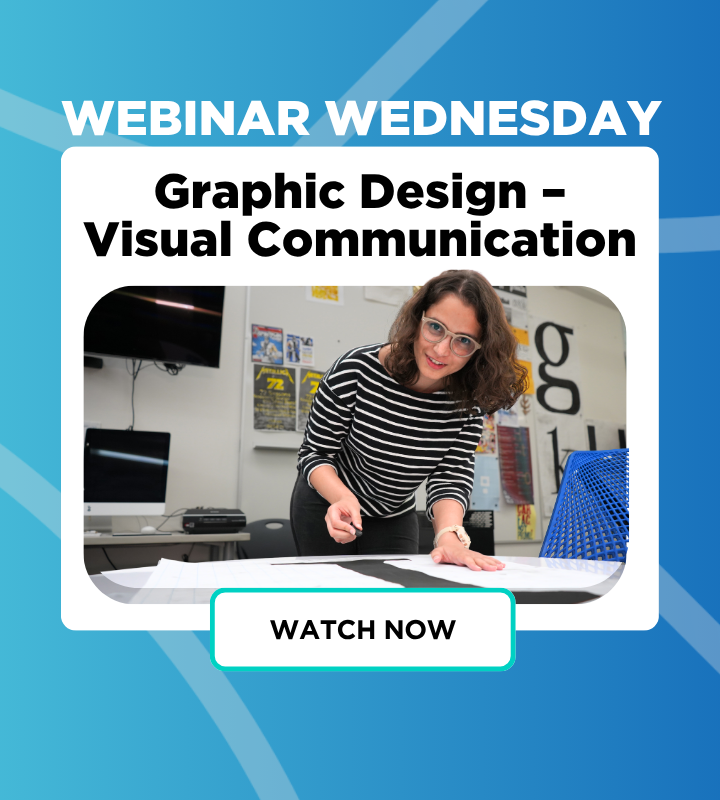
Last week, we hosted a Webinar Wednesday session highlighting our Graphic Design – Visual Communication (GDV) program. If you couldn’t join us live, don’t worry. Below are some key takeaways from the session, along with the full recording available to watch at your convenience.
Fleming College’s Graphic Design program offers students an immersive, hands-on creative education focused on storytelling, branding, digital media, design strategy, and real-world client work. During the webinar, prospective students connected with Matt Thompson from Student Recruitment and Anita Matusevics, Program Coordinator, to learn more about the studio environment, student projects, internship opportunities, career pathways, and the evolving future of design.
Why Graphic Design at Fleming?
Our graphic design program is an accelerated advanced diploma program completed in just two years. The program runs continuously through the summer, allowing students to graduate faster and enter the workforce sooner.
Students learn through a project-based, studio-style environment that mirrors a professional design studio rather than a traditional classroom. Throughout the program, students work on real-world creative challenges across print, digital, branding, storytelling, motion graphics, web design, typography, photography, and experiential design.
The program is designed to help students think creatively, communicate visually, and develop the technical and strategic skills needed in today’s design industry. Faculty members are all practicing professional designers, ensuring students are learning current tools, workflows, and industry best practices.
Three Key Takeaways
1. Hands-on, Project-Based Learning from Day One
The program is built around applied learning through projects instead of traditional exams or tests. Students gain experience working on branding campaigns, posters, web design, illustration, editorial layouts, typography, packaging, social media campaigns, photography, and motion graphics projects.
Students are encouraged to experiment creatively while also learning industry-standard tools like Adobe Creative Suite alongside emerging technologies and platforms. The curriculum combines technical skill development with creative problem solving and visual storytelling.
The studio environment also emphasizes observation, collaboration, communication, and design thinking, helping students learn how to approach challenges like professional designers.
2. Real-World Experience Through Community Client Work and Internships
A major highlight of the program is the opportunity to work directly with community clients on meaningful design campaigns. Students collaborate with nonprofit organizations and community partners on projects related to mental health, accessibility, homelessness, children’s services, arts organizations, and more.
Past community partners have included organizations such as United Way Peterborough & District, the Alzheimer Society, Five Counties Children’s Centre, and Peterborough Folk Festival. In many cases, student work has been implemented in real campaigns, with some students even securing internships and employment opportunities through these partnerships.
The final semester also includes an internship component where students gain professional work experience in real design environments. Fleming has maintained a strong record of helping eligible students secure internships with agencies, organizations, and businesses.
3. A Creative Career with Diverse Opportunities
Graphic design continues to evolve rapidly across industries, with opportunities spanning branding, advertising, web design, social media, motion graphics, UX/UI design, publication design, illustration, content creation, and more.
During the webinar, Anita discussed how design is increasingly connected to digital experiences, storytelling, strategy, and emerging technologies. Students graduate with versatile creative and technical skills that can adapt across many industries and career paths.
The webinar also addressed questions about artificial intelligence and design careers. Rather than replacing designers, AI is viewed as another creative tool that supports the design process. Human creativity, communication, storytelling, strategy, and emotional understanding remain essential components of successful visual communication. Graduates may choose to enter the workforce immediately, start freelance or entrepreneurial ventures, or continue their education through pathways into university degree programs in areas such as communication, media, design, or marketing.
LEARNING BEYOND THE CLASSROOM
Students in the program also participate in a second-year design research trip to Montreal, where they explore museums, exhibitions, installation design, and emerging creative technologies. The experience helps inspire and inform their own exhibition and design projects back in the studio.
Another unique aspect of the program is that no portfolio is required for admission. The program welcomes students from many different backgrounds and experiences who are looking to explore their creativity and develop new skills in a supportive, collaborative environment.
CHECK OUT THE FULL WEBINAR:
HAVE QUESTIONS OR WANT TO LEARN MORE?
If this session sparked your interest or you’re considering a future in graphic design, we’d love to connect with you. Our Student Recruitment team and program representatives are here to answer questions, help you explore admission pathways, or guide you toward the right next step. Be sure to check out our upcoming Webinar Wednesday sessions online. We’re hosting new topics in the months ahead and it’s a great way to learn more about programs that excite you.
CAN’T MAKE A LIVE WEBINAR WEDNESDAY EVENT?
No problem! We’ll save video recordings on Fleming’s official YouTube channel. And don’t worry, Program Coordinators are always available to answer your questions!
For more information about Webinar Wednesdays, please contact Student Recruitment.