Hunter Reman’s Aquaculture Journey
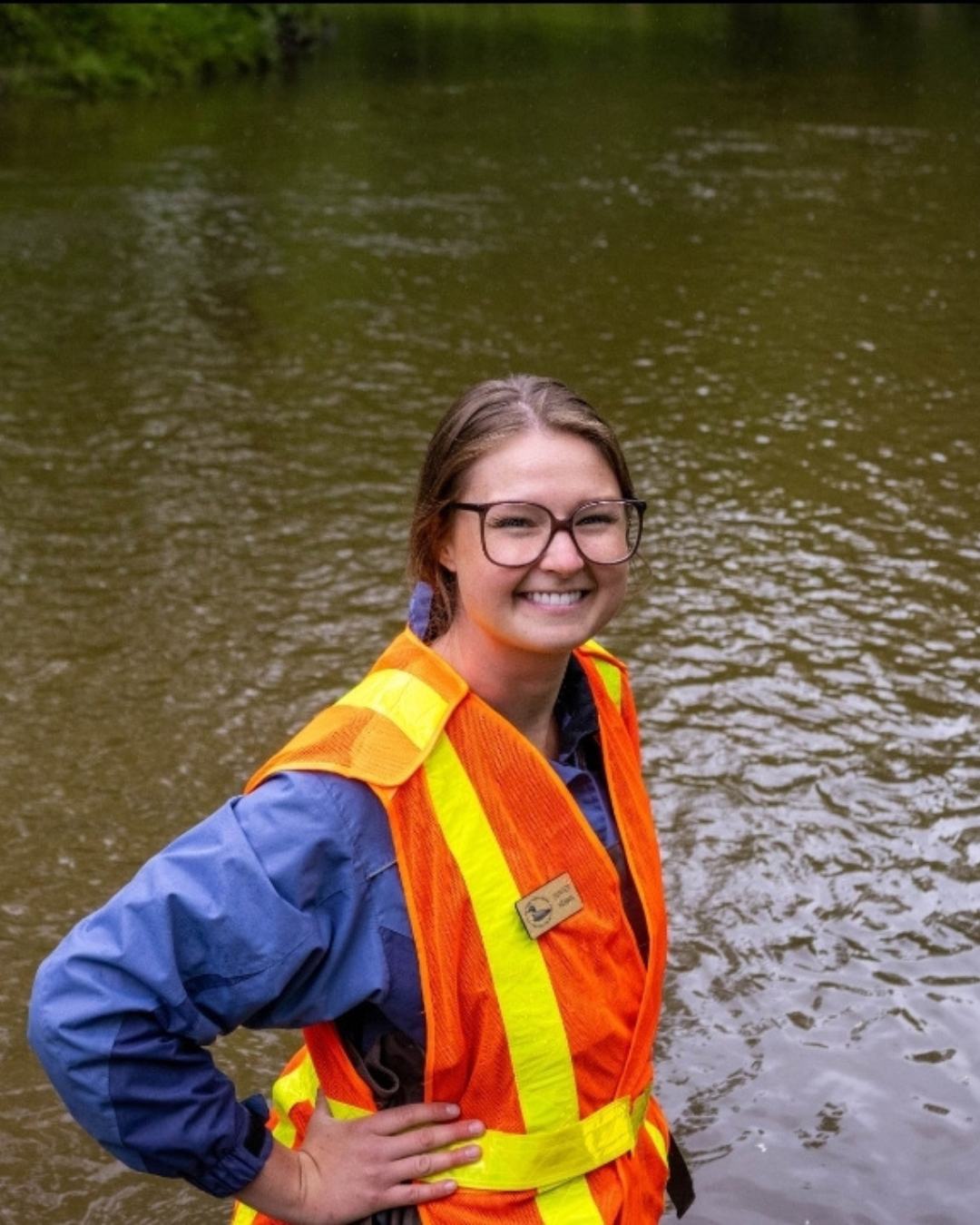
For Hunter Reman, a passion for the outdoors, fishing and aquatic environments led to a career that has taken her from fish farms to technology testing, teaching and now helping restore a native species to Lake Ontario.
A graduate of Fleming College’s Fish and Wildlife Technician and Aquaculture programs, Hunter has discovered that a background in aquaculture can open doors to far more opportunities than many people realize.
“I didn’t realize just how diverse the industry was or how many different career paths were available,” she says.
Following a passion for aquatic environments
Hunter has always felt drawn to the outdoors, particularly hunting and fishing. In fact, she used to say that if she could have any superpower, it would be the ability to breathe underwater.
Her interest in aquaculture also grew from a curiosity about food production and sustainability, fuelled by her passion for culinary arts. She wanted to better understand where our food comes from and learn more about an industry that she felt was often misunderstood.
After completing Fleming’s Fish and Wildlife Technician program, Hunter began thinking about what might come next. When she discovered the College’s Aquaculture program, it felt like a natural fit.
The program gave her a broader understanding of the industry, from fish production and hatchery operations to research, technology development and conservation.
“It helped me develop a more informed perspective on the industry and recognize the important role aquaculture can play in food production and sustainability,” she says.
Just as importantly, it gave her a foundation she could carry into different areas of the field.
A career that keeps opening doors
Hunter began her career at Cedar Crest Trout Farms in Ontario, where she completed her co-op placement before moving into a full-time position as an Aquaculture Technician.
The work was physically demanding, with long hours and plenty of cold, wet days. But for Hunter, one of the most rewarding parts was working alongside people who shared her passion for aquatic life.
“The team cared deeply about the work they did and the fish they looked after. It felt more like being part of a family than simply having a job.”
From there, Hunter had the opportunity to explore a different side of the industry: technology.
She participated in testing developing fish-counting software for a Quebec-based technology company, helping assess how the software performed with juvenile fish. The experience introduced her to the ways innovation and technology are helping shape aquaculture.
Her career then brought her back to Fleming, where she worked as a hatchery technician and contract faculty member in the Aquaculture program.
Returning to the College gave her the opportunity to contribute to the same program that had helped launch her career, this time by sharing her knowledge and experience with future aquaculture professionals.
Today, Hunter works as the Atlantic Salmon Project Specialist with the Ontario Federation of Anglers and Hunters (OFAH), supporting the Lake Ontario Atlantic Salmon Restoration Program.
The program works to restore Atlantic salmon to Lake Ontario, where the native species was extirpated by 1898.
For Hunter, the move from fish production to species restoration has been another opportunity to put her aquaculture background to work in a new way.
Although her roles have looked quite different, each has built on the knowledge and practical skills she developed through her education and experience.
“Moving from fish production into species restoration has given me a real appreciation for the breadth of opportunities available through an aquaculture background,” she says.
Keeping an open mind
Looking back on her career so far, Hunter says one of the biggest lessons has been the importance of staying curious and being willing to explore opportunities beyond what you initially imagined.
When she first started at Fleming, she couldn’t necessarily have pictured herself working in technology, teaching or species restoration. Each experience helped her discover another side of an industry she was passionate about.
Her advice to students considering aquaculture is simple: don’t limit yourself to what you already know.
“Knowledge is power. Keep learning about the things you’re passionate about, ask questions, and be open to opportunities that might not have been on your radar when you started. You don’t have to know exactly where you want your career to go before you begin.”
She also encourages students to look beyond what they hear about the industry in the media and take the time to learn for themselves.
“Learn about the industry for yourself, talk to people who work in it, and form your own opinions based on experience and evidence.”
For Hunter, that willingness to learn has led to a career spanning several areas of aquaculture, all connected by a shared interest in fish, aquatic environments and the role they play in our world.
Her journey is a reminder that a college education doesn’t have to lead you down just one path. Sometimes, the opportunities you discover along the way are the ones that make your career what it is.
Interested in a career in aquaculture? Fleming College’s Aquaculture program offers students the opportunity to explore an industry with connections to fish production, hatchery operations, technology, research and conservation.